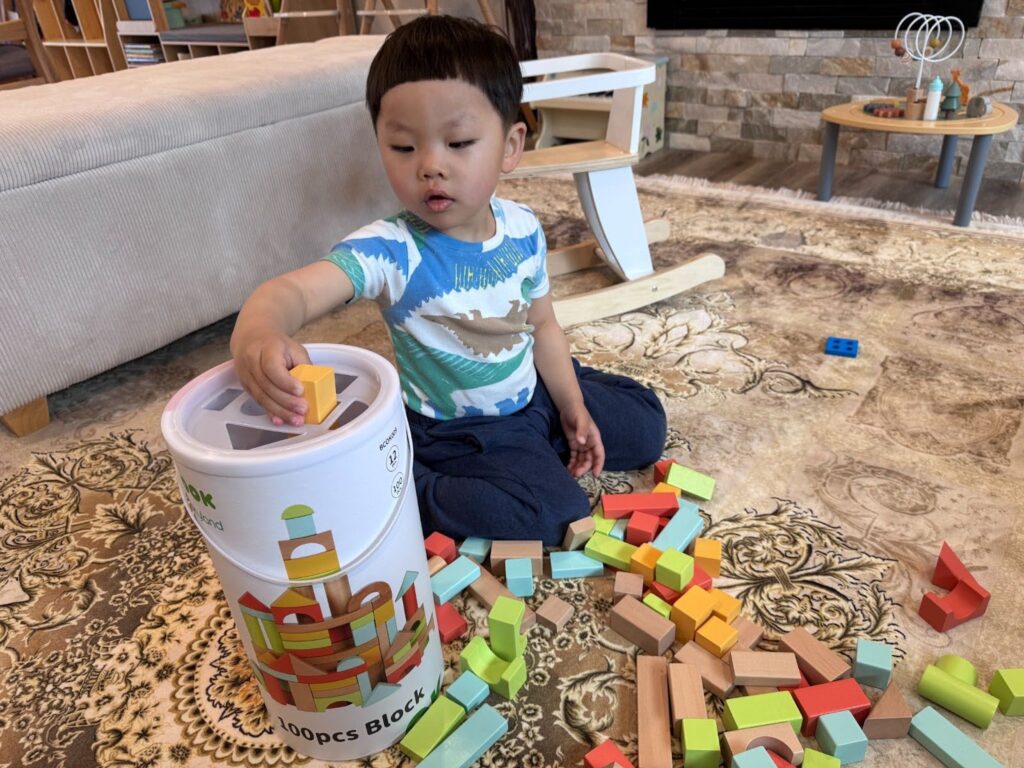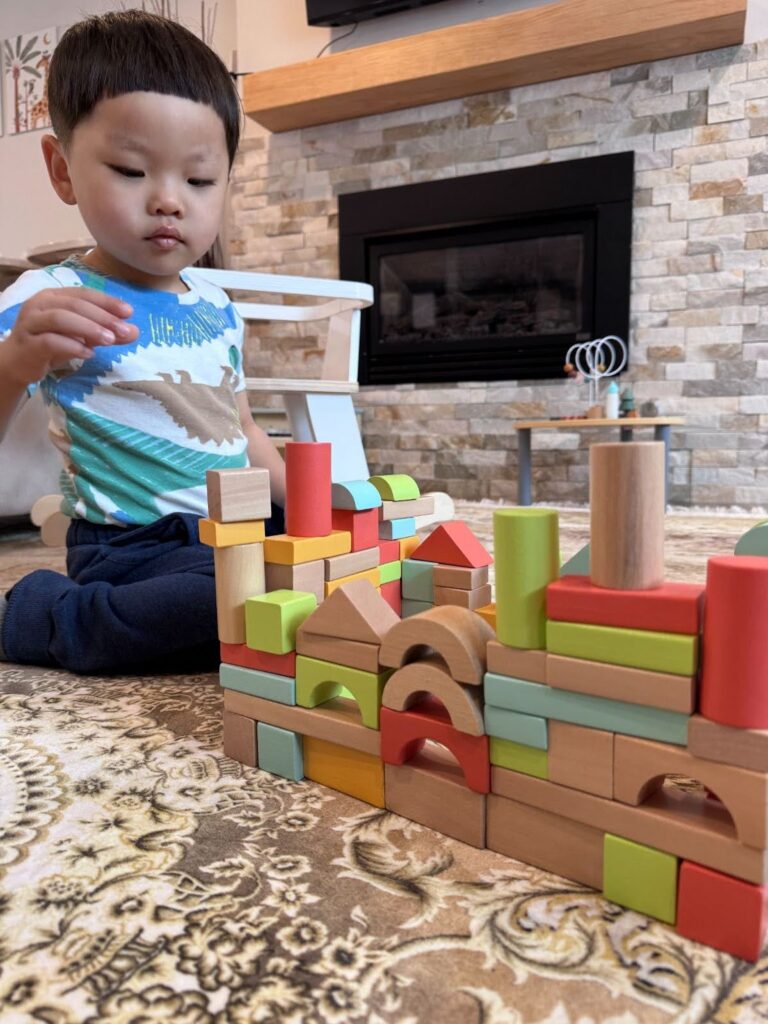
Nurturing Independence and Healthy Habits Through Mealtime

At Kido Heaven Child Care in Bothell, WA, mealtimes are more than just a chance to eat—they’re opportunities for preschoolers to grow, learn, and build lifelong skills. In our Montessori-inspired environment, children take ownership of their meals, practice fine motor skills, explore diverse foods, and enjoy nutritious, balanced plates in a calm, respectful setting. These practices align with Washington State’s Early Achievers Quality Standards, supporting child outcomes in health, social-emotional development, and independence.

Why Mealtimes Matter for Preschoolers

Mealtimes are a daily classroom for hands-on learning. Research shows that structured mealtime routines can boost children’s self-confidence and dietary acceptance, with studies suggesting 15–20 exposures to new foods may be needed for a child to embrace them USDA MyPlate. At Kido Heaven, children:

  • Use child-safe utensils to eat independently.
  • Sit at appropriately sized tables in a family-style setting.
  • Enjoy balanced meals with whole grains, fruits, vegetables, and proteins.
  • Practice social skills like waiting their turn and saying “please” and “thank you.”

These routines nurture physical, cognitive, and social growth in meaningful, everyday moments.
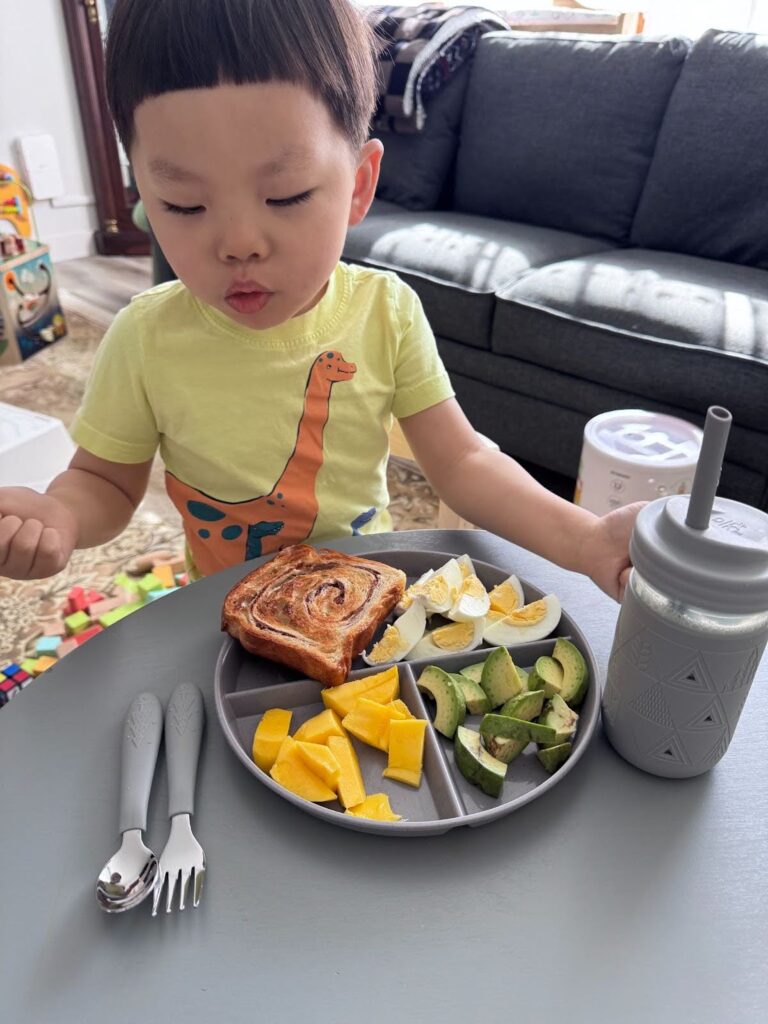
Preschoolers practicing independence by setting the table during mealtime at Kido Heaven Child Care in Bothell, WA.

Benefits of Structured Mealtime Routines

Our mealtime practices are designed to empower children and lay a foundation for lifelong habits. Here’s how:

  1. Independence and Self-Care
    Children serve themselves, pour water, wipe their mouths, and clean up, fostering pride in their abilities. These tasks build self-help skills critical for school readiness.
  2. Fine Motor Skills
    Scooping rice, cutting soft fruits, or holding a fork strengthens hand muscles, improving coordination for writing and dressing.
  3. Language and Social Skills
    Mealtimes spark conversation. Teachers model phrases like “Would you like more carrots?” and encourage children to express preferences, boosting vocabulary and emotional awareness.
  4. Cultural Awareness
    Children explore diverse foods like salmon, avocado, and yogurt, celebrating global flavors and fostering curiosity about different traditions.
  5. Healthy Eating Habits
    Nutrient-dense meals with low sugar and fresh produce teach children to listen to hunger and fullness cues. This aligns with USDA MyPlate guidelines for preschoolers.

Parent Tip: Try offering a new food alongside a familiar one at home to encourage exploration without pressure.
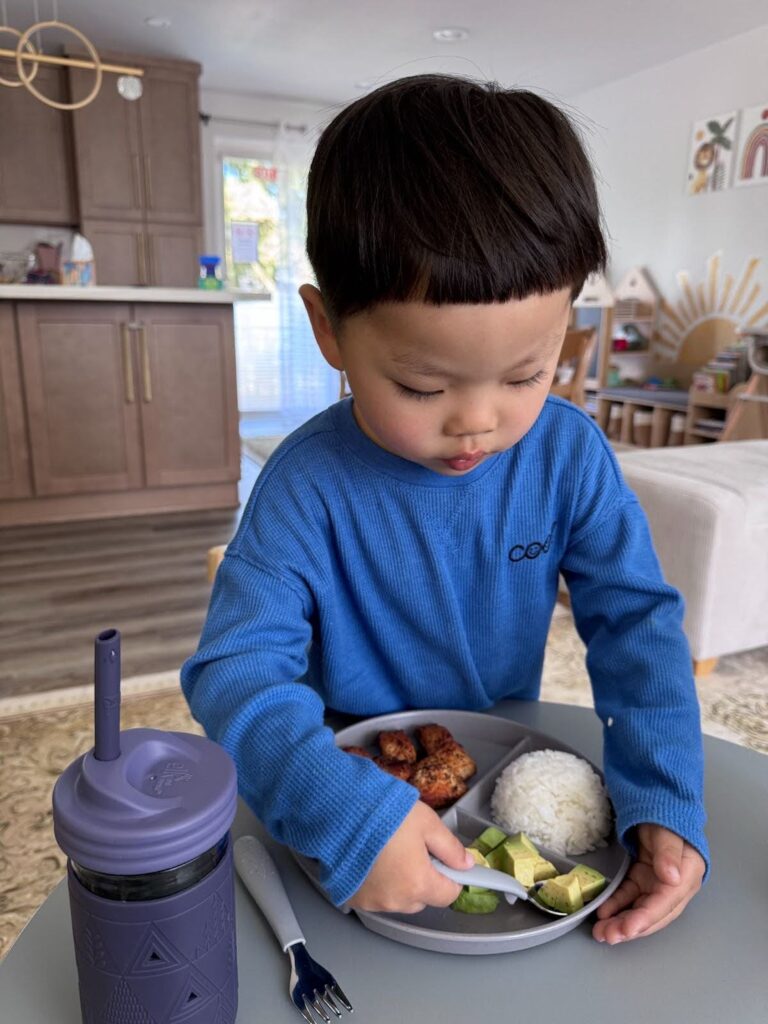
Child using child-safe utensils to foster independence at mealtime in Kido Heaven Child Care, Bothell, WA.

Aligned with Early Achievers Quality Standards

Kido Heaven’s mealtime practices meet Washington State’s Early Achievers framework, ensuring high-quality care. Here’s how we align:

  1. Learning Environment
    • Calm, clean, child-centered dining areas.
    • Tables and chairs sized for independence.
    • Accessible water bottles and healthy snacks.
  2. Child Outcomes
    • Documented progress in fine motor skills, self-regulation, and expressive language via Brightwheel.
    • Consistent routines reduce anxiety and ease transitions.
  3. Interactions and Curriculum
    • Teachers model positive behaviors and reinforce manners.
    • Activities like fruit tasting are woven into our Montessori-inspired curriculum.
  4. Family Engagement
    • Daily Brightwheel updates with meal photos and appetite notes.
    • Cultural and dietary preferences are honored in partnership with families.
    • Weekly menus shared in advance.
  5. Professional Development
    • Staff complete nutrition and food safety training per CACFP and DCYF standards.
    • Teachers are trained in language modeling to enrich mealtime conversations.

Link to Kido Heaven’s for more learning.
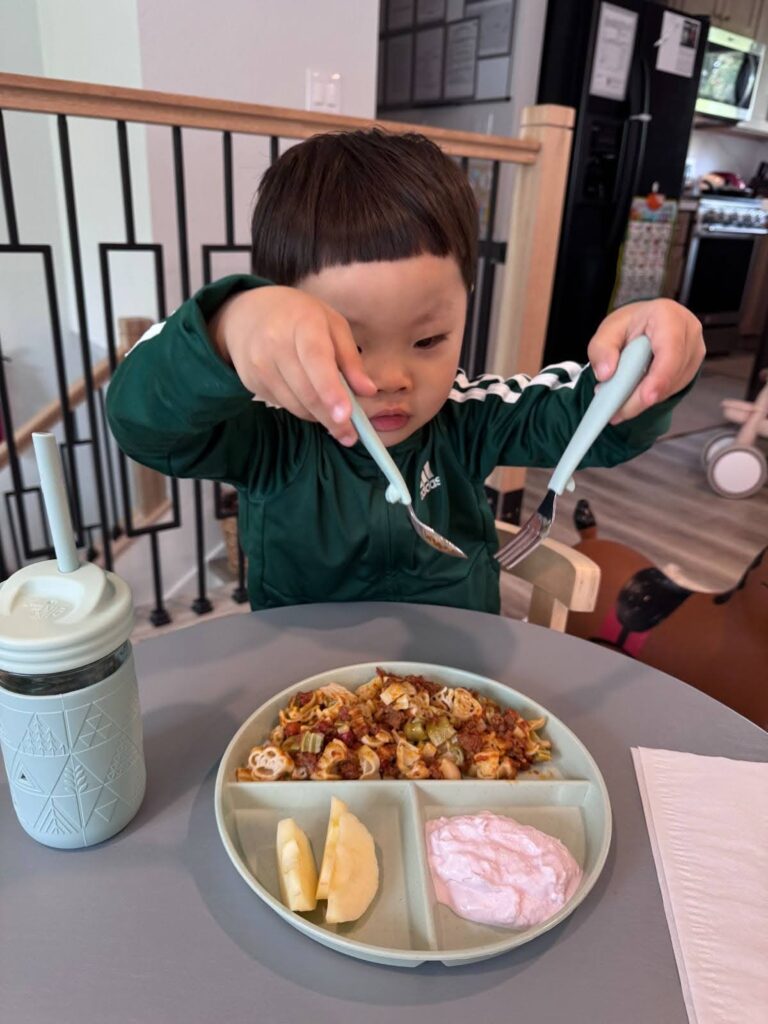
Child with sensory needs enjoying mealtime at Kido Heaven Child Care in Bothell, WA.

Montessori Mealtime Principles

Our Montessori-inspired approach emphasizes:

  • Freedom within Limits: Children choose what to eat from healthy options, fostering independence while maintaining balance.
  • Order and Routine: A predictable rhythm creates emotional security.
  • Respect: Children are given responsibilities like wiping tables, building confidence and community.

These principles nurture traits like concentration and self-discipline, preparing children for success in school and beyond.
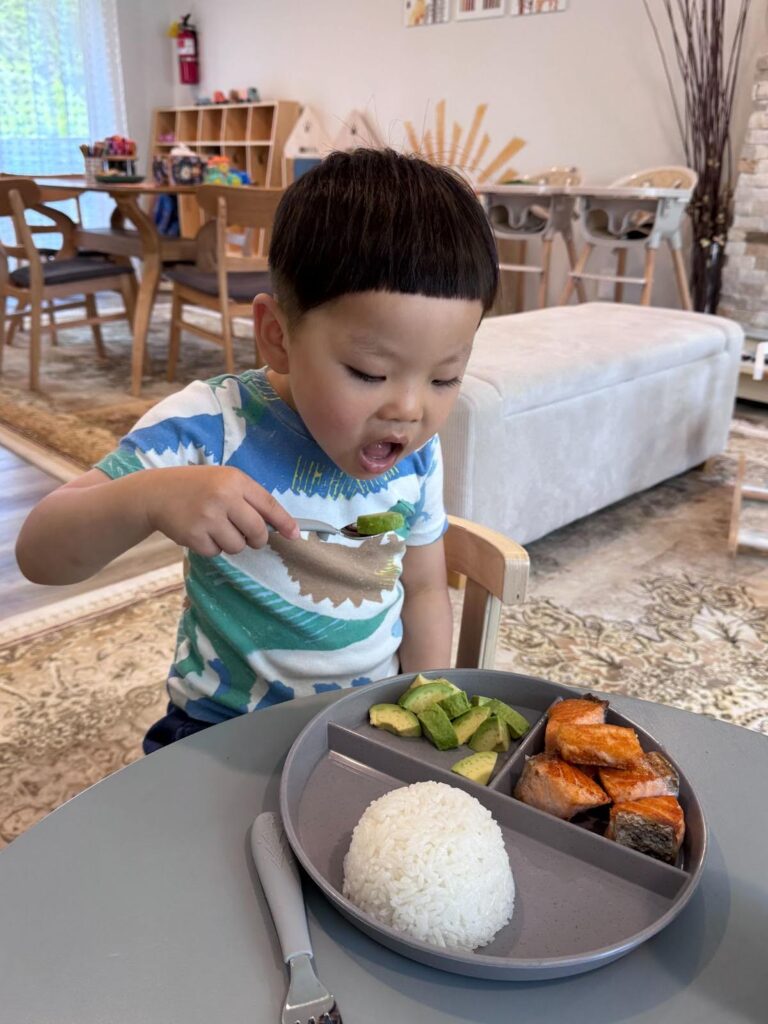
Healthy meal with salmon, rice, and avocado for preschoolers at Kido Heaven Child Care in Bothell, WA.

🧁 Sample Meals at Kido Heaven

We serve a variety of culturally inclusive and nutrient-rich meals:

  • 🍣 Salmon, rice, and avocado
  • 🧇 Whole grain waffles with berries and bananas
  • 🍝 Pasta with lean beef and vegetables
  • 🍚 Oatmeal with berries and milk
  • 🍎 Fresh fruit, yogurt, and whole grain toast

Children are encouraged to try everything but are never forced to eat. We build positive associations with food, reduce picky eating, and encourage exploration.
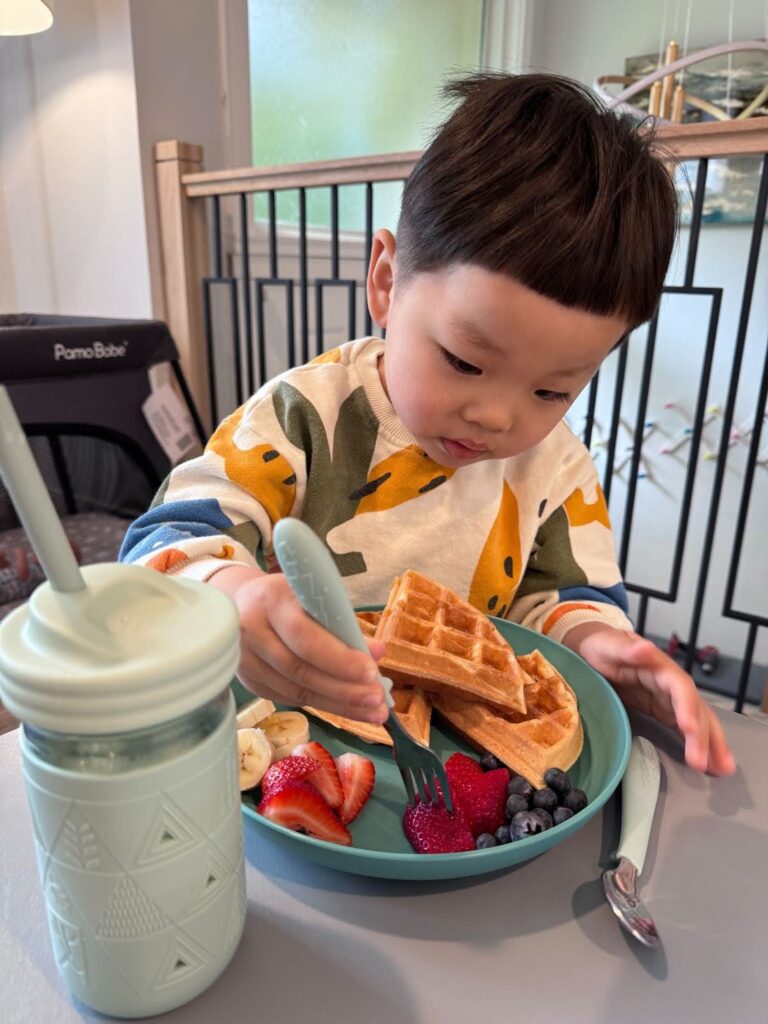
Colorful infographic of weekly nutritious meals for kids at Kido Heaven Child Care, Bothell, WA.

Supporting Children with Diverse Needs

For children with sensory sensitivities or special dietary needs, we adapt strategies to ensure comfort. For example, we introduce new textures gradually and collaborate with families to honor preferences, making mealtimes inclusive and stress-free.

👪 What Parents Love

Parents often share how their children become more confident with utensils or try new foods at home after practicing at Kido Heaven. Daily Brightwheel photos keep families connected to their child’s progress, from mastering a fork to enjoying a new flavor. We welcome family recipes, cultural dishes, and open communication about allergies or dietary needs, creating a bridge between home and school.
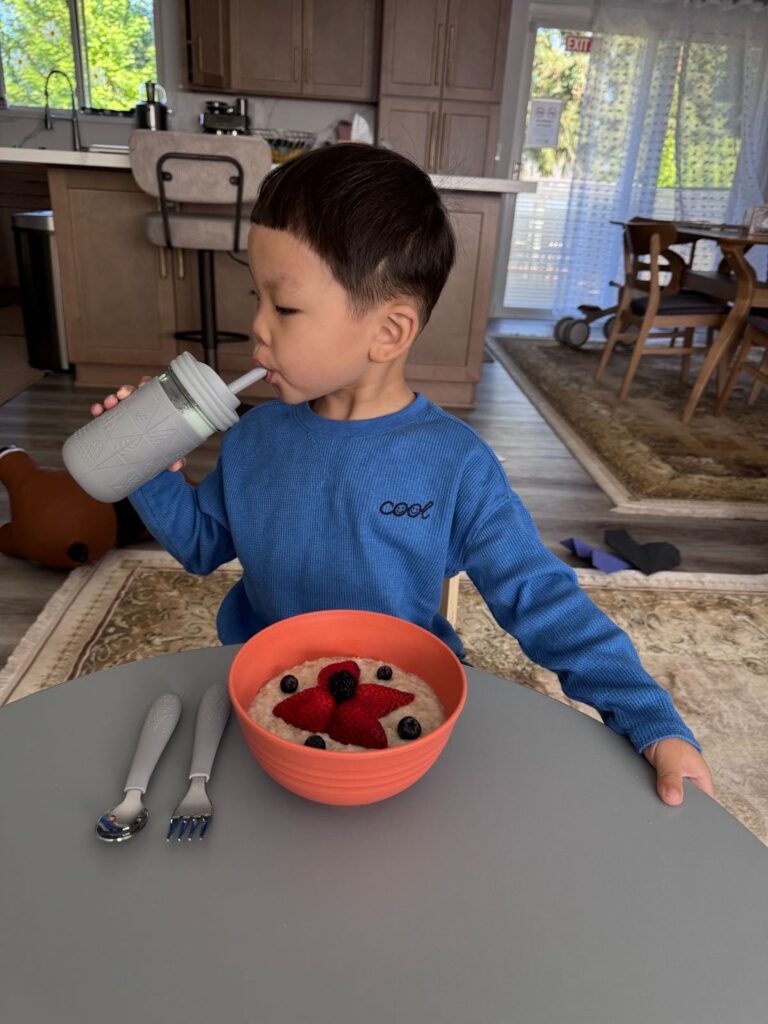
mealtime independence for preschool parents by Kido Heaven Child Care, Bothell, WA.

Tips for Fostering Independence at Home

Bring Kido Heaven’s mealtime magic to your kitchen with these simple ideas:

  1. Let your child choose their plate or cup to build ownership.
  2. Offer two healthy food options (e.g., carrots or peas) to encourage decision-making.
  3. Involve them in setting the table or pouring water to practice fine motor skills.

📍 Why Choose Kido Heaven Child Care?

At Kido Heaven, we nurture the whole child—emotionally, physically, and academically. Our mealtime practices reflect our commitment to quality, intention, and growth, making us a trusted choice for Bothell families.

  • ✅ Aligned with Early Achievers
  • ✅ Licensed in WA State
  • ✅ Montessori-Inspired Curriculum
  • ✅ Daily Reports via Brightwheel
  • ✅ Healthy, Fresh, Kid-Friendly Meals
  • ✅ Subsidy Accepted

📞 Call 206-734-2040 to schedule a tour
🌐 Enroll now


Follow Us for More

Stay connected with our nutritious routines and family learning ideas:

🍽️ In Summary

At Kido Heaven Child Care, mealtime is a daily opportunity to build independence, explore nutrition, and nurture meaningful habits. These experiences support not only strong child outcomes, but also your Early Achievers rating—proving that even the smallest routines can lead to the biggest growth.

FAQ

1. How does Kido Heaven encourage independence during mealtimes?

Children serve themselves, use child-safe utensils, and participate in tasks like setting the table, fostering self-reliance and confidence.

2. What types of meals are served at Kido Heaven?

We offer balanced, culturally diverse meals like salmon with rice, whole grain waffles, and fresh fruit, following USDA MyPlate guidelines.

3. How are dietary needs or allergies handled?

We collaborate with families to accommodate allergies, cultural preferences, and sensory needs, ensuring every child feels included.

4. How do mealtimes align with Early Achievers standards?

Our routines support learning environments, child outcomes, family engagement, and professional development, as outlined by Early Achievers.

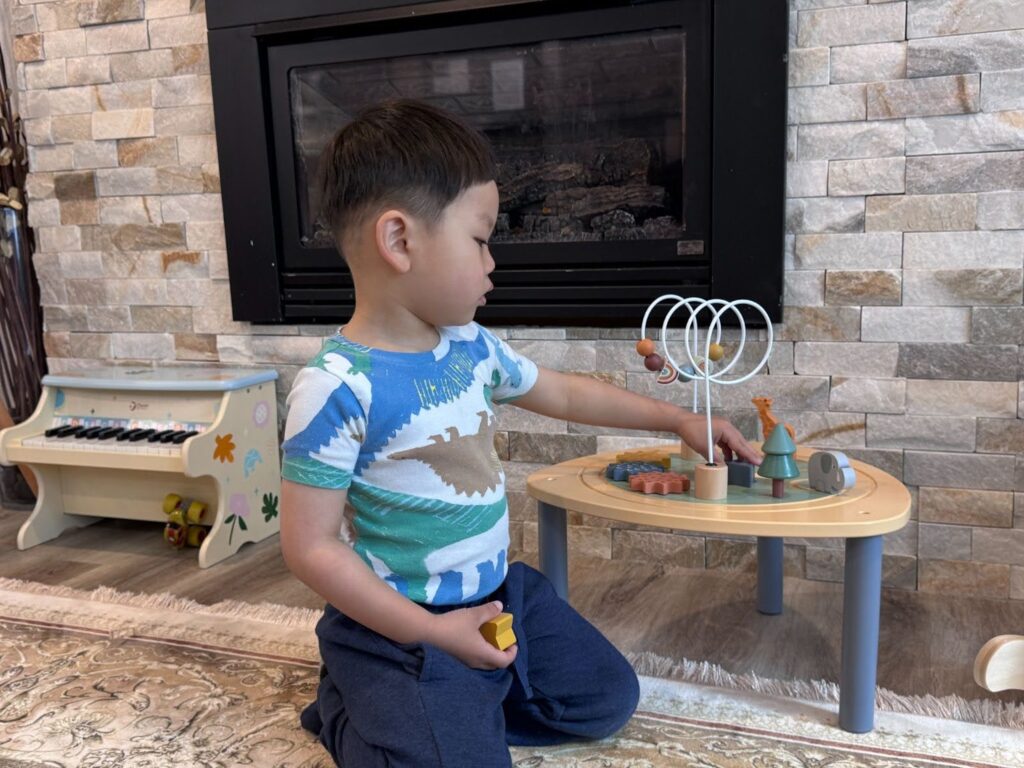
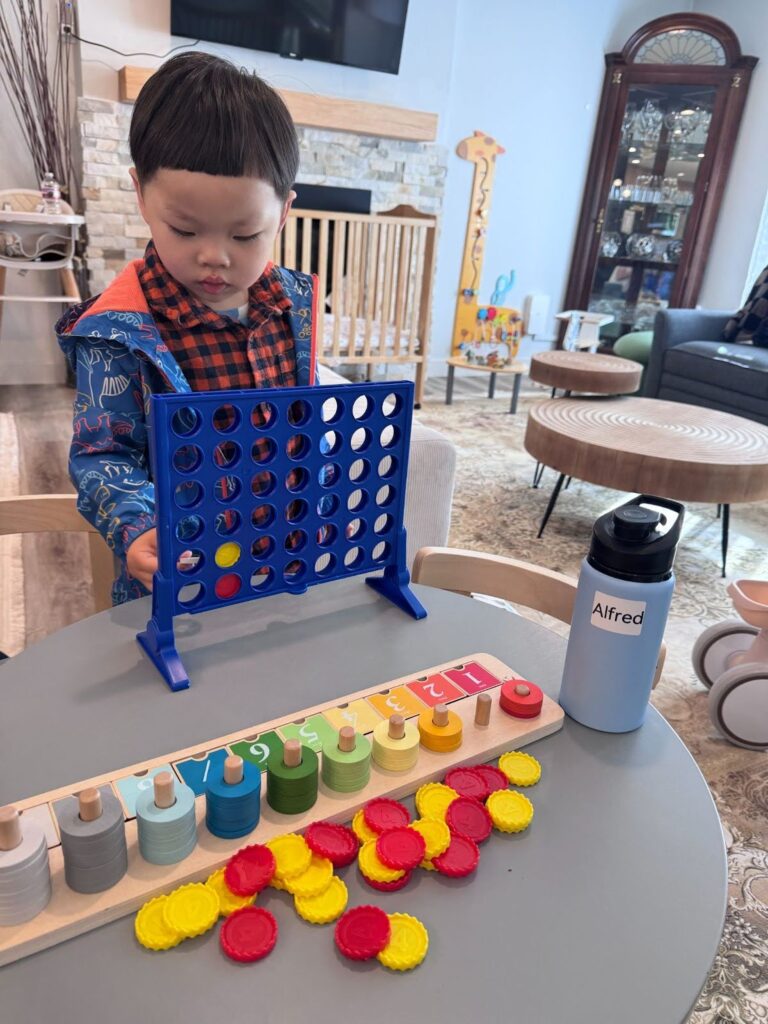
Building Brains Through Play: STEM Learning at Kido Heaven Child Care

Young child engaged in indoor Montessori-style play with educational toys in a home daycare setting.

At Kido Heaven Child Care in Bothell, WA, we believe play is the heart of learning. From stacking magnetic shapes to solving a Connect Four challenge, our children engage in hands-on activities that spark curiosity and build strong brains. These joyful moments, guided by Washington’s Early Achievers Quality Standards, nurture cognitive, social, and motor skills, preparing kids for kindergarten and beyond. In this blog, we explore how play-based STEM learning (Science, Technology, Engineering, Math) at Kido Heaven fosters school readiness, supports child development, and aligns with best practices in early childhood education.

What Is Play-Based STEM Learning?

Play-based STEM learning uses fun, hands-on activities to introduce young children to science, technology, engineering, and math. Through games, experiments, and creative projects, kids explore concepts like counting, building, and problem-solving in a natural, engaging way. For preschoolers, whose brains grow rapidly from birth to age 5, play builds neural connections that support lifelong skills like critical thinking and resilience.

At Kido Heaven, we create a nurturing environment where children experiment, question, and discover through play. Our Montessori-inspired approach, combined with STEM-focused activities, helps kids develop a love for learning while meeting Early Achievers standards.

Preschooler sorting shapes in a STEM activity at Kido Heaven Child Care, Bothell, WA.

Why STEM Matters for Young Children

The early years are critical for brain development, with over 1 million neural connections forming per second before age 5. Introducing STEM through play helps children:

  • Think Critically: Asking “why” and testing ideas builds problem-solving skills.
  • Stay Resilient: Trying and failing in a safe setting teaches persistence.
  • Get Creative: Inventing new ways to build or explore sparks imagination.
  • Prepare for School: Early STEM fosters skills for math, science, and collaboration.

Research from Harvard’s Center on the Developing Child shows that playful interactions with caring adults strengthen brain architecture, supporting cognitive and emotional growth. At Kido Heaven, our trained educators use guided play to maximize these benefits, ensuring every child thrives.

How Kido Heaven Brings STEM to Life

At Kido Heaven, we weave STEM into daily play, making learning fun and meaningful. Our educators use open-ended materials and thoughtful questions to spark curiosity. Here’s how we do it:

  1. Science Adventures:
    • Activities: Mixing baking soda and vinegar, observing bugs on nature walks, or exploring magnets.
    • Benefits: Teaches cause-and-effect and scientific inquiry.
  2. Technology Fun:
    • Activities: Creating digital art with apps or guiding programmable toys like Bee-Bots.
    • Benefits: Introduces coding basics and digital skills.
  3. Engineering Play:
    • Activities: Building towers with blocks, designing bridges with craft sticks, or creating a fort.
    • Benefits: Develops spatial reasoning and engineering concepts.
  4. Math Exploration:
    • Activities: Sorting shapes, counting coins in a Connect Four game, or measuring ingredients for a snack.
    • Benefits: Builds number sense and math vocabulary.

Our educators ask questions like, “What happens if we add one more block?” or “How many coins are left?” to encourage critical thinking. Using Brightwheel, we share photos and updates of these activities with parents, keeping families connected to their child’s growth.

Benefits of STEM at Kido Heaven

Our play-based STEM activities offer a range of developmental benefits:

  • Cognitive Skills: Sorting, counting, and experimenting improve memory and logic.
  • Social-Emotional Growth: Group projects teach teamwork, patience, and empathy.
  • Fine Motor Skills: Stacking rings or placing coins in a grid strengthens hand-eye coordination for writing and self-care.
  • Confidence: Mastering challenges like building a stable tower boosts self-esteem.
  • School Readiness: STEM play prepares kids for kindergarten math, science, and collaboration.

These activities align with Early Achievers standards, ensuring high-quality learning that supports every child’s potential.

Preschoolers building towers during STEM play at Kido Heaven Child Care in Bothell, WA.

STEM Activities at Kido Heaven

Here are some favorite STEM activities at Kido Heaven, designed for ages 1–5:

  1. Sink or Float: Kids predict if objects (e.g., a feather, a rock) will sink or float, then test in water. This teaches scientific thinking.
  2. Block City: Teams build a city with blocks, adding roads and bridges, fostering engineering skills.
  3. Nature Collage: Collecting leaves and sorting them by size or color introduces biology and classification.
  4. Counting Songs: Singing “Five Little Monkeys” reinforces numbers through rhythm.
  5. Coding Play: Guiding a toy robot with arrows teaches basic programming logic.

These activities are accessible, child-led, and rotated regularly to keep kids engaged, meeting Early Achievers learning environment standards.

Meeting Early Achievers Quality Standards

Washington’s Early Achievers program ensures high-quality early learning. Kido Heaven’s STEM activities align with all five standard areas:

  1. Learning Environment:
    • Clean, organized materials like blocks and sorting trays are placed at child height.
    • Activities rotate to sustain engagement, encouraging exploration.
  2. Child Outcomes:
    • Kids show growth in counting, classifying, and reasoning, documented via Brightwheel.
    • Children gain independence and confidence in challenges.
  3. Interactions and Curriculum:
    • Teachers model words like “pattern” or “more than” and ask open-ended questions: “What happens if we turn it?”
    • Our Montessori-inspired curriculum blends project-based learning for ages 1–5.
  4. Family Engagement:
    • Parents receive Brightwheel updates with photos of STEM play.
    • We share home-based STEM tips (e.g., sorting socks, counting steps).
    • Parent-teacher meetings set cognitive goals.
  5. Professional Development:
    • Staff attend STEM and math language workshops, aligning with DCYF standards.
    • We align our planning and documentation practices with the DCYF Early Achievers Framework.

Montessori Principles in Our STEM Approach

Our Montessori-inspired classroom naturally supports STEM learning:

  • Self-Correcting Materials: Kids see and fix errors, like misaligned blocks, fostering independence.
  • Concentration: Repeating tasks (e.g., sorting coins) builds focus and mastery.
  • Guided Discovery: Teachers act as guides, letting kids explore patterns and logic at their own pace.

This approach ensures children develop critical thinking and confidence through play, aligning with Early Achievers and STEM goals.

🔗 Learn more: Blocks Rock – A Montessori-Friendly STEM Game

Encouraging STEM Learning at Home

Parents can reinforce STEM skills with simple, fun activities:

  • Count Everyday Items: Count steps upstairs or spoons in the kitchen.
  • Sort and Match: Sort socks by color or coins by size.
  • Experiment: Mix water and oil or test magnets with household items.
  • Build: Create forts with boxes or stack cups for engineering play.
  • Explore Apps: Use ScratchJr for coding or watch science videos together.

Try resources like Vroom.org for free brain-building activities that turn daily moments into learning opportunities.

The Science of Play and Brain Development

Play isn’t just fun—it’s essential for brain growth. Harvard research shows that playful interactions build sturdy neural connections, supporting problem-solving, communication, and emotional regulation. For example, stacking blocks teaches spatial skills, while counting songs build number sense. At Kido Heaven, we design STEM activities to leverage this science, preparing kids for a tech-driven future.

Why Choose Kido Heaven Child Care?

Located in Bothell, WA, Kido Heaven is more than a safe space—it’s a launchpad for learning. Our play-based STEM approach, guided by Early Achievers and Montessori principles, ensures every child thrives. Why parents love us:

  • Quality Care: Licensed, accepts WCCC subsidy, and meets Early Achievers standards.
  • Small Groups: Personalized attention for ages 1–5.
  • Daily Updates: Brightwheel photos and notes keep parents connected.
  • Holistic Learning: STEM, music, art, literacy, and outdoor play.
  • Trained Staff: Certified in early education and STEM integration.

Ready to see the magic of play-based STEM? Call 206-734-2040 to schedule a tour or visit our enrollment page to join our Kido Heaven family

📞 Call 206-734-2040 to schedule a tour
🌐 Enroll Now

📲 Connect With Us

Follow our learning journey and family updates across these trusted platforms:


Conclusion: Play, Learn, Grow at Kido Heaven

At Kido Heaven Child Care, play is powerful. Through STEM activities like building, sorting, and experimenting, we nurture curious, capable learners ready for kindergarten and beyond. Our Early Achievers-aligned approach, combined with Montessori-inspired methods, ensures every child grows in a joyful, supportive environment.

Join us in Bothell, WA, to spark your child’s love for learning. Contact us or explore our child care programs today. Let’s build brains through play together!


FAQ

1. What is STEM learning at Kido Heaven Child Care?

Hands-on, play-based activities teaching Science, Technology, Engineering, and Math to kids 1–5, fostering critical thinking in a Montessori setting.

2. How does play support STEM development in young children?

Play-based STEM activities like building or exploring materials boost curiosity, cognitive growth, motor skills, and scientific inquiry.

3. Is STEM learning at Kido Heaven suitable for all children?

Yes, inclusive STEM activities accommodate diverse sensory, motor, and developmental needs for all kids.

4. How does Kido Heaven integrate STEM into its curriculum?

STEM is woven into play and themes like nature, with open-ended questions to spark exploration.

5. What tools or materials are used for STEM play at Kido Heaven?

Safe tools like blocks, measuring cups, and natural objects promote hands-on STEM learning.


Piano Play in Early Childhood: Unlocking Learning Through Music

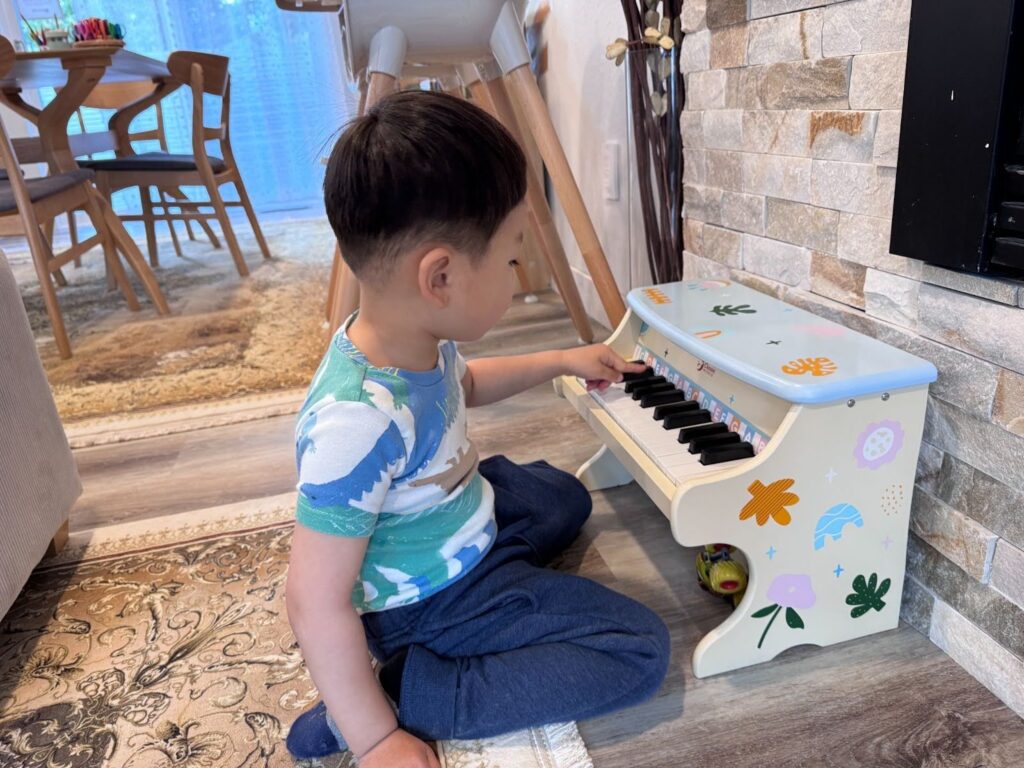
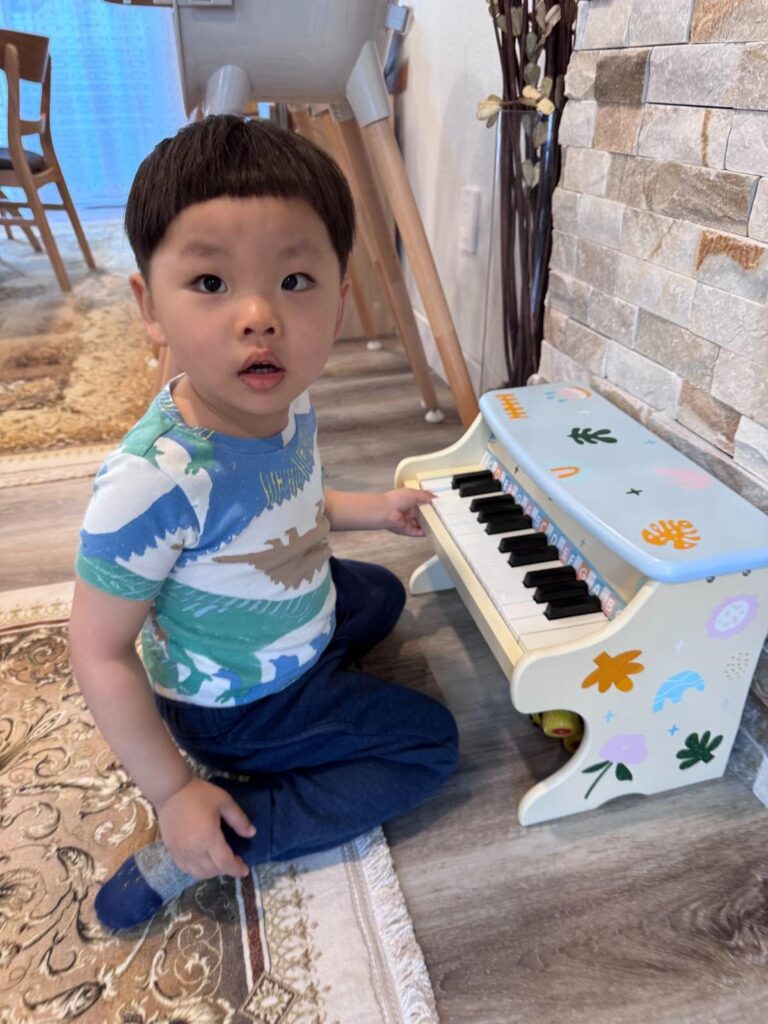
Child seated at a white toy piano with painted flowers, exploring music through hands-on play at Kido Heaven Childcare in Bothell.

At Kido Heaven Child Care in Bothell, WA, we believe that music is more than just a joyful part of the day—it’s a powerful developmental tool. Whether children are exploring rhythm, learning to press keys, or dancing to their favorite tunes, music plays an important role in early brain development.

Imagine your child tapping the keys of a piano, giggling as they create their own little tune. It’s not just play—it’s a powerful way to help them grow smarter, stronger, and happier. Music, especially piano play, is like a superfood for young brains, sparking skills that last a lifetime.
A 2016 study from the University of Southern California found that music in early childhood boosts brain development, especially for language and reading. When kids explore a piano, they’re building skills like talking, thinking, and even making friends—all while having fun. This article dives into why piano play is so special for kids ages 1–5, how it gets them ready for school, and easy ways you can bring music magic home.

Young child playing a toy piano in early childhood music activity

Why Piano Play Is a Game-Changer for Young Kids

Music lights up every part of a child’s brain, from language to emotions to movement. Piano play is extra special because It activates language centers, strengthens memory pathways, and supports physical coordination. But more importantly, it nurtures joy, curiosity, and emotional connection.

Here’s how piano play works its magic:

1. Talking and Reading Made Fun

When kids tap piano keys, they hear different sounds—like high or low notes. This helps them notice the tiny differences in words, which is key for learning to read. For example, 3-year-old Mia started copying simple piano melodies at her daycare and soon got better at saying new words clearly.

Did You Know? A 2018 study in Frontiers in Psychology showed that music training helps kids understand word sounds, making reading easier.

2. Brain Power for Smart Kids

Playing the piano teaches kids that pressing a key makes a sound (like a mini science experiment!). They also practice remembering tunes or playing notes in order, which is great for math and problem-solving. Four-year-old Sam loved repeating a short piano song, and his parents noticed he got better at puzzles, too.

Science Says: The National Association of Music Merchants (NAMM) Foundation found that kids who play instruments often score higher in math and science because they’re pros at spotting patterns.

3. Strong Hands for School

Tapping piano keys strengthens the little muscles in a child’s hands. This helps them hold a pencil, zip their jacket, or eat with a fork. Two-year-old Lily spent weeks banging on a toy piano, and her teacher saw her drawing straighter lines in class.

4. Expressing Feelings Without Words

Kids don’t always know how to say “I’m sad” or “I’m excited.” Playing the piano lets them share their feelings through music. After a tough day, 3-year-old Ethan played soft notes to calm down, showing he was learning to manage his emotions.

5. Making Friends Through Music

When kids play piano together, they learn to take turns and cheer each other on. At a preschool music session, kids clapped as each friend played a tune, creating giggles and teamwork. These moments build friendships that make kids feel safe and happy.

Piano Play and Montessori: A Perfect Match

The Montessori approach is all about letting kids explore and learn on their own, and piano play fits right in. Kids love the piano’s sounds and patterns, and they get to create music in their own way. Here’s why it’s a Montessori favorite:
Freedom to Explore: Kids choose how to play, sparking their imagination.

Learning by Trying: If a note sounds wrong, they figure it out themselves, like a little detective.

Feeling Proud: When 4-year-old child played her own “song” for her friends, she stood taller and smiled bigger.

Child-sized pianos or toy keyboards are perfect for this—they’re safe, simple, and let kids dive into music with no pressure, just joy.

How Piano Play Gets Kids Ready for School

Piano play is like a secret tool for school success. It builds skills kids need in kindergarten and beyond, such as:

  • Focus and Listening: Practicing a tune helps kids stay focused, like when 5-year-old Noah worked hard to play his favorite song perfectly.
  • Memory Skills: Remembering notes helps kids learn letters, numbers, and more.
  • Staying Calm: Waiting for a turn or playing softly teaches kids to handle big feelings.
  • Working Together: Playing with others builds teamwork, like when kids shared the piano and clapped for each other.

These skills line up with early learning goals across the U.S., helping kids start school confident and ready.

Research Insight: A 2020 study in Developmental Science found that music activities improve self-regulation, helping kids stay calm and focused in class.

Kids exploring music with toy piano in Montessori classroom

Bringing Piano Play Home: Easy Ideas for Parents

You don’t need a real piano—or a big budget—to make music part of your child’s day. Here are fun, simple ways to spark learning at home:

  1. Sing and Dance: Play a favorite song and let your child dance or tap on a toy xylophone. Pots and spoons make awesome drums!
  2. Play with Rhythms: Clap a beat (like clap-clap-pause) and have your child copy it. It’s a game that boosts memory.
  3. Make Homemade Instruments: Fill a bottle with rice for a shaker or use a box as a drum. Kids love creating their own “band.”
  4. Use Songs for Routines: Sing “Clean up, clean up…” to make tidying fun or a lullaby to calm bedtime.
  5. Try Free Piano Apps: Apps like Piano Kids (free on iOS and Android) let kids play virtual keys on your phone or tablet.
  6. Share Your Culture: Sing songs from your family’s heritage, like a Spanish lullaby or an Indian folk tune. It helps your child feel proud of their roots.

Real-Life Story: One mom, Sarah, started clapping rhythms with her 3-year-old, Leo, at dinner. A month later, Leo was copying longer patterns and even “teaching” his baby sister!

Extra Tip: Record your child playing or singing and share it with family. It’s a great way to celebrate their creativity.

Music for Every Child: Inclusive and Accessible

Music, especially piano play, is for all kids, including those with special needs or from diverse backgrounds. Here’s how it works:

  • For Kids with Special Needs: Piano play can be adapted for kids with motor or speech challenges. For example, 4-year-old Zara, who has low muscle tone, uses a soft mallet to tap keys, building strength and confidence.
  • Cultural Connection: Include songs from your family’s culture to make music meaningful. A preschool in Seattle used a Korean lullaby shared by a parent, and the whole class loved learning it.
  • Affordable Options: No piano? No problem. Toy keyboards (under $20 at most stores) or free apps bring the same benefits.

Did You Know? A 2019 study in Journal of Music Therapy found that music activities improve social skills in children with autism, helping them connect with peers.

Why Piano Play Stands Out

Unlike general music activities (like singing or dancing), piano play offers unique benefits:

  • Hands-On Learning: Touching keys teaches cause-and-effect in a way singing alone can’t.
  • Precision Skills: Playing notes builds fine motor control, perfect for writing and drawing.
  • Creative Freedom: Kids make their own tunes, boosting imagination and confidence.

Compared to other instruments, pianos are ideal for young kids because they’re easy to use (just press a key!) and don’t require breath control (like a flute) or complex coordination (like a guitar).

Parent Story: When 3-year-old Oliver started playing a toy piano, his dad noticed he got better at stacking blocks, thanks to stronger fingers and focus.

Why Families Choose Kido Heaven

Families choose Kido Heaven Child Care because we integrate creativity, movement, and play into every part of our day. Whether it’s music, literacy, or outdoor exploration, every activity is designed to support:

✔️ WA Early Achievers quality goals
✔️ Montessori-inspired development
✔️ Strong school readiness outcomes
✔️ Cultural and family inclusion

📞 Schedule a tour or call us at 206-734-2040
🌐 Enroll now | 📍 Bothell, WAWe accept Working Connections Child Care subsidy, offer full-time care for ages 1–5, and welcome families from Bothell, Mill Creek, Lynnwood, and nearby areas.

📲 Connect With Us

Follow our musical moments, learning milestones, and joyful discoveries on:

Summary

Music at Kido Heaven isn’t just a break between lessons—it is the lesson. Piano play helps children grow cognitively, emotionally, and socially. And best of all, they love it. When learning feels this joyful, kids naturally thrive—and that’s exactly what Early Achievers and Montessori philosophies are all about.


FAQ

1. When can kids start piano play?

Kids as young as 1 or 2 can explore toy pianos or keyboards. It’s about fun and discovery, not formal lessons.

2. Do I need a real piano at home?

Not at all! Toy pianos, xylophones, or free apps like Piano Kids work just as well. It’s about playing with sounds.

3. How does piano play help with school?

It builds focus, memory, and teamwork—skills that make kindergarten easier. It also strengthens hands for writing.

4. Is piano play good for kids with special needs?

Yes! Music can be adapted for kids with motor, speech, or sensory needs, helping them grow confidence and skills.

5. How can I make music part of our family’s culture?

Sing songs from your heritage or teach them to your child’s daycare. It connects kids to their roots.


Learning Letters Through Play: Magnetic Alphabet Maze at Kido Heaven

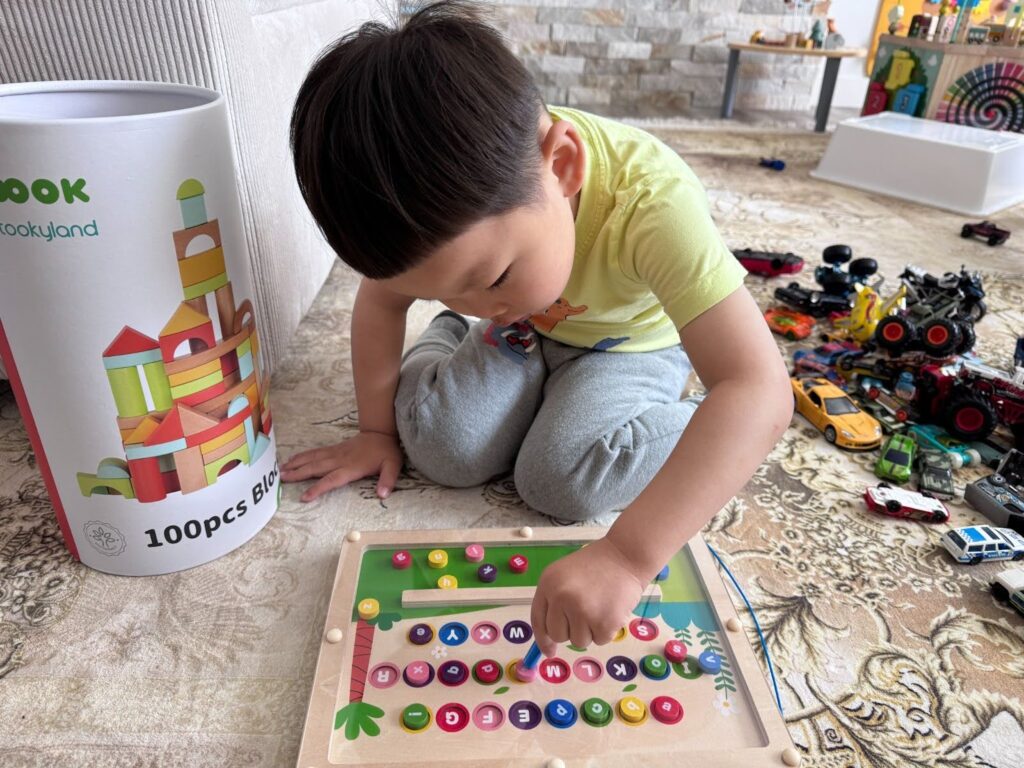
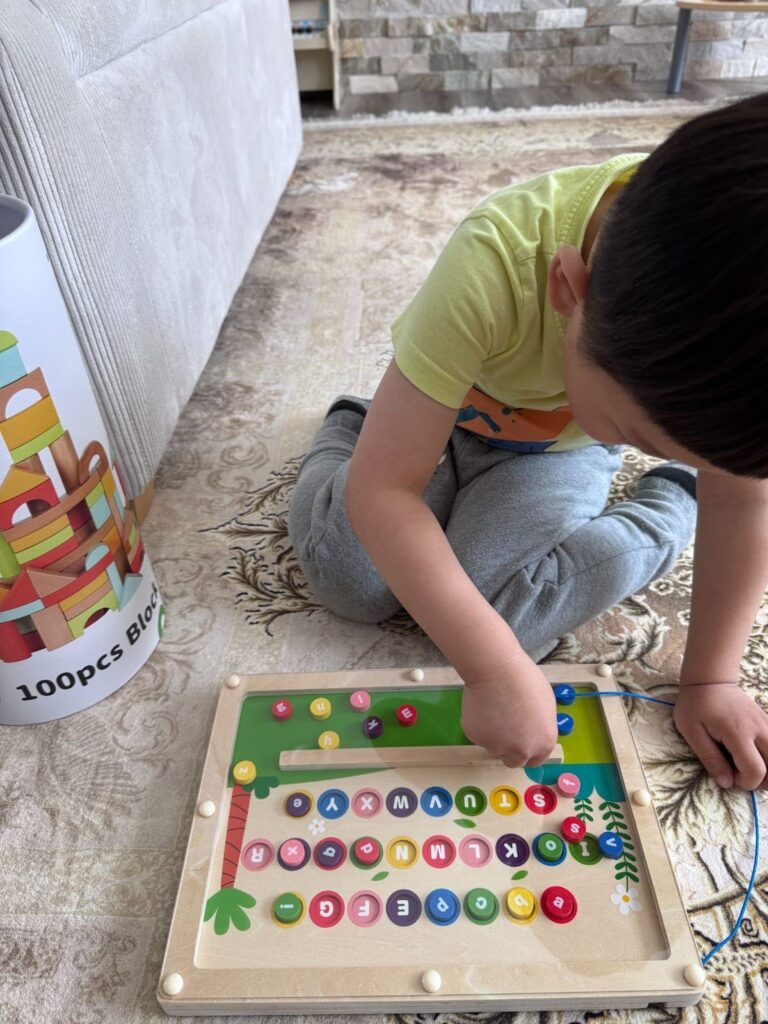
Child playing with a colorful magnetic alphabet maze board on a soft rug at Kido Heaven Childcare, promoting hands-on early learning through sensory play in Bothell, WA.

At Kido Heaven Child Care in Bothell, WA, we go beyond traditional lessons to nurture every child’s growth through hands-on learning. In this blog, we highlight a simple yet powerful learning moment: a child using a magnetic alphabet maze board to explore letters, sounds, colors, and focus.

This type of activity may look like play—and it is—but it also deeply supports all five Early Achievers Quality Standards: Learning Environment, Child Outcomes, Interactions and Curriculum, Family Engagement and Partnerships, and Professional Development and Training. These standards are designed to improve early learning settings and ensure high-quality outcomes for all children, especially in licensed programs like ours.Let’s explore how this alphabet activity strengthens your child’s development and supports our quality rating.

Why the Magnetic Alphabet Maze Matters for Early Literacy

The magnetic alphabet maze is more than a toy—it’s a powerful tool for early literacy. Children use a magnetic wand to guide colorful discs through letter-shaped grooves, building essential skills for reading and writing. This activity, rooted in Montessori principles, fosters independence and engagement. Here’s why it’s a game-changer:

  • Letter Recognition: Children identify, repeat, and associate letters with their sounds, building early phonemic awareness. These are essential steps toward decoding, reading, and writing.
  • Fine Motor Skills: Guiding the wand strengthens hand muscles, crucial for writing and self-care tasks.
  • Cognitive Growth: Children solve problems as they figure out the path of each letter. This builds memory, logic, spatial awareness, and patience.
  • Focus and Resilience: Activities like these allow children to practice sustained attention. They learn to follow a task through, even when it’s challenging—building resilience and internal motivation.

Learn more about early literacy from NAEYC.

Child engaging in early literacy with magnetic alphabet maze at Kido Heaven preschool"

How the Magnetic Alphabet Maze Aligns with Early Achievers Standards

The Washington State Early Achievers program evaluates licensed providers across five key areas. Here’s how we meet each one with this activity and beyond:

1. Learning Environment

  • Our space is designed for exploration, order, and comfort. Materials are child-accessible and rotated regularly.
  • The alphabet maze is made from natural materials, with soft colors and a calming design, minimizing overstimulation.
  • Toys like building blocks and model cars are available nearby to complement the learning, as seen in the photos.

Learn more: DCYF Early Achievers Guide

2. Child Outcomes

  • We focus on whole child development—not just academics.
  • This activity supports language, cognitive growth, motor skills, and social-emotional learning.
  • We document each child’s learning journey using Brightwheel, including photos, videos, and daily notes.

3. Interactions and Curriculum

  • Our curriculum includes Montessori elements, with emphasis on child-led discovery.
  • Teachers ask questions during activities:
    “What letter are you working on?”
    “What sound does it make?”
    “Can you find the first letter of your name?”
  • These conversations help build vocabulary, confidence, and expressive language.

4. Family Engagement and Partnerships

  • We actively involve families by sharing photos like this one, giving updates through Brightwheel, and encouraging home practice.
  • We provide suggestions for home activities (like tracing letters with salt or using playdough to shape names).
  • Parents are welcome to schedule observation visits and join learning celebrations.

5. Professional Development and Training

  • Our team attends trainings on early literacy, Montessori philosophy, and WA State Early Achievers standards.
  • We reflect on what works best for each child and adjust activities accordingly.
  • We use documentation tools not only for communication, but also for ongoing professional reflection and quality improvement.

Montessori-Inspired Learning Through Play

Dr. Maria Montessori believed that young children learn best through hands-on, sensory-based exploration. This alphabet maze is a great example of that philosophy in action.

  • Control of Error: Children see if letters are traced correctly, fostering self-correction.
  • Independence: The child works at their own pace, with confidence.
  • Freedom Within Limits: While there is structure (letter paths), children choose which letters to practice and how long to work.

This approach not only teaches letters but also cultivates emotional regulation and executive functioning—skills vital for lifelong learning. Explore Montessori benefits at American Montessori Society.

Preschooler playing with magnetic alphabet maze to learn letters through play at Kido Heaven Child Care

How Parents Can Support Learning at Home

We love partnering with parents to continue the learning at home.Reinforce the magnetic alphabet maze’s benefits with these simple home activities:

  • Place magnetic letters on the fridge and name them during snack time.
  • Play “I Spy” with letter sounds (e.g., “I spy something starting with B”).
  • Read alphabet books together, pointing out familiar letters.

Just 5–10 minutes daily can boost your child’s school readiness. Visit NAEYC’s Early Literacy Guide.

Beyond Letters: Whole-Child Benefits

This type of focused learning through play supports far more than literacy. It encourages:

  • Emotional regulation – staying calm and focused through challenge
  • Executive functioning – planning, memory, and flexible thinking
  • Creativity – linking letters to names, stories, or pretend play
  • Confidence – completing a task brings a strong sense of pride

You’ll often find children integrating this work into other areas, like building letters with blocks, tracing them with cars, or singing the ABCs during play.

Documenting and Reflecting on Progress

We believe every child’s learning story is unique and worth celebrating. Through regular documentation, we capture:

  • Progress in letter recognition and fine motor skills
  • Evidence of developmental milestones
  • Shifts in attention span, persistence, and curiosity

These moments are shared with parents weekly and used during formal developmental updates, family meetings, or Early Achievers reviews.

Why Choose Kido Heaven for Early Literacy?

At Kido Heaven, we’re committed to high-quality early education:

  • Licensed in WA State
  • Early Achievers participant
  • Montessori-inspired curriculum
  • Brightwheel parent communication
  • Full-time care for ages 1–5
  • Subsidy accepted

📞 Call us at 206-734-2040 or
🌐 Visit kidoheaven.com/enrollment to schedule a tour.

📲 Follow us: Nextdoor | Yelp | Winnie | Instagram | Facebook | YouTube | Upward

🌟 In Summary

The alphabet maze is a small but mighty part of our daily learning. It supports key outcomes across every Early Achievers Quality Standard while keeping the joy of learning alive. Through intentional play, we are helping children develop language, motor skills, problem-solving abilities, and independence—skills they will carry for life.


FAQ

1. What age is the magnetic alphabet maze best for?

It’s ideal for children ages 2–5, as it supports early letter recognition and fine motor development.

2. How does the maze help with reading?

By linking letters to sounds, it builds phonemic awareness, a key predictor of reading success.

3. Can I replicate this activity at home?

Yes! Use magnetic letters or tracing apps.

4. How does Kido Heaven ensure quality education?

We align with Early Achievers standards, use trained educators, and track progress with Brightwheel.


How Painting Sparks Creativity and Emotional Growth in Preschoolers

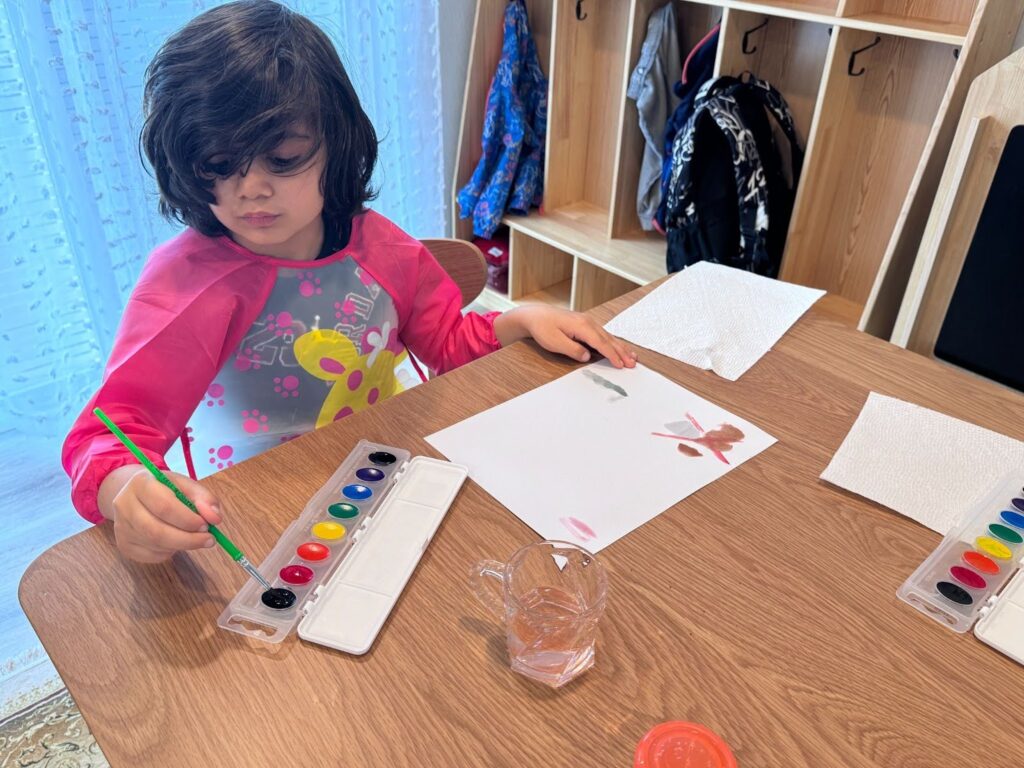
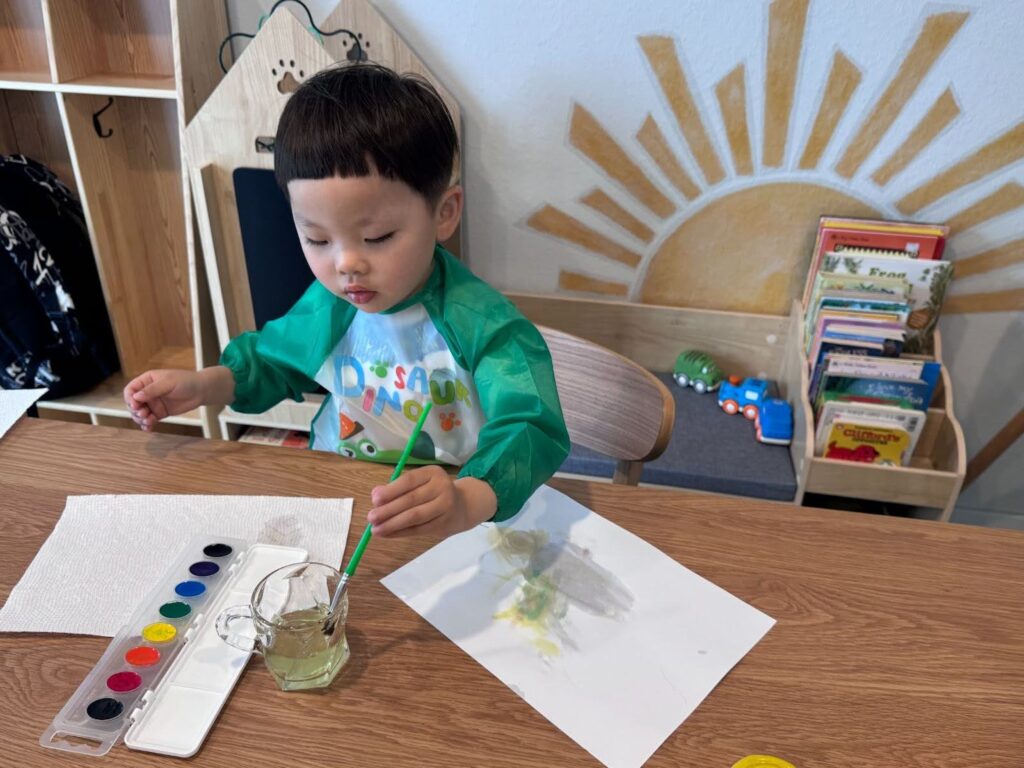
At Kido Heaven Child Care in Bothell, WA, we believe painting is more than a fun activity—it’s a powerful tool for child development. Our Montessori-inspired environment encourages young learners to explore, create, and grow through hands-on art experiences. In our recent watercolor painting sessions, children used brushes, paints, and paper to express themselves, as shown in our gallery of vibrant artwork. These activities build confidence, independence, and a lifelong love of learning.

In this article, we’ll explore how painting supports creativity, emotional growth, and cognitive skills in early childhood, with practical tips for parents and insights from our Bothell daycare.

Why Painting Matters for Preschoolers

Painting is a cornerstone of early childhood education, offering benefits that extend beyond the canvas. Here’s how painting transforms young learners:

1. Fine Motor Skill Development

Dipping brushes, mixing colors, and guiding strokes strengthen small hand muscles. These skills are essential for tasks like writing, buttoning clothes, and self-feeding. For example, our preschoolers in Bothell practice precision while painting, laying the foundation for school readiness.

2. Emotional Expression

Painting is a child’s first language for emotions. Colors and shapes allow kids to express feelings they can’t yet verbalize. A blue swirl might represent sadness, while a bright yellow splash could show joy. This process fosters emotional intelligence, as noted in NAEYC’s research.

3. Focus and Problem-Solving

During painting sessions, children focus deeply on their creations, as seen in our Bothell classroom photos. Choosing colors or correcting a brushstroke teaches patience and problem-solving—skills that support academic success.

4. Color Theory and Science

Mixing colors introduces children to cause and effect. What happens when red meets blue? Our preschoolers experiment freely, discovering new shades and building scientific curiosity.

5. Social and Language Development

Painting sparks conversations. Children describe their artwork, share materials, or ask peers about their creations. Our teachers use open-ended questions like, “What story does your painting tell?” to boost vocabulary and social-emotional learning.

Child painting to develop fine motor skills in Bothell daycare

Benefits of Watercolor Painting for Preschoolers

At Kido Heaven Child Care in Bothell, WA, watercolor painting is a beloved activity that sparks creativity and exploration in preschoolers. This unique medium offers specific benefits that enhance young children’s development:

  • Fostering Creativity Through Color Exploration: Watercolors allow children to experiment with blending colors, creating new shades. In our recent Bothell sessions, children marveled at discovering what happens when red meets blue, igniting their scientific curiosity.
  • Promoting Calmness and Focus: The smooth, fluid nature of watercolors, paired with gentle brush movements, helps children stay present and build concentration.
  • Enhancing Fine Motor Skills: Using fine brushes for watercolor painting strengthens small hand muscles, preparing children for tasks like writing.
    Our gallery of vibrant watercolor artwork, shared on our blog and social media, showcases the joy and creativity this activity brings. Watercolor painting is more than fun—it’s a gateway to emotional and cognitive growth for preschoolers.

Our Montessori-Inspired Painting Environment

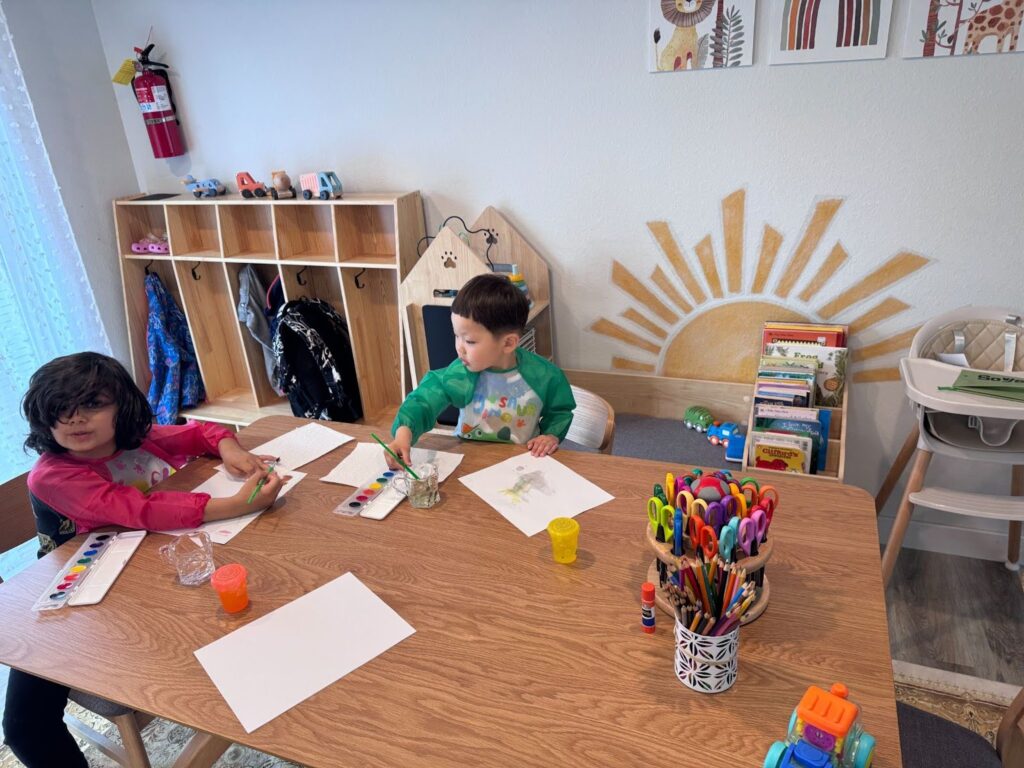
At Kido Heaven, we organize our environment to inspire curiosity and concentration. Each child works at their own pace, with materials arranged in a calm and accessible space. This approach is closely aligned with the Montessori philosophy, which emphasizes child-led exploration and independence.

  • Individual Tools: Each child has paints, brushes, and paper to foster ownership.
  • Protective Smocks: Protective smocks to keep children clean and comfortable
  • Natural Light: A calm, distraction-free space enhances focus.
  • Accessible Materials: Art supplies are within reach for independence.
  • Open-Ended Activities: No templates—kids create freely.

This environment aligns with Washington’s Early Achievers standards, earning high scores in child outcomes, classroom environment, and curriculum.

How Painting Supports Early Achievers and Montessori Goals

Our painting activities meet key assessment criteria for Early Achievers and Montessori:

CategoryHow Painting Contributes
Child OutcomesBuilds emotional literacy, creativity, and fine motor skills.
Classroom EnvironmentOffers engaging, child-centered materials in a calm space.
Family EngagementShares progress via Brightwheel and parent conferences.
CurriculumPromotes individualized learning through open-ended art.

5 Painting Activities for Home

Want to spark creativity at home? Try these simple activities, inspired by our Montessori programs:

  1. Watercolor Exploration: Provide watercolors and paper. Let kids mix colors freely.
  2. Nature Painting: Use leaves or sticks as brushes for textured art.
  3. Emotion Painting: Ask, “What color is your mood?” and let them paint it.
  4. Collaborative Canvas: Paint on a large sheet with siblings or friends to encourage teamwork.
  5. Story Painting: Have kids paint a scene from a favorite story.

Tip: Use non-toxic, washable paints for safety, available at local Bothell stores.

Parent reviewing preschool art in Bothell daycare

Documenting and Sharing Learning

We keep Bothell parents connected through:

  • Child Portfolios: Artwork and developmental notes.
  • Brightwheel Updates: Real-time photos and progress reports.
  • Family Conferences: Discussing growth with parents.

Externally, we share updates on:

Safety and Cleanliness

Safety is a priority at Kido Heaven:

  • Non-toxic, washable paints.
  • Sanitized brushes and surfaces after each use.
  • Lessons on cleaning up, fostering responsibility.

These practices align with Early Achievers’ health and safety standards, ensuring a trusted environment for Bothell families.

Montessori preschool classroom in Bothell, WA

Why Painting Outshines Other Art Activities

While crafts like clay modeling or collage are valuable, painting offers unique benefits:

ActivityFine Motor SkillsEmotional ExpressionCognitive Growth
PaintingHigh (brush control)High (color choices)High (problem-solving)
Clay ModelingModerateModerateModerate
CollageLowHighModerate

Painting’s versatility makes it a staple in our Bothell preschool curriculum.

Painting Classes for Bothell Preschoolers

Located at 17510 Brook Blvd. Bothell, WA, 98012, Kido Heaven is proud to serve Bothell families. Our painting classes are part of our comprehensive child care programs, designed for kids aged 2-5. Call us at (tel:206-734-2040) or visit our Contact us to learn more.

A Word from Our Team

As caregivers and educators, we love seeing the joy on children’s faces as they paint. But what’s even more special is watching their growth—emotionally, cognitively, and socially. Every brushstroke is a building block of confidence and creativity.

Conclusion

Painting at Kido Heaven is much more than a colorful activity—it’s a developmental milestone, a social experience, and a doorway to self-expression. We proudly integrate open-ended art into our daily curriculum, supporting the whole child in a way that meets the high standards of both Montessori education and Washington’s Early Achievers system.

FAQ

1. How does painting help preschoolers’ development?

Painting boosts fine motor skills, emotional expression, and cognitive growth. By using brushes and mixing colors, children strengthen hand muscles, express feelings through art, and develop problem-solving skills. At Kido Heaven, our Montessori-inspired painting activities foster creativity and confidence.

2. What are the benefits of watercolor painting for kids in Bothell?

Watercolor painting enhances hand-eye coordination, teaches color theory, and encourages emotional literacy. Our Bothell preschoolers explore watercolors in a safe, nurturing environment, building skills for school readiness.

3. Can painting at home help my child’s emotional growth?

Yes! Painting allows kids to express emotions through colors and shapes. Try simple activities like watercolor mixing or emotion-based painting.

4. Why is art important in early childhood education?

Art, like painting, supports cognitive, social, and emotional development. According to NAEYC, it fosters critical thinking and self-expression. At Kido Heaven, art is a core part of our Montessori curriculum in Bothell.

Is Painting a Fine Motor Skill?

Yes, painting is a fine motor skill! At Kido Heaven Child Care, our preschoolers use brushes, crayons, and watercolors to create artwork, which strengthens the small muscles in their hands. Controlling a brush to make precise lines, mixing colors, and even cleaning tools all improve hand-eye coordination and prepare children for skills like writing. As seen in our Bothell painting sessions, each brushstroke builds confidence and dexterity.


Supporting Independent Learning Through Montessori-Inspired Play

Why Montessori-Inspired Learning Matters for Bothell Preschoolers

At Kido Heaven Child Care in Bothell, WA, we believe early education should spark curiosity, nurture independence, and unlock each child’s unique potential. Our Montessori-inspired program, grounded in Dr. Maria Montessori’s philosophy, empowers children ages 0-5 to learn through hands-on exploration at their own pace. Aligned with Washington State’s Early Achievers Quality Standards, our approach builds a strong foundation for lifelong learning by fostering critical thinking, creativity, and self-confidence.

Montessori tools—like alphabet tracing boards, wooden stacking cylinders, magnetic letter games, and open-ended manipulatives—are designed to engage young minds. These materials go beyond play; they stimulate cognitive development, fine motor skills, and problem-solving abilities in a safe, nurturing environment.

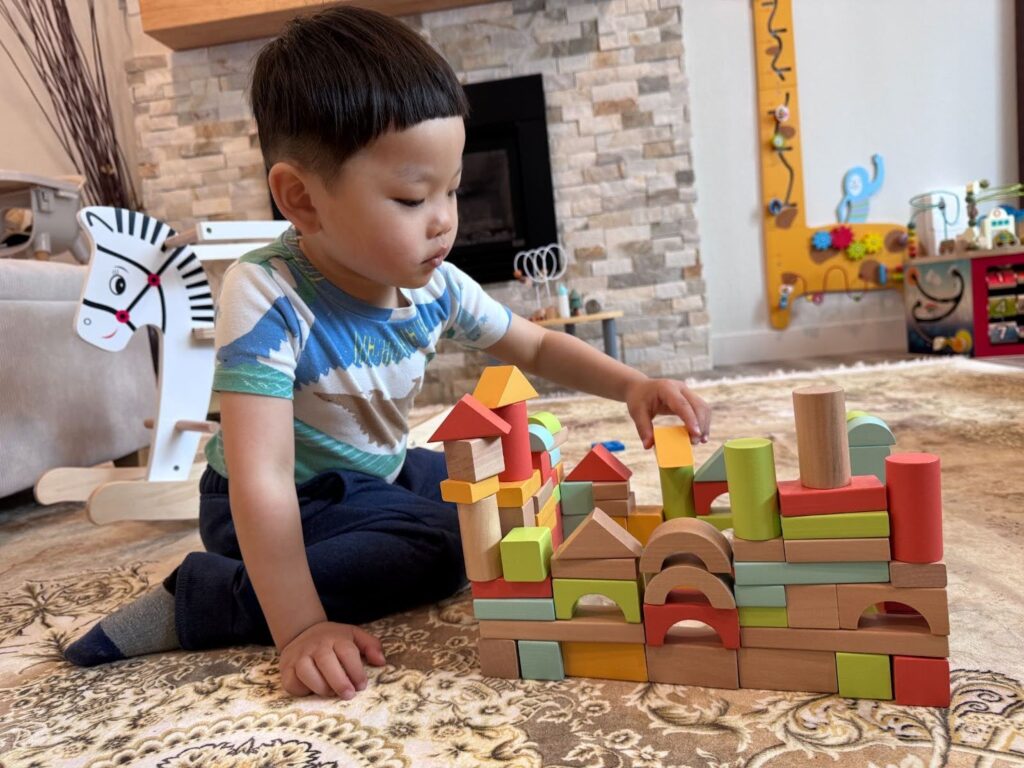
Preschooler using Montessori wooden blocks to explore shapes at Kido Heaven Child Care in Bothell, WA, fostering critical thinking skills.

How Montessori Tools Drive Development:

  • Problem-Solving: Open-ended manipulatives, such as wooden puzzles, encourage children to explore solutions. For instance, a child arranging blocks by size hones logical reasoning through trial and error.
  • Language Skills: Color-coded letter boards strengthen phonemic awareness. Tracing letters and matching sounds helps children build early reading and writing skills.
  • Mathematical Thinking: Stacking shapes and sorting beads introduce geometry and counting. A preschooler sorting cylinders by height intuitively grasps number sequences.
  • Fine Motor Coordination: Threading beads or grasping small objects refines hand-eye coordination, preparing children for tasks like writing.

Each tool is chosen to align with developmental milestones, allowing children to progress from simple to complex tasks. Our educators observe and guide, empowering children to take charge of their learning.

Building Confidence and Independence in Bothell’s Young Learners

At Kido Heaven, we prioritize choice within structure, setting us apart from traditional daycare settings. Children select their activities, manage their time, and care for their space, developing early executive functioning skills. This autonomy helps them make decisions, take initiative, and build self-confidence.

Our educators serve as facilitators, tailoring support to each child’s needs. For example:

  • A toddler might focus on stacking cylinders, mastering hand-eye coordination through repeated practice.
  • A preschooler might use a magnetic letter board to form simple words, glowing with pride as they share their achievement.

Benefits of Choice and Movement:

  • Cognitive Growth: Choosing activities fosters curiosity and problem-solving. A child deciding to build a tower or sort shapes engages in active decision-making.
  • Social-Emotional Skills: Moving freely in the classroom builds self-awareness and respect. Children learn to share materials and collaborate naturally.
  • Physical Development: Hands-on tasks, like pouring water or scrubbing tables, strengthen motor skills and coordination.

This approach creates a joyful, play-based environment where learning feels natural.

 Child tracing letters on a Montessori alphabet board at Kido Heaven Child Care in Bothell, WA, building phonemic awareness and fine motor skills.

Commitment to Early Achievers Standards in Bothell

Kido Heaven proudly participates in Washington State’s Early Achievers program, a quality rating system that ensures excellence in early education. Our Montessori-inspired approach aligns seamlessly with the program’s standards, delivering measurable outcomes for Bothell families.

How We Meet Early Achievers Standards:

  • Learning Environment:
    • Culturally responsive materials reflect diverse backgrounds, promoting inclusivity.
    • Developmentally appropriate tools, like sensory bins and stacking blocks, match each child’s age and abilities.
    • Classrooms are designed for independence, with low shelves and accessible materials.
  • Child Outcomes:
    • Milestones are tracked through regular assessments, such as a child’s ability to recognize letters or sort objects.
    • Personalized learning plans ensure progress at each child’s pace, with updates shared monthly via Brightwheel.
  • Interactions & Curriculum:
    • Our curriculum blends Washington State Early Learning Guidelines with Montessori principles.
    • Educators use positive reinforcement, like praising a child for completing a puzzle, to encourage exploration.
  • Family Engagement:
    • Daily updates via Brightwheel keep parents informed about activities and milestones.
    • In-person conferences and family events strengthen the home-school partnership.

This alignment ensures children thrive academically, socially, and emotionally.

The Role of Nutrition and Daily Routin

At Kido Heaven, our holistic approach extends beyond academics. We provide healthy, balanced meals and snacks, aligned with CACFP (Child and Adult Care Food Program) guidelines. Our daily routine includes time for rest, movement, and unstructured play—all essential components of a child’s development.
Whether a child is enjoying breakfast waffles with fresh fruit or engaged in a sensory activity with water play, each moment is intentional and rooted in care. We strive to create an atmosphere that feels like home while offering the structure and reliability of a professionally guided early learning program.

Toddler stacking Montessori cylinders in a nurturing classroom at Kido Heaven Child Care in Bothell, WA, enhancing hand-eye coordination and independence.

Why Choose Montessori in a Licensed Home Daycare?

Home-based programs like Kido Heaven provide the best of both worlds: the warm, close-knit setting of a family environment combined with professional structure and oversight. Our small group size allows us to individualize attention, foster meaningful relationships, and adapt to each child’s pace and learning style.
For families looking for a child care option that balances Montessori philosophy, Early Achievers recognition, and a loving environment, Kido Heaven is a natural choice. Our play-based, child-centered approach ensures that children are not only learning—they are thriving.

What Makes Kido Heaven Special:

  • Montessori-Inspired Play: Hands-on activities build independence and critical thinking, preparing children for kindergarten.
  • Early Achievers Recognition: Our commitment to quality meets Washington State’s rigorous standards.
  • Home-Like Setting: A cozy, family-oriented environment helps children feel secure, paired with professional oversight.
  • Flexible Options: Full-time enrollment for ages 0-5, drop-in care, and support for subsidy families

Enroll Today at Kido Heaven Child Care in Bothell

Ready to give your child a joyful, Montessori-inspired start in Bothell, WA? Kido Heaven Child Care offers a nurturing environment where children thrive academically, socially, and emotionally.
Take the Next Step:
Schedule a Tour: Visit our Bothell classroom to see Montessori in action.

Join Our Waitlist: Secure your child’s spot for full-time or drop-in care.

📞 Call us at 206-734-2040

➡️ Click here to schedule a tour or join our waitlist

Learn More About Early Achievers and Montessori

To understand how our approach aligns with state standards, visit:

At Kido Heaven Child Care, we are proud to offer an environment where learning is joyful, development is celebrated, and every child is treated with respect and love.

FAQ

1. What ages do you serve at Kido Heaven?

We care for children ages 0-5, from infants to preschoolers, with activities tailored to each developmental stage.

2. How does Montessori differ from traditional daycare?

Montessori focuses on self-directed learning and hands-on materials, unlike traditional daycare’s group-based instruction.

3. Is Kido Heaven licensed in Bothell?

Yes, we are a licensed home daycare, meeting Washington State’s safety and quality standards.

4. Do you accept subsidies for Bothell families?

Yes, we welcome subsidy families and assist with the application process.

5. How do you keep parents updated?

We use Brightwheel for daily updates, provide monthly progress reports, and host regular family conferences.