
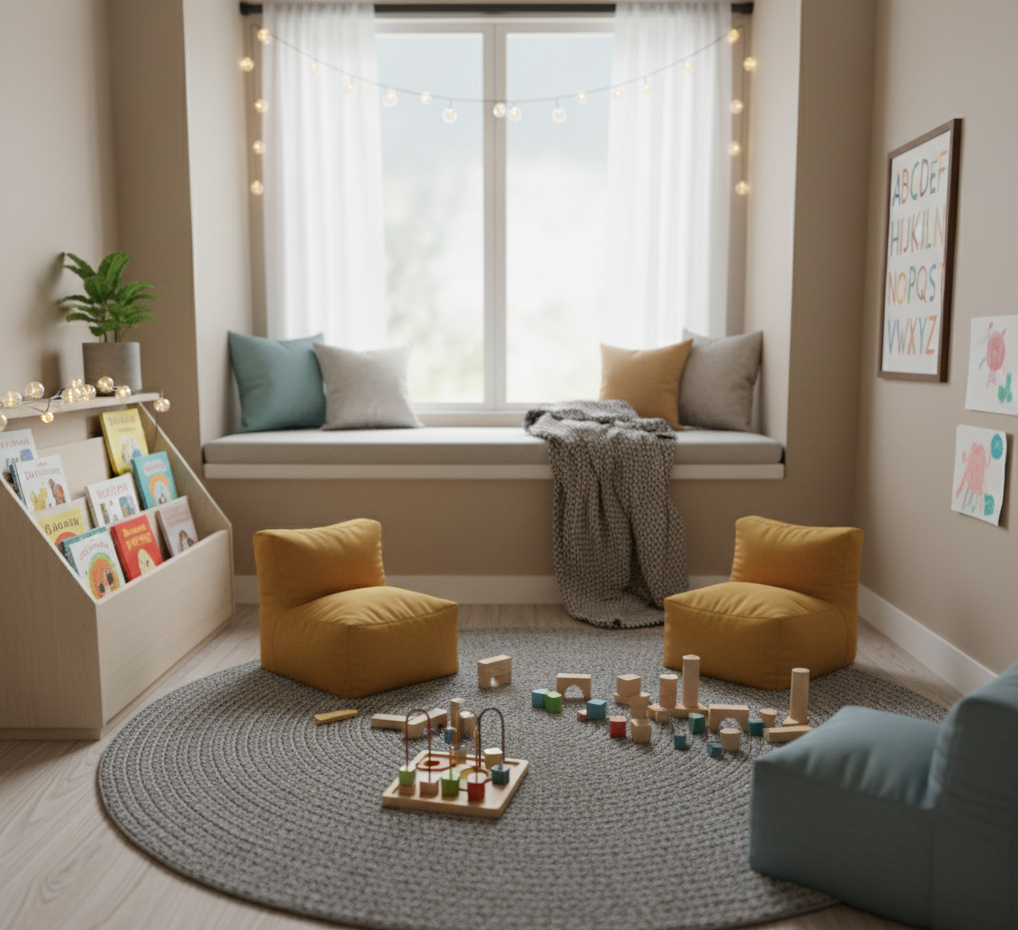


A cozy reading nook in daycare creates a calm, inviting space that supports early literacy, emotional security, and independent learning for children of all ages. By thoughtfully designing this area with age-appropriate books, safe furniture, proper lighting, and WAC-compliant supervision, daycare providers can encourage infants, toddlers, and preschoolers to engage with books in a way that supports healthy development and a lifelong love of reading.
Why a Reading Nook Matters in Early Childhood Settings
Early exposure to books plays a critical role in language development, cognitive growth, and emotional bonding. In daycare environments, a dedicated reading nook creates a predictable and calming space where children can explore stories independently or share reading experiences with caregivers.
Research consistently shows that children who engage with books early develop stronger vocabulary, listening skills, and comprehension. A reading nook also supports self-regulation by offering a quiet retreat in otherwise busy group-care settings—an essential balance for young children.
Understanding Developmental Needs by Age Group
Designing a single reading nook for multiple age groups requires an understanding of how children interact with books at different developmental stages.
Infants (0–12 months)
Infants experience books through sensory exploration. Soft textures, high-contrast images, and close adult interaction are key. Reading nooks for infants should emphasize floor-level access, physical comfort, and constant supervision.
Toddlers (1–3 years)
Toddlers actively engage with books by pointing, naming objects, repeating words, and turning pages. Durable books, low shelving, and clear organization encourage independence while minimizing frustration.
Preschoolers (3–5 years)
Preschoolers use books to develop storytelling skills, imagination, and early literacy concepts such as sequencing and letter recognition. A reading nook for this age group should support longer engagement, peer interaction, and guided reading activities.
Choosing the Right Location in Your Daycare
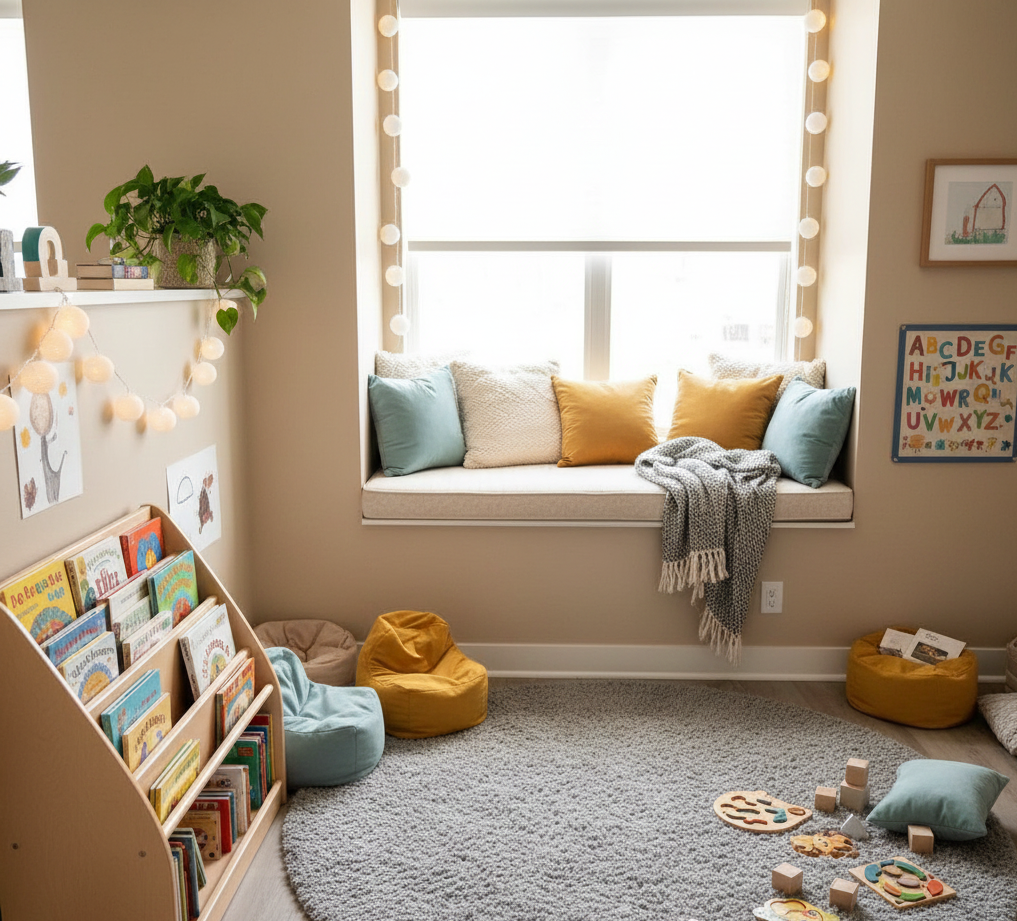
Location plays a major role in the effectiveness of a daycare reading nook. Ideally, the space should be:
- Away from loud or high-traffic play areas
- Fully visible to caregivers for supervision
- Easily accessible to children of all ages
Low shelves, rugs, or soft dividers can define the reading area without blocking sightlines. Maintaining visibility is especially important to meet Washington State supervision expectations.
Safety and WAC Compliance in Reading Nook Design
Washington State childcare regulations emphasize safe, literacy-rich, and developmentally appropriate environments. When designing a reading nook, ensure that:
- Furniture is sturdy, non-toxic, and age-appropriate
- No sharp edges or detachable small parts are present
- Emergency pathways remain clear
- All materials are cleanable and well-maintained
Soft furnishings such as cushions and rugs should meet fire safety requirements and be sanitized regularly. Books for infants and toddlers must be free from choking hazards and loose components.
Furniture and Layout for Comfort and Accessibility
Comfort encourages children to remain engaged with books. Effective furniture choices include:
- Foam mats and floor cushions for infants and toddlers
- Child-sized chairs or low benches for preschoolers
- Forward-facing shelves that display book covers
Arrange seating to support both individual reading and shared experiences. Avoid overcrowding, as overly busy spaces can overwhelm young children.
Lighting, Color, and Sensory Elements
Lighting should be soft yet sufficient for reading. Natural light is ideal when available, while warm, indirect artificial lighting works well in interior areas. Avoid harsh overhead lighting directly above the nook.
Calming, neutral colors help create a relaxing atmosphere. Soft textures such as rugs or fabric panels can enhance comfort while also improving acoustics.
Selecting Age-Appropriate Books
Choosing appropriate books is foundational to early literacy.
Infant Books
- Board books and cloth books
- High-contrast images
- Simple faces and familiar objects
Toddler Books
- Repetitive language and rhythm
- Interactive features such as flaps or textures
- Stories focused on everyday routines
Preschooler Reading Materials
- Storybooks with clear narratives
- Early concept books (letters, numbers, emotions)
- Culturally diverse stories and characters
Organizing and Rotating Books Effectively
A cluttered reading nook can discourage engagement. Use labeled baskets or categorized shelves to organize books by age or theme. Rotating books every three to four weeks keeps the space fresh while preserving familiar favorites that provide comfort and confidence.
Encouraging Independent and Guided Reading
Caregivers play a vital role in modeling positive reading behaviors. Sitting with children, asking open-ended questions, and encouraging children to retell stories all support deeper comprehension.
At the same time, the space should invite independent exploration. When children freely choose books, they build autonomy and early learning confidence.
Inclusion, Cultural Representation, and Accessibility
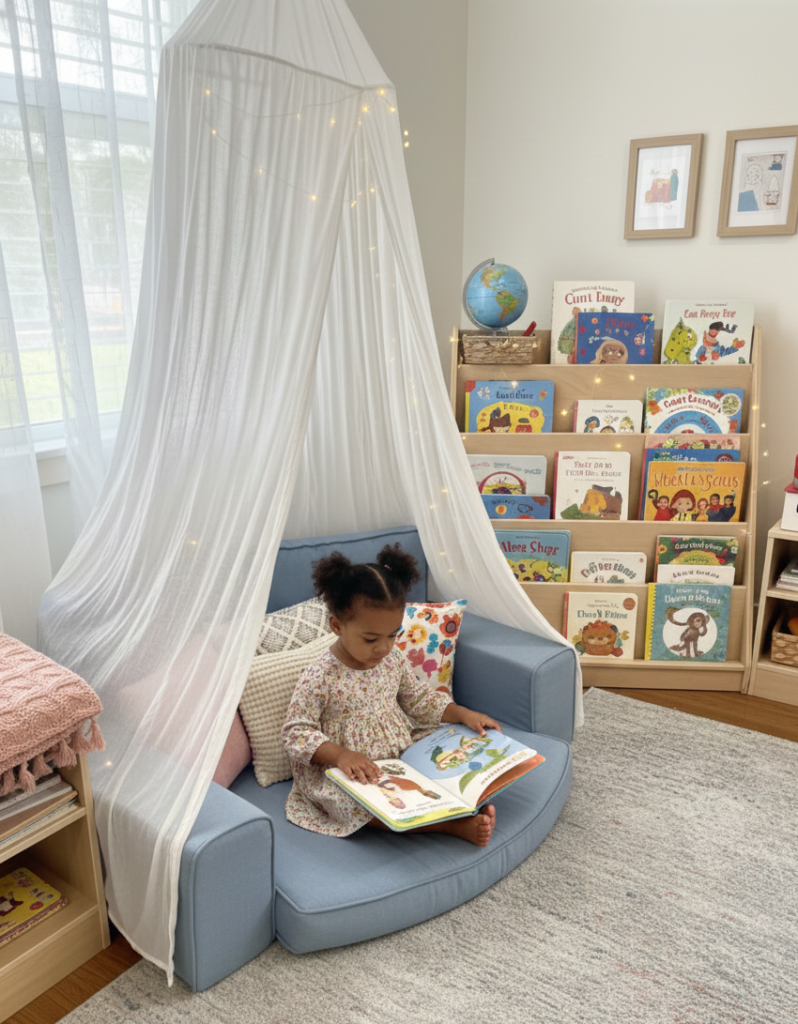
An effective reading nook reflects the diversity of the children it serves. Include books representing various cultures, languages, abilities, and family structures. Inclusive materials support social-emotional development and help children feel seen and valued.
Accessibility is equally important. Children with mobility or sensory needs should be able to comfortably access the space and materials.
Maintaining Cleanliness and Durability in Shared Spaces
Hygiene is essential in daycare environments. Choose books and materials that can be wiped clean, and establish routines for inspecting damaged items. Replace worn books promptly to maintain safety and quality.
Common Mistakes to Avoid When Setting Up a Daycare Reading Nook
- Overdecorating the space
- Using adult-sized furniture
- Blocking supervision sightlines
- Providing too many books at once
A successful reading nook is simple, intentional, and responsive to children’s needs.
About Kido Heaven
At Kido Heaven, we believe early literacy begins with intentional environments designed around children’s developmental needs. Our approach emphasizes safe, nurturing, and educational spaces that support growth from infancy through preschool.
Families looking for high-quality daycare services in Bothell trust our commitment to Washington State standards and evidence-based early learning practices. We focus on creating enriching environments—such as thoughtfully designed reading nooks—that help children build strong foundations for lifelong learning.
Why KidoHeaven Stands Out
✅ Licensed in Washington State
✅ Aligned with Early Achievers standards
✅ Working Connections subsidy accepted
✅ Daily updates via Brightwheel
✅ Located in Bothell, serving Mill Creek, Lynnwood & nearby areas
✅ Nutritious snacks, safe outdoor space, & positive mealtime routines
📞 Call 206-734-2040 to schedule a tour
🌐 Enroll now
Follow Our Mealtime Moments
Stay updated with more beautiful outdoor meals and daily learning routines on:
Instagram | Facebook | Nextdoor | Yelp | Winnie | YouTube | Upwards
FAQ
1. How big should a daycare reading nook be?
A reading nook does not need to be large. Even a small, well-defined corner can be effective if it is comfortable, quiet, and accessible.
2. How often should books be rotated?
Most childcare programs rotate books every 3–4 weeks, while keeping a few familiar favorites available at all times.
Can one reading nook serve multiple age groups?
Yes, with thoughtful layout and book selection, a single reading nook can successfully support infants, toddlers, and preschoolers.
Are reading nooks required by Washington State regulations?
While not explicitly required, literacy-rich environments are strongly encouraged and align with WAC quality and developmental guidelines.


