
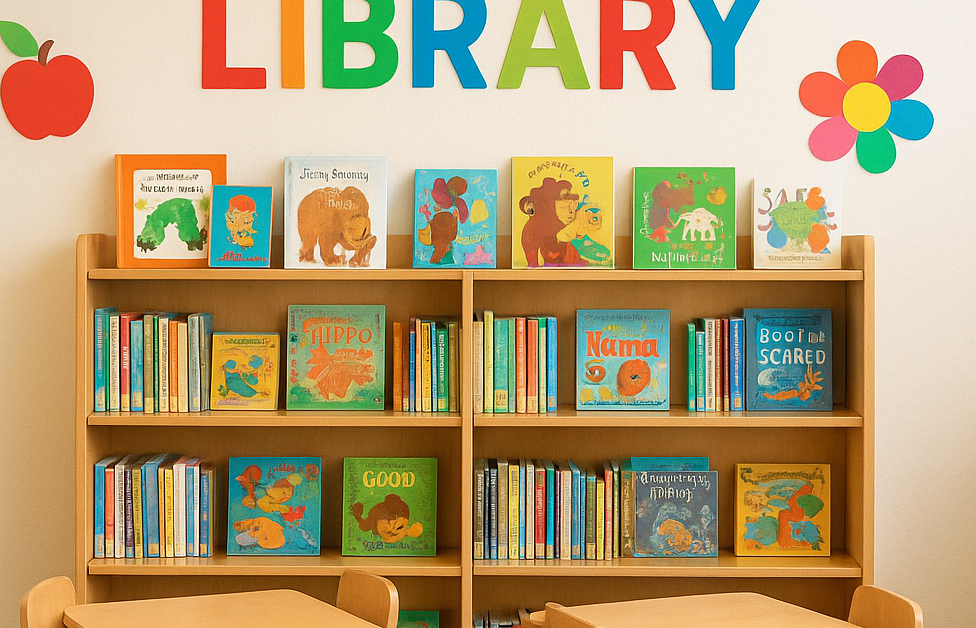


Creating a child library in daycare is one of the most effective ways to nurture early literacy and a lifelong love of reading. This guide walks you step by step through planning, designing, and maintaining a literacy-rich environment—from selecting age-appropriate board books to building cozy reading corners that engage infants, toddlers, and preschoolers. You’ll learn how to align your library with early learning standards, encourage daily reading routines, and measure literacy growth in children. With practical tips on safety, hygiene, and parent involvement, this article helps caregivers and educators transform any childcare setting into an inspiring early literacy hub.
Why Early Literacy Matters in Daycare Settings
Research from the American Academy of Pediatrics (AAP) shows that children exposed to reading before age 2 develop larger vocabularies and stronger language skills by kindergarten. In daycare environments, a dedicated childcare library serves as a foundational tool for early childhood literacy, bridging home and school experiences.
Studies published in Pediatrics (2020) indicate that daily read-aloud sessions in group care settings improve phonological awareness by 25% in preschoolers. For infants, tactile board books stimulate neural pathways associated with object permanence and sensory integration.
A well-designed daycare reading corner transforms passive caregiving into active cognitive development, reducing screen time while fostering emotional regulation through storytelling.
Planning Your Daycare Library: Space and Goals
Assessing Available Space for Infants to Preschoolers
Measure square footage per child per NAEYC guidelines: minimum 35 sq ft per child, with 10–15 sq ft dedicated to the reading area. For mixed-age groups, create zoned sections—soft mats for infants, low shelves for toddlers, and bean bags for preschoolers.
Defining Literacy Goals by Age Group
| Age Group | Primary Goal | Measurable Outcome |
|---|---|---|
| 0–12 months | Sensory exposure | Tracks images, reaches for books |
| 1–3 years | Vocabulary building | Names 10+ objects in books |
| 3–5 years | Narrative comprehension | Retells simple stories |
Align with Head Start Early Learning Outcomes Framework.
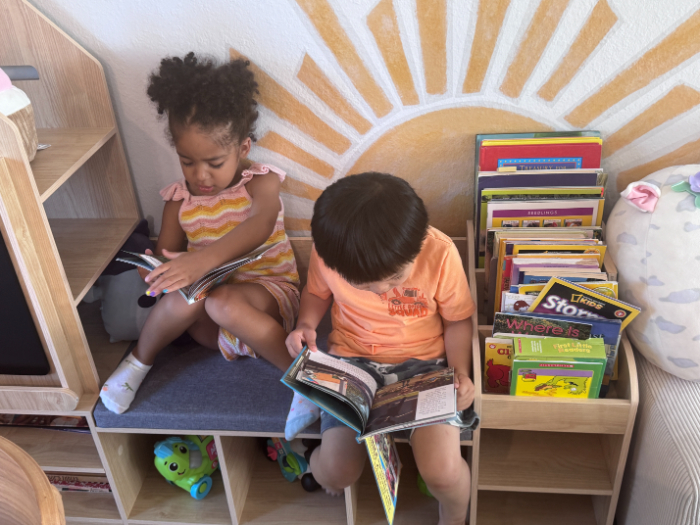
Selecting Age-Appropriate Board Books and Materials
Infant Board Books: Sensory and Durable Choices
Choose vinyl or cloth books resistant to drool and tearing. High-contrast visuals (black/white/red) support visual development in 0–6-month-olds.
Recommended: Black on White by Tana Hoban.
Toddler Reading Selections: Interactive and Repetitive
Lift-the-flap and touch-and-feel formats promote fine motor skills. Repetition in texts like Dear Zoo builds prediction skills. Avoid books with small parts per CPSC choking hazard standards.
Preschooler Books: Narrative-Driven and Educational
Transition to thicker board books with simple plots. Include STEM titles (Rosie Revere, Engineer board edition) and social-emotional learning (The Color Monster).
Diversity and Inclusion in Book Selection
Ensure 40% of collection reflects varied family structures, abilities, and cultures. Use Lee & Low Books’ diversity baseline checklist.
External resource: We Need Diverse Books.
Designing a Cozy Daycare Reading Corner
Essential Furniture for Safety and Comfort
Use rounded-edge, commercial-grade furniture meeting ASTM F963 standards.
Height guidelines:
- Infants: Floor-level padded mats
- Toddlers: 8–10 inch shelves
- Preschoolers: 12–15 inch benches
Lighting, Colors, and Sensory Elements
Natural light preferred; supplement with 3,000K warm LED bulbs. Wall colors: muted pastels (sage green, soft blue) to reduce overstimulation. Add textured pillows and quiet fidget toys.
Storage Solutions for Easy Access and Rotation
Forward-facing acrylic displays increase selection by 30% (Journal of Early Childhood Research). Use labeled bins for thematic rotation (seasons, emotions, animals).
Building and Curating the Book Collection
Core Collection: Must-Have Board Book Titles
| Category | Title | Author | Age |
|---|---|---|---|
| Classic | Goodnight Moon | Margaret Wise Brown | 0–3 |
| Interactive | Press Here | Hervé Tullet | 2–5 |
| Diversity | Everywhere Babies | Susan Meyers | 0–2 |
| STEM | Baby Loves Aerospace Engineering! | Ruth Spiro | 1–4 |
Start with multiple copies of high-demand titles.
Sourcing Books: New, Used, and Donation Strategies
- Educator discounts: Barefoot Books and similar publishers
- Library discards: Check local systems for gently used board books
- Parent drives: Request “gently loved” donations with wish lists
Rotation Schedules to Maintain Engagement
Rotate 20% of collection biweekly. Track usage via simple checkout sheets to identify favorites.
Integrating the Library into Daily Routines
Scheduled Reading Times for Each Age Group
| Time | Activity | Duration |
|---|---|---|
| 9:30 AM | Infant lap reading (1:1) | 5–7 min |
| 10:15 AM | Toddler group read-aloud | 10 min |
| 2:00 PM | Preschool story + discussion | 15–20 min |
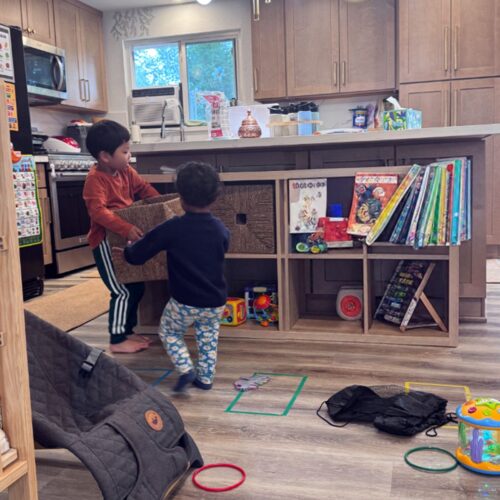
Staff Training on Interactive Read-Aloud Techniques
Use Dialogic Reading method (C. Whitehurst):
- Prompt child to describe pictures
- Evaluate responses
- Expand on answers
- Repeat key phrases
Record mock sessions for peer feedback.
Tracking Progress in Early Childhood Literacy
Use ASQ-3 screening tools at 6-month intervals. Document vocabulary growth via parent-teacher conferences.
Maintenance, Safety, and Hygiene Protocols
Cleaning and Sanitizing Board Books
Wipe vinyl covers with 1:10 bleach solution daily. Cloth books: machine wash weekly. Discard damaged books immediately to prevent ingestion hazards.
Safety Standards for Furniture and Accessories
Anchor all shelves to walls (CPSC: furniture tip-over kills 1 child every 2 weeks). Use non-toxic, GREENGUARD-certified materials.
Inventory Management and Damage Control
Digital catalog via LibraryThing or simple Google Sheets. Repair minor tears with book tape; replace beyond repair.
Measuring Success and Scaling Your Childcare Library
Key Metrics for Early Literacy Development
| Metric | Target | Tool |
|---|---|---|
| Book interactions/day | 3+ per child | Observation log |
| Parent reading at home | 70% weekly | Survey |
| Vocabulary growth | +50 words/6 months | PPVT-5 |
Parent Involvement and Feedback Loops
Host monthly “Library Nights” where families borrow books. Use QR codes linking to read-aloud videos in native languages.
Expanding to Multilingual and Thematic Collections
Add dual-language board books (Spanish/English, Mandarin/English) based on enrollment demographics. Create pop-up themed corners (ocean, farm) quarterly.
About Kido Heaven
Kido Heaven is a trusted Daycare Bothell center dedicated to nurturing curiosity, creativity, and early literacy in young children. Our programs combine play-based learning with personalized care, featuring cozy reading corners, age-appropriate board books, and engaging daily activities that support language development. Families choose Kido Heaven for its warm environment, qualified educators, and commitment to helping every child grow with confidence and joy.
Why KidoHeaven Stands Out
✅ Licensed in Washington State
✅ Aligned with Early Achievers standards
✅ Working Connections subsidy accepted
✅ Daily updates via Brightwheel
✅ Located in Bothell, serving Mill Creek, Lynnwood & nearby areas
✅ Nutritious snacks, safe outdoor space, & positive mealtime routines
📞 Call 206-734-2040 to schedule a tour
🌐 Enroll now
Follow Our Mealtime Moments
Stay updated with more beautiful outdoor meals and daily learning routines on:
Instagram | Facebook | Nextdoor | Yelp | Winnie | YouTube | Upwards
FAQ
Q: How many books should a daycare library start with?
A: Begin with 50–75 board books for 20 children (3–4 books per child). Scale up as resources allow.
Q: Are e-books suitable for infants in daycare?
A: No—AAP recommends zero screen time under 18 months. Physical books provide tactile feedback essential for brain development.
Q: How do I clean board books after illnesses?
A: Use EPA-registered disinfectants safe for children’s toys. Air dry completely before returning to shelves.
Q: Can I use library books in daycare?
A: Public library board books often lack durability. Invest in commercial-grade editions or laminate paperbacks.
Q: What if parents don’t read at home?
A: Provide take-home book bags with simple discussion prompts. Record staff read-alouds for families to play.


