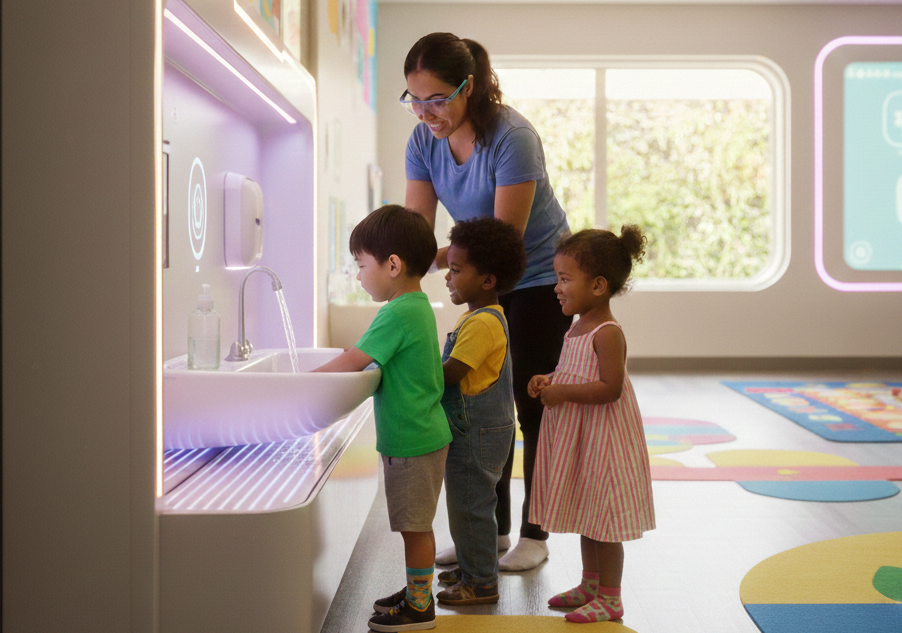


Teaching healthy hygiene habits in early childhood is one of the most effective ways to support children’s overall health and well-being. In childcare settings, simple daily routines such as handwashing, tooth brushing, and proper hygiene during meals and playtime help reduce the spread of illness while building lifelong self-care skills.
This article provides practical, age-appropriate strategies for encouraging hygiene habits in toddlers and preschoolers within childcare environments. You will learn how educators can teach hygiene in a fun, positive, and developmentally appropriate way while meeting Washington State (WAC) childcare health standards and supporting daycare wellness programs.
Why Hygiene Education Matters in Early Childhood
Healthy hygiene habits formed during early childhood play a foundational role in lifelong wellness. In childcare settings, where children interact closely and share materials, hygiene education is not just about cleanliness—it is a public health responsibility. Teaching children how and why to wash their hands, care for their teeth, and cover coughs helps reduce the spread of illness and supports overall daycare wellness.
Research consistently shows that structured hygiene routines in early learning environments significantly reduce absenteeism due to illness. More importantly, children who learn hygiene through positive routines develop self-care skills, confidence, and responsibility at an early age—key developmental milestones in early childhood hygiene education.
Understanding Hygiene Through a Child Development Lens
Young children do not naturally understand germs, contamination, or long-term health consequences. Toddlers learn through imitation and repetition, while preschoolers begin to grasp simple cause-and-effect relationships. Effective childcare hygiene education must align with these developmental stages.
For toddlers, hygiene education is sensory and routine-based—warm water, soap bubbles, songs, and visual cues. Preschoolers, on the other hand, benefit from explanations, stories, and guided independence. Recognizing these differences ensures hygiene instruction is age-appropriate, engaging, and effective.
WAC Health & Hygiene Requirements for Childcare Centers
In Washington State, childcare providers must comply with the Washington Administrative Code (WAC), which outlines strict health and hygiene standards. These regulations cover handwashing procedures, diapering protocols, cleaning schedules, illness prevention, and staff training.
WAC-compliant childcare centers are required to:
- Enforce handwashing at key transition times
- Maintain sanitary diapering and toileting areas
- Clean and disinfect toys and surfaces regularly
- Educate staff on infection control practices
Adhering to these standards not only ensures regulatory compliance but also builds trust with families seeking a WAC-compliant daycare center in Bothell.
Teaching Handwashing to Toddlers the Right Way
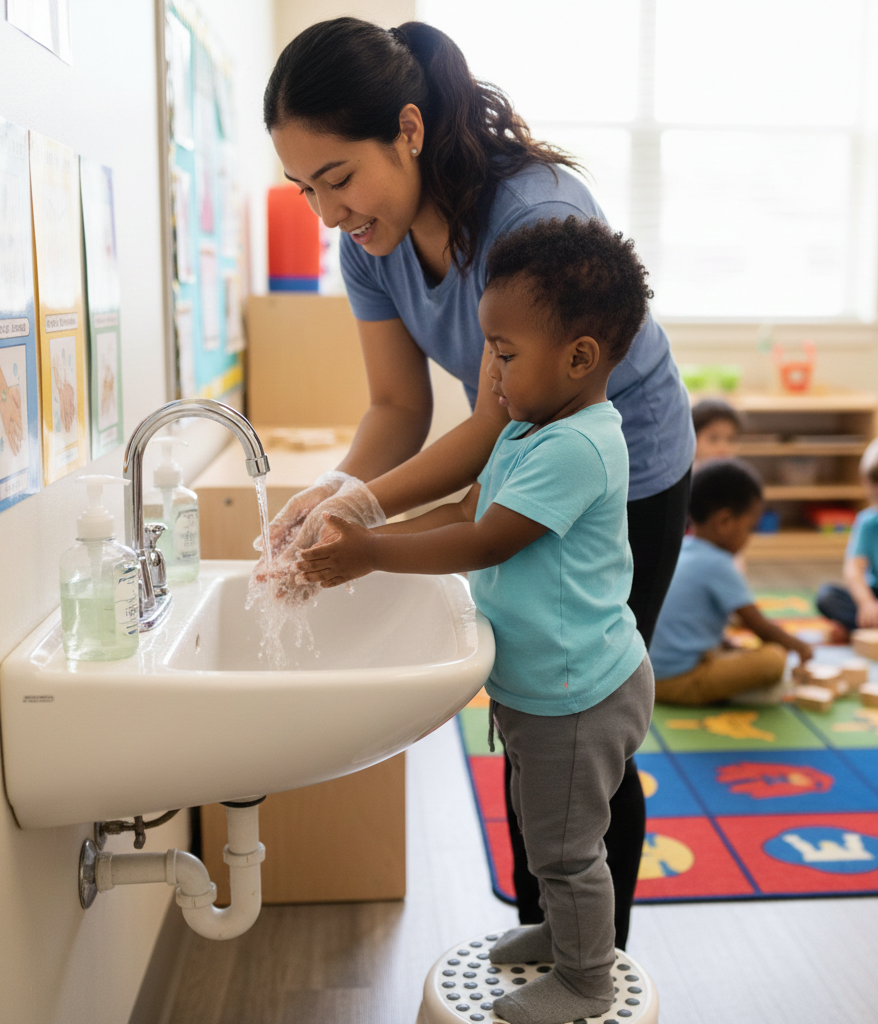
Toddler handwashing is one of the most critical—and challenging—hygiene habits to teach. At this age, children learn best through routine and repetition rather than instruction alone.
Effective strategies include:
- Handwashing songs that last 20 seconds
- Visual handwashing charts near sinks
- Adult modeling at every handwashing moment
Handwashing should occur after diaper changes, before meals, after outdoor play, and after nose wiping. Consistency is key. Over time, toddlers begin to associate handwashing with daily transitions, making it a natural part of their routine.
Fun and Effective Hygiene Activities for Preschoolers
Preschool-aged children are ready for more structured hygiene education. Preschoolers’ health habits can be reinforced through playful learning activities that encourage independence.
Examples include:
- Germ-themed storybooks
- Glitter experiments to demonstrate germ spread
- Classroom hygiene charts with stickers or rewards
These activities transform hygiene from a rule into a shared responsibility. When children understand why hygiene matters, they are more likely to practice it consistently—both in childcare and at home.
Oral Hygiene Habits in Early Childhood Settings
Oral health is often overlooked in childcare hygiene education, yet it is essential to overall wellness. Teaching children proper toothbrushing habits supports speech development, nutrition, and long-term dental health.
In childcare settings, oral hygiene education may include:
- Demonstrating brushing techniques with models
- Discussing healthy vs. sugary foods
- Coordinating with parents on daily routines
According to the American Academy of Pediatric Dentistry, early oral hygiene education significantly reduces the risk of childhood cavities—one of the most common chronic conditions in children.
Teaching Respiratory Hygiene and Germ Awareness
Respiratory hygiene became especially important in recent years, but it remains a core component of daycare wellness. Preschoolers can learn to cover coughs and sneezes using tissues or elbows, followed by handwashing.
Educators should use simple, non-frightening language to explain germs. The goal is awareness—not fear. Visual cues, posters, and daily reminders help reinforce these habits in a supportive way.
Hygiene Routines for Diapering and Toilet Training
Diapering and toilet training require strict hygiene protocols to protect both children and staff. WAC guidelines specify procedures for sanitation, glove use, and surface disinfection.
Children transitioning to toilet independence should be gently guided through:
- Proper wiping techniques
- Handwashing after toileting
- Respect for personal hygiene
These routines support dignity, confidence, and independence while maintaining a hygienic environment.
Making Hygiene Fun, Not Fear-Based
Fear-based messaging can create anxiety around cleanliness and illness. Instead, hygiene education should be framed positively—as a way to care for ourselves and others.
Using play, music, and storytelling helps children associate hygiene with empowerment rather than restriction. A fun approach leads to better engagement and long-term habit formation.
Role of Educators in Modeling Healthy Hygiene
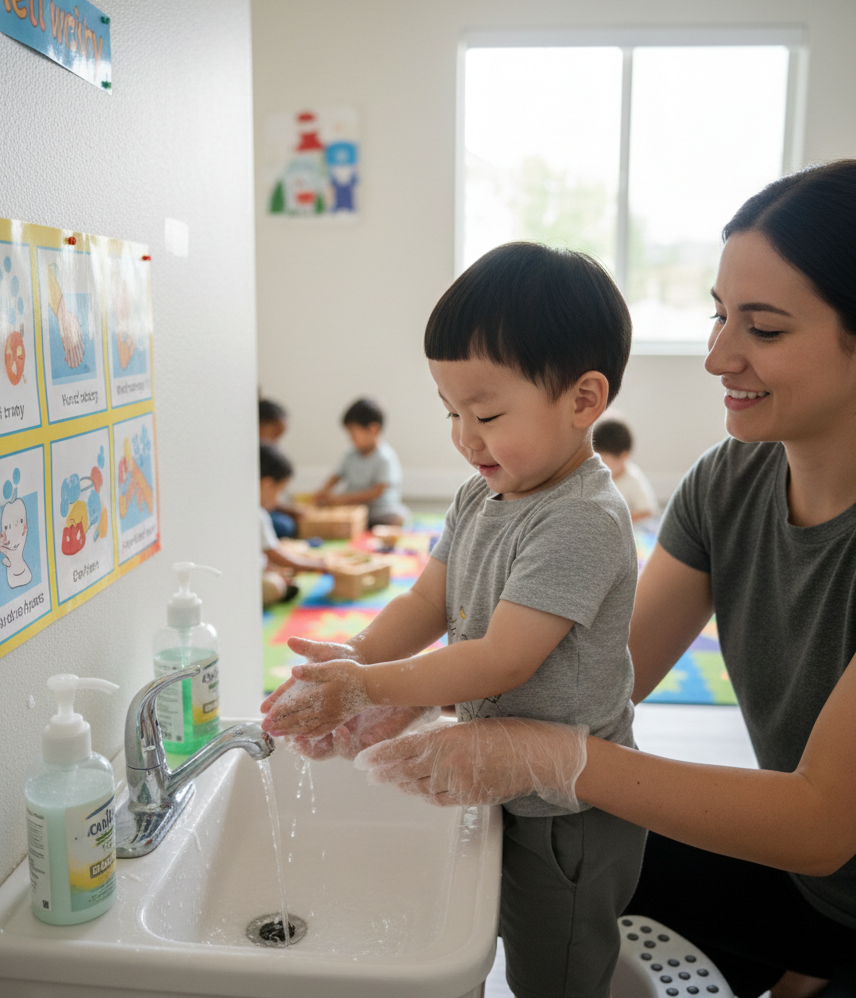
Children learn more from what adults do than what they say. Educators must consistently model proper hygiene behaviors, from handwashing to surface cleaning.
Ongoing staff training ensures alignment with childcare hygiene best practices and WAC requirements. When educators demonstrate care and consistency, children naturally follow suit.
Creating a Hygienic Childcare Environment
A clean environment reinforces hygiene lessons. Regular cleaning schedules, labeled sanitation stations, and child-accessible sinks all contribute to a safe learning space.
High-touch areas such as toys, door handles, and tables should be disinfected daily. These practices support infection prevention and reflect professional standards expected from a trusted childcare center in Bothell.
Partnering With Parents for Consistent Hygiene Habits
Consistency between home and childcare is essential. Open communication with parents helps reinforce hygiene routines across environments.
Sharing newsletters, hygiene checklists, or parent workshops encourages collaboration. When families and educators work together, children receive clear, consistent messages about health and wellness.
Hygiene as Part of Daycare Wellness Programs
Hygiene education should be integrated into broader daycare wellness initiatives, including nutrition, physical activity, and emotional health.
Wellness-focused childcare programs recognize that hygiene is not an isolated skill—it is part of a holistic approach to child development and safety.
Introducing Kido Heaven’s Approach to Childcare Hygiene
At Kido Heaven daycare, hygiene education is thoughtfully woven into daily routines, curriculum planning, and staff training. As a licensed daycare in Bothell, Kido Heaven follows WAC health standards while creating a nurturing, child-centered environment.
Through age-appropriate instruction, consistent routines, and strong family partnerships, Kido Heaven early learning center supports healthy habits that extend beyond the classroom—laying the foundation for lifelong wellness.
Why KidoHeaven Stands Out
✅ Licensed in Washington State
✅ Aligned with Early Achievers standards
✅ Working Connections subsidy accepted
✅ Daily updates via Brightwheel
✅ Located in Bothell, serving Mill Creek, Lynnwood & nearby areas
✅ Nutritious snacks, safe outdoor space, & positive mealtime routines
📞 Call 206-734-2040 to schedule a tour
🌐 Enroll now
Follow Our Mealtime Moments
Stay updated with more beautiful outdoor meals and daily learning routines on:
Instagram | Facebook | Nextdoor | Yelp | Winnie | YouTube | Upwards
FAQ
1. Why is hygiene education important in childcare settings?
Because young children are more vulnerable to illness, hygiene education helps prevent infection and supports overall health and attendance.
2. At what age should children start learning hygiene habits?
Hygiene education can begin in toddlerhood through routines and modeling, with more structured learning introduced during preschool years.
3. How does Washington State regulate childcare hygiene?
Washington State enforces hygiene standards through WAC regulations covering handwashing, sanitation, illness prevention, and staff training.
4. How can parents support hygiene learning at home?
By maintaining consistent routines, modeling healthy behaviors, and communicating with childcare providers.
5. What makes a daycare hygienic and safe?
WAC compliance, trained staff, structured routines, and a clean, well-maintained environment.


