
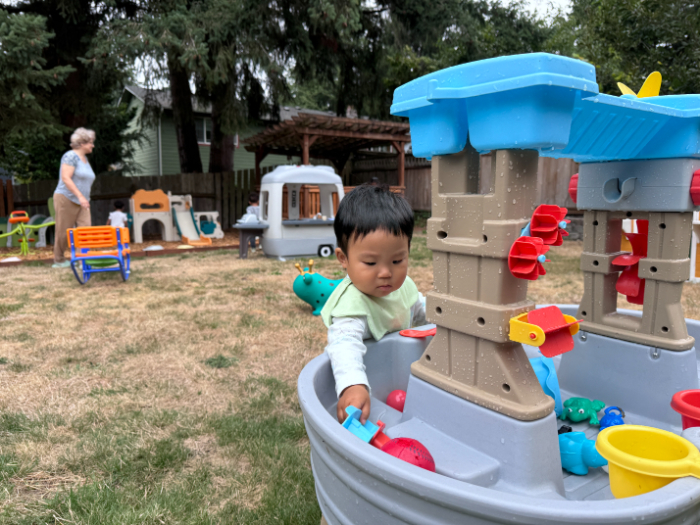


Mixed-age play—where infants, toddlers, and preschoolers learn and interact together—has long been recognized as a powerful approach in early childhood education. In thoughtfully designed childcare settings, younger children observe and imitate older peers, while older children practice leadership, empathy, and communication. When implemented intentionally and in alignment with Washington State WAC (Washington Administrative Code) requirements, mixed-age play becomes a safe, inclusive, and developmentally rich experience for all children.
This in-depth guide explores how mixed-age interactions foster social, cognitive, emotional, and physical development; the science behind peer learning; and how licensed childcare programs can implement mixed-age play responsibly and effectively.
Understanding Mixed-Age Play in Early Childhood
Mixed-age play refers to educational and play environments where children of different developmental stages interact regularly rather than being strictly separated by age. This model reflects natural family and community settings, where younger and older children learn side by side.
In high-quality childcare programs, mixed-age play is not unstructured chaos. It is intentionally planned, carefully supervised, and guided by early childhood educators who understand developmental milestones, safety considerations, and social dynamics.
The Developmental Science Behind Peer Learning
Peer learning is grounded in well-established child development theories. Children often learn best from observing others who are slightly more advanced than themselves. Older peers model language, problem-solving, self-regulation, and social behaviors in ways that feel accessible and motivating.
Research in early childhood development shows that mixed-age interactions can:
- Increase engagement and attention span
- Encourage cooperative problem-solving
- Support flexible thinking and adaptability
These benefits are particularly strong when educators scaffold interactions and ensure experiences remain developmentally appropriate for all age groups.
Social-Emotional Benefits of Mixed-Age Interaction
Empathy and Emotional Regulation
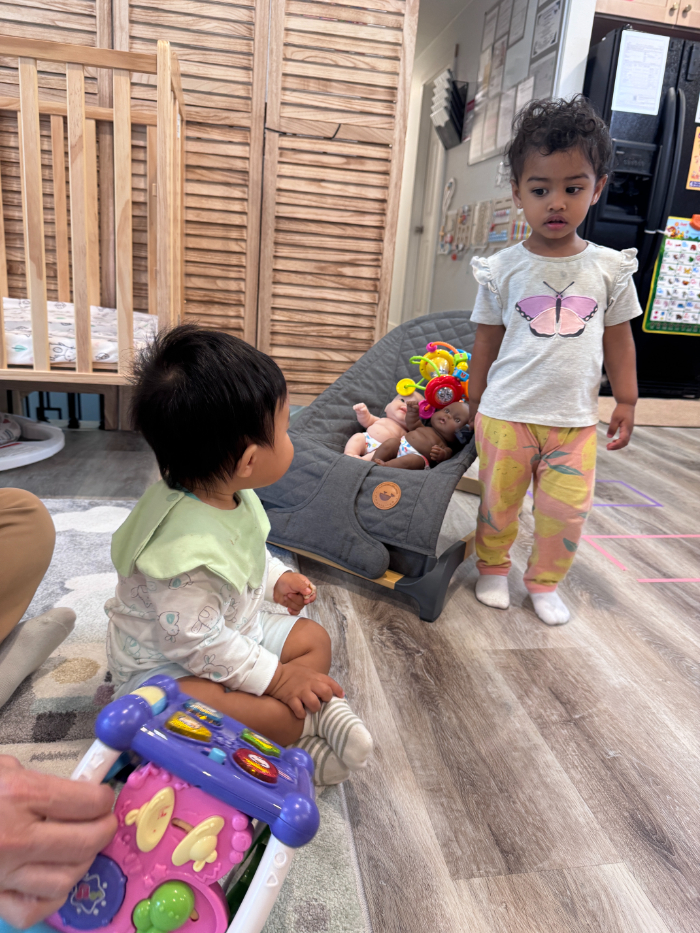
When children interact across age groups, they gain early exposure to different emotional needs and communication styles. Older children learn to recognize frustration or uncertainty in younger peers, while younger children feel supported and understood.
This dynamic helps build empathy, patience, and emotional regulation—skills that are foundational for lifelong social success.
Leadership and Confidence Building
Preschoolers in mixed-age settings often take on leadership roles naturally. Helping a toddler stack blocks or showing an infant how a toy works reinforces confidence, responsibility, and positive self-identity.
Rather than competition, mixed-age play encourages collaboration and mutual support.
Cognitive and Language Development Through Observation
Children absorb an enormous amount of information simply by watching others. In mixed-age environments:
- Infants are exposed to richer language patterns
- Toddlers hear more complex vocabulary
- Preschoolers refine storytelling and explanation skills
These interactions promote language expansion, memory development, and early executive functioning skills, all within the context of natural play.
Benefits for Infants, Toddlers, and Preschoolers
Infants Observing Older Children
Infants benefit greatly from watching older children move, speak, and interact. This observation supports early motor planning, attention control, and social awareness. Seeing peers engage with books, music, or problem-solving activities provides powerful developmental stimulation.
Toddlers Learning Through Imitation
Toddlers are especially responsive to imitation. In mixed-age play, they copy behaviors such as turn-taking, simple conversation, and imaginative play. This accelerates social learning and builds confidence in new skills.
Preschoolers as Mentors
Preschool-aged children deepen their understanding by teaching others. Explaining rules, demonstrating tasks, or offering comfort strengthens their cognitive processing and emotional maturity.
Mixed-Age Play and Daycare Group Dynamics
Healthy daycare group dynamics depend on balance. Mixed-age play reduces rigid social hierarchies and creates a cooperative atmosphere where children support one another rather than compete.
Well-managed mixed-age groups often experience:
- Fewer behavioral conflicts
- Increased peer cooperation
- Stronger sense of community
These outcomes align with best practices in early childhood education and support inclusive learning environments.
Safety, Supervision, and WAC Compliance
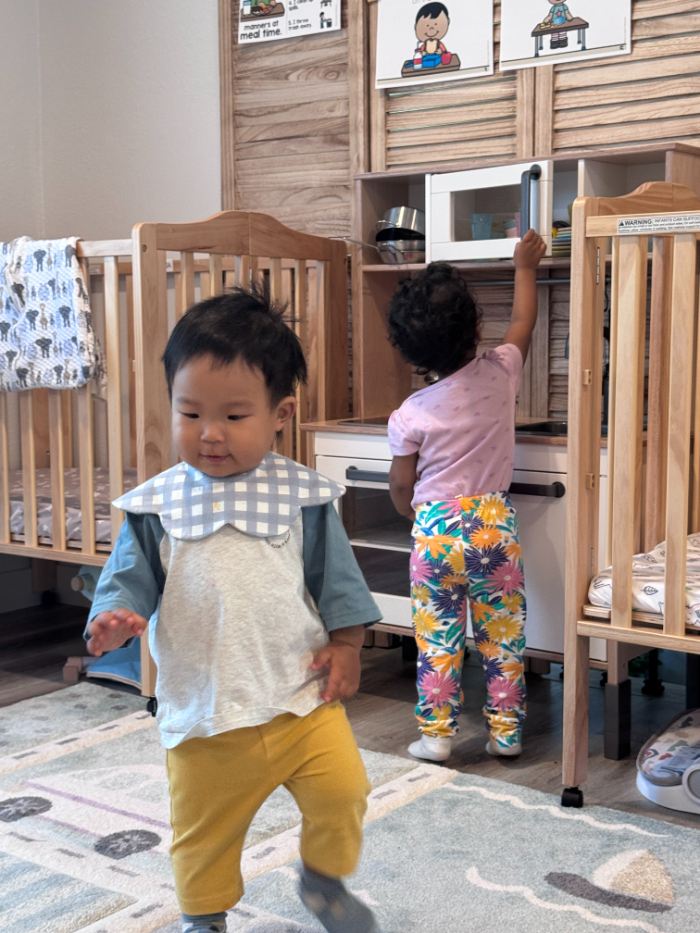
In Washington State, childcare providers must meet strict WAC regulations regarding supervision, ratios, and safety. Mixed-age play must always be implemented within these guidelines.
Key WAC-aligned considerations include:
- Continuous visual and auditory supervision
- Age-appropriate materials accessible to all children
- Safe separation of activities when developmental needs differ
Licensed programs ensure that mixed-age play enhances learning without compromising safety or regulatory compliance.
Designing Age-Inclusive Learning Environments
Effective mixed-age classrooms are intentionally designed. Furniture, toys, and activity zones must support a wide range of abilities while minimizing risk.
Best practices include:
- Low, open shelving for shared materials
- Soft play areas for infants
- Clearly defined zones for active and quiet play
These environments encourage exploration while respecting individual developmental stages.
The Educator’s Role in Mixed-Age Classrooms
Educators play a critical role in guiding mixed-age interactions. Their responsibilities include observing group dynamics, facilitating positive interactions, and stepping in when support or redirection is needed.
Skilled educators know when to let children lead and when to scaffold learning, ensuring that every child feels included, challenged, and safe.
Addressing Common Parent Concerns
Parents sometimes worry that mixed-age play may limit academic readiness or pose safety risks. In reality, when implemented correctly, mixed-age play supports school readiness by strengthening social competence, communication skills, and emotional resilience.
Transparent communication, clear policies, and WAC compliance help families feel confident in this approach.
About Kido Heaven Early Learning Center
Families seeking a licensed daycare in Bothell often look for programs that combine educational excellence with a nurturing environment. Kido Heaven early learning center is committed to supporting whole-child development through thoughtful curriculum design, experienced educators, and safe, WAC-compliant practices.
By embracing developmentally appropriate mixed-age interactions, Kido Heaven creates a learning community where children grow socially, emotionally, and cognitively—together.
Why KidoHeaven Stands Out
✅ Licensed in Washington State
✅ Aligned with Early Achievers standards
✅ Working Connections subsidy accepted
✅ Daily updates via Brightwheel
✅ Located in Bothell, serving Mill Creek, Lynnwood & nearby areas
✅ Nutritious snacks, safe outdoor space, & positive mealtime routines
📞 Call 206-734-2040 to schedule a tour
🌐 Enroll now
Follow Our Mealtime Moments
Stay updated with more beautiful outdoor meals and daily learning routines on:
Instagram | Facebook | Nextdoor | Yelp | Winnie | YouTube | Upwards
FAQ
1. Is mixed-age play safe for infants?
Yes, when supervised properly and aligned with WAC requirements, mixed-age play is safe and developmentally beneficial for infants.
2. Does mixed-age play slow academic progress?
No. Social-emotional skills developed through mixed-age interaction support long-term academic success.
3. How do teachers manage different developmental needs?
Educators use differentiated activities, careful supervision, and intentional grouping to meet each child’s needs.
4. Is mixed-age play suitable for full-day childcare?
Yes. Many high-quality programs successfully integrate mixed-age play throughout the day.


