
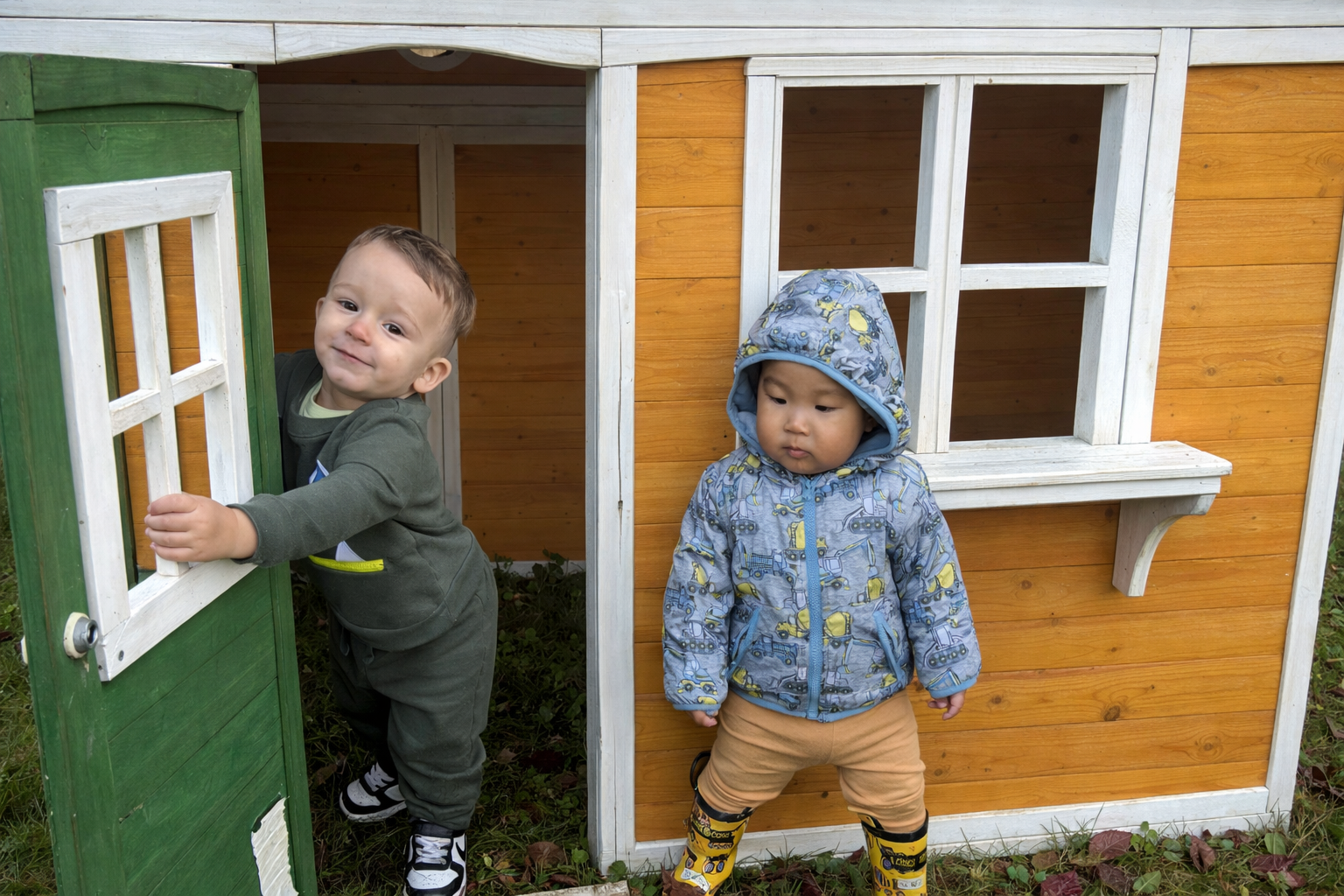


Movement games play a powerful role in supporting a child’s growth from infancy through preschool. By encouraging crawling, balancing, dancing, and playful physical exploration, these activities strengthen motor skills, support brain development, improve emotional regulation, and build social confidence. When thoughtfully guided and practiced in safe, nurturing environments that follow Washington State WAC standards, movement games help children develop stronger bodies, sharper minds, and happier learning experiences.
What Are Movement Games and Why They Matter
Movement games are structured or guided physical activities that encourage children to use their bodies to explore space, develop coordination, and support whole-child development. These activities are not simply “playtime.” Research consistently shows that movement supports:
- Neurological development
- Motor skill refinement
- Cognitive growth
- Language development
- Social skills
- Self-regulation and emotional confidence
In early childhood education, movement games bridge the gap between learning through play and intentional developmental support, aligning with educational quality standards such as WAC guidelines in Washington State that emphasize safe, developmentally appropriate and supervised learning experiences.
The Role of Movement in Early Brain and Body Development
Movement stimulates neural pathways responsible for memory, executive functioning, and concentration. When a child crawls, jumps, balances, or dances:
- The vestibular system strengthens, improving balance and spatial awareness.
- The proprioceptive system develops, helping children understand body positioning.
- Cognitive processes such as planning, sequencing, and problem-solving are activated.
- Language learning improves because movement supports engagement and attention.
Organizations like the Centers for Disease Control (CDC) and American Academy of Pediatrics (AAP) highlight that young children need frequent movement opportunities daily to support healthy growth, posture, reflex integration, and emotional well-being.
Movement Games for Infants (0–12 Months)
Infants rely heavily on sensory-motor exploration. Gentle, supervised movement experiences help build foundational strength and coordination.
Key Developmental Goals at This Stage
- Head and neck control
- Core strength
- Crawling readiness
- Visual and hand-eye coordination
- Body awareness
Recommended Movement Games
✔ Tummy Time Adventure
Place colorful objects or soft toys around the infant during tummy time to encourage reaching and lifting. This strengthens the neck, shoulders, and upper body.
✔ Rolling Routines
Lay infants on a soft mat and gently guide rolling movements. This supports body awareness and early mobility.
✔ Supported Sitting and Reaching Games
Use rattles and soft balls to encourage babies to reach forward, sideways, and up, improving coordination and stability.
✔ Guided Crawling Paths
Create soft obstacle paths with pillows to motivate crawling, building coordination and strength.
Safety Notes (WAC-Aligned)
- Always supervise infants
- Use clean, padded flooring
- Avoid forcing any movement
- Follow safe positioning standards
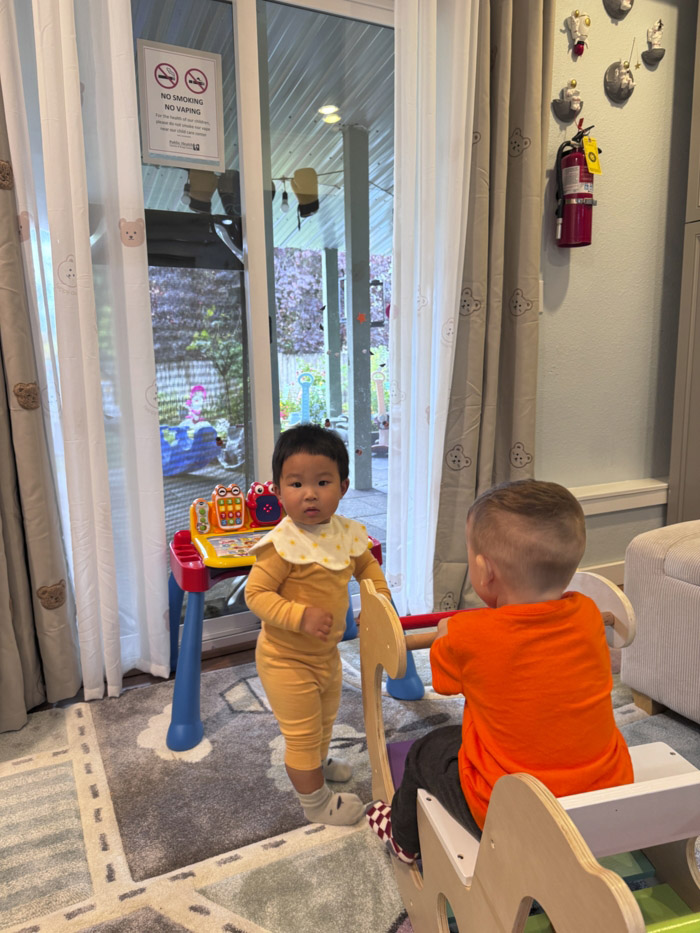
Movement Games for Toddlers (1–3 Years)
Toddlers are curious, energetic, and constantly in motion. This stage focuses on walking confidence, coordination, balance, and early problem-solving.
Developmental Goals
- Strong balance and walking skills
- Improved coordination
- Beginning of structured play
- Early social interaction
Recommended Movement Games
✔ Follow the Leader
Encourage toddlers to mimic clapping, marching, stomping, or slow walking. Enhances imitation, rhythm, and attention.
✔ Soft Ball Rolling and Kicking
Supports eye-hand coordination, gross motor control, and timing.
✔ Tunnel and Cushion Crawling
Encourages problem solving, body awareness, and confidence through safe exploration.
✔ Simple Obstacle Courses
Use cones, cushions, and soft blocks to encourage stepping, turning, balancing, and crawling.
Safety & Inclusion Notes
- Ensure equipment stability
- Avoid choking hazards
- Respect individual developmental pace
- Provide supportive encouragement instead of pressure
Movement Games for Preschoolers (3–5 Years)
Preschoolers have greater strength, awareness, and imagination. Movement activities now support refined motor skills, structured learning, teamwork, and emotional development.
Developmental Goals
- Strong gross motor coordination
- Early athletic skill readiness
- Emotional regulation
- Cognitive and social collaboration
Recommended Movement Games
✔ Dancing & Rhythm Games
Guided dancing improves coordination, rhythm, listening skills, and creativity.
✔ Balance and Freeze Games
“Freeze Dance” or “Statue Game” helps develop impulse control and muscle control.
✔ Running and Relay Activities
Encourage direction-following, teamwork, and healthy energy release.
✔ Animal Movement Play
Pretend to hop like a bunny, stomp like an elephant, crawl like a bear. Encourages imagination + muscle engagement.
✔ Parachute or Scarf Movement Play
Supports group cooperation, timing, social bonding, and motor synchronization.
Social, Emotional, and Cognitive Benefits of Movement Play
Movement games do far more than strengthen muscles.
Emotional Development
- Builds self-confidence
- Reduces stress
- Supports emotional expression
Social Growth
- Encourages teamwork
- Enhances sharing and turn-taking
- Builds communication skills
Cognitive Development
- Strengthens attention span
- Improves memory
- Encourages planning and sequencing
Children who engage in frequent movement activities show better school readiness, improved behavior regulation, and higher engagement in learning.
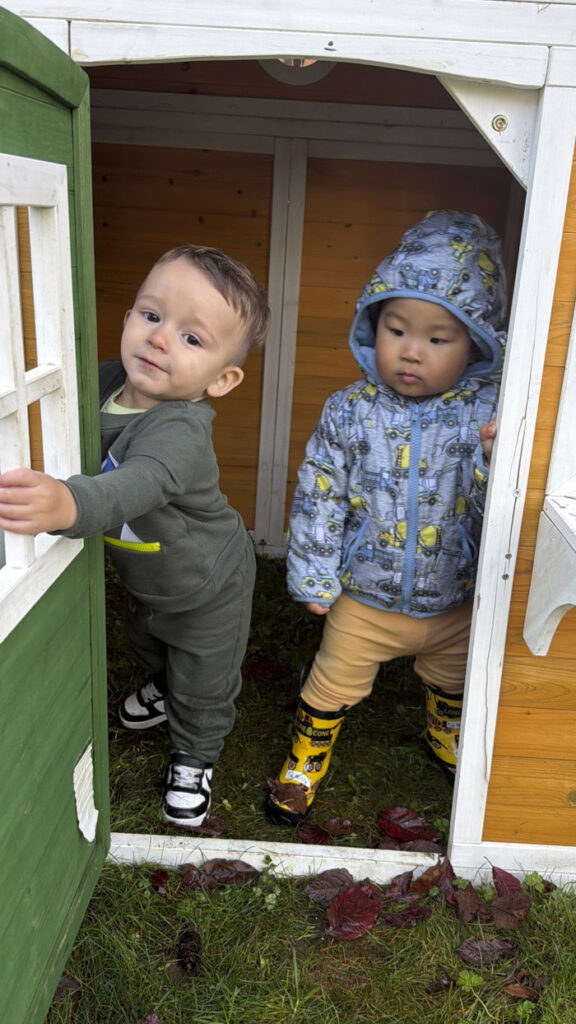
Safety, Inclusion, and WAC-Aligned Best Practices
In Washington State, childcare environments must align with WAC (Washington Administrative Code) standards, which emphasize:
- Safe, supervised learning environments
- Age-appropriate equipment
- Hygiene and cleanliness
- Inclusive practices
- Child well-being and developmental appropriateness
Movement games must always:
- Be supervised by trained childcare staff
- Use safe, well-maintained equipment
- Respect children’s physical abilities and developmental differences
- Encourage participation without pressure
Credible guideline references to support safe practice include:
- CDC Early Childhood Movement Recommendations
- American Academy of Pediatrics Movement Guidelines
- World Health Organization Early Childhood Activity Standards
Practical Tips for Parents and Caregivers
- Encourage movement daily
- Provide variety: indoor + outdoor
- Combine movement with music
- Avoid screen-based replacements
- Celebrate effort, not perfection
- Create safe play spaces
Movement should never feel forced. It should feel joyful, engaging, and supportive.
Childcare Support in Bothell
At KidoHeaven, we believe movement is a foundation for healthy development. Our childcare environment adheres to Washington State WAC standards, ensuring a safe, professionally supervised, developmentally supportive, and joyful learning environment every day. Families looking for nurturing, development-focused environments in Bothell can trust us to support their child’s growth through thoughtfully designed movement experiences and early education programs. Learn more about our trusted programs at Daycare Bothell and child care Bothell, where we prioritize your child’s well-being, development, and happiness.
Why KidoHeaven Stands Out
✅ Licensed in Washington State
✅ Aligned with Early Achievers standards
✅ Working Connections subsidy accepted
✅ Daily updates via Brightwheel
✅ Located in Bothell, serving Mill Creek, Lynnwood & nearby areas
✅ Nutritious snacks, safe outdoor space, & positive mealtime routines
📞 Call 206-734-2040 to schedule a tour
🌐 Enroll now
Follow Our Mealtime Moments
Stay updated with more beautiful outdoor meals and daily learning routines on:
Instagram | Facebook | Nextdoor | Yelp | Winnie | YouTube | Upwards
FAQ
1. How often should young children participate in movement activities?
Daily. Infants benefit from multiple short movement sessions. Toddlers and preschoolers need frequent structured and free movement opportunities.
2. Are movement games safe for all children?
Yes, when supervised, age-appropriate, and inclusive. Always follow safety and WAC guidelines.
3. Can movement games help with learning later in school?
Absolutely. Movement supports memory, focus, self-regulation, and readiness for academic learning.
4. What if a child is shy or hesitant to participate?
Offer gentle encouragement, smaller activities first, and avoid pressure. Confidence builds gradually.


