
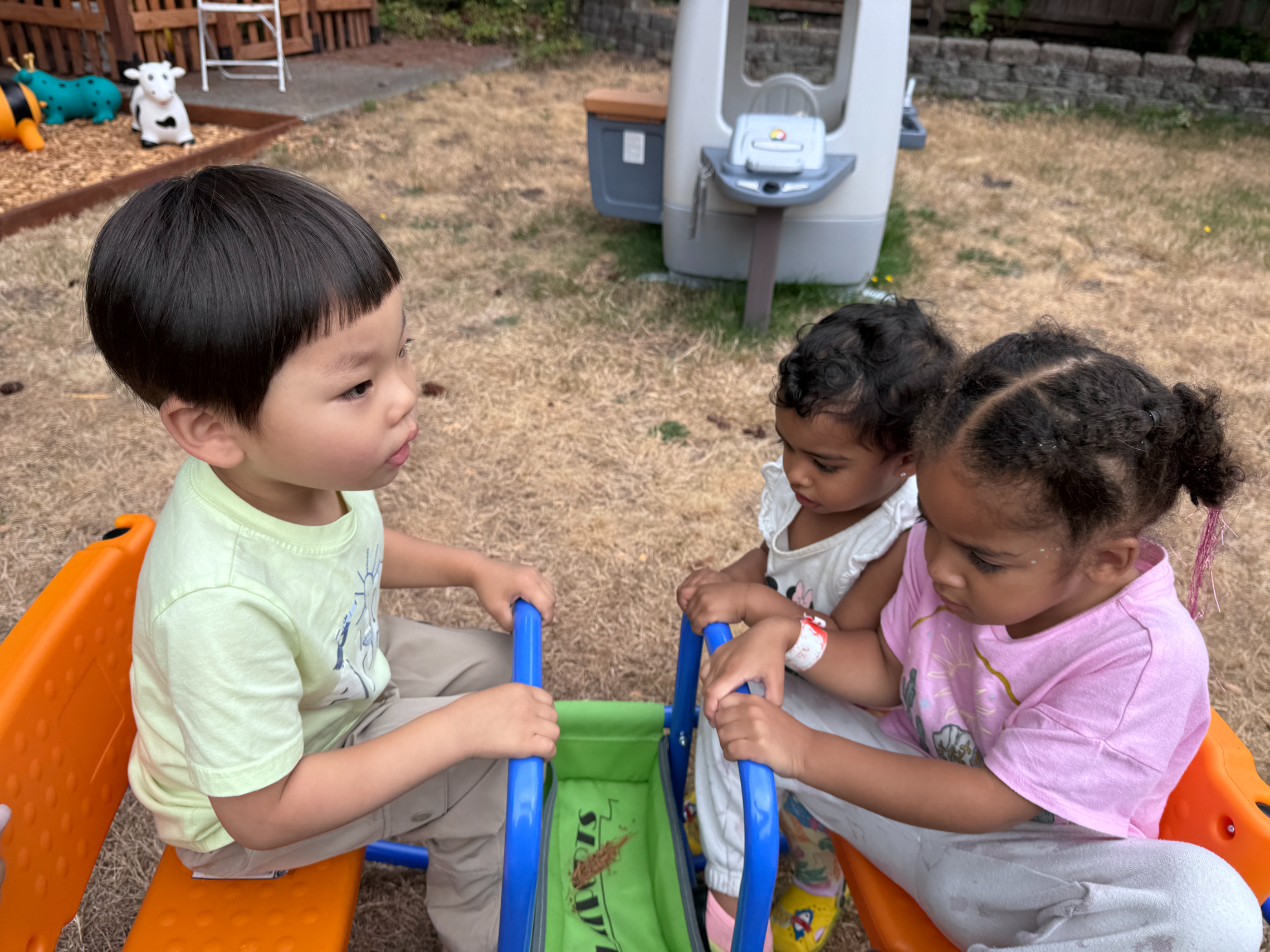


The first five years of life represent a uniquely plastic period for brain development, with social experiences shaping neural pathways that influence relationships for decades. In group care settings, infants and toddlers encounter their first consistent peer interactions outside the family unit—opportunities that can either accelerate or hinder the acquisition of infant social skills and toddler group play competencies. Research from the American Academy of Pediatrics demonstrates that high-quality early childhood relationships in daycare correlate with reduced behavioural problems at school age and enhanced preschooler socialization outcomes. HealthyChildren.org+2Pediatrics Online+2 This article synthesizes current evidence on fostering early childhood relationships through intentional group activities, environmental design, and caregiver practices.
Understanding Developmental Stages of Social Interaction
Infant Social Milestones (0–12 Months)
Infants progress from reflexive social smiles (6–8 weeks) to intentional social referencing (9–12 months). Key markers include:
- 3 months: Coordinated gaze following
- 6 months: Differentiated social responses to familiar vs. unfamiliar adults
- 9 months: Joint attention episodes during play
- 12 months: Proto-imperative pointing to share interest
Toddler Social Milestones (12–36 Months)
The transition from solitary to parallel and associative play characterizes this stage:
- 18 months: Simple imitation of peer actions
- 24 months: Emergence of parallel play with shared toys
- 30 months: First cooperative exchanges (“you throw, I catch”)
- 36 months: Basic turn-taking in structured games
Preschooler Social Milestones (3–5 Years)
More complex social negotiation emerges:
- Formation of preferential friendships
- Understanding of social rules in group games
- Perspective-taking in conflict resolution
- Collaborative pretend play scenarios
The Science Behind Early Social Connections
Neurological Foundations of Social Bonding
Brain architecture is constructed early on, and responsive social environments play a key role in shaping the developing brain. According to the Center on the Developing Child at Harvard University, “brains are built over time, from the bottom up … the connections that form early provide either a strong or weak foundation for the connections that form later.” Harvard Center on Child Development+1 Serve-and-return interactions—back-and-forth exchanges between a young child and a caring adult—are essential for the development of social and language skills. Harvard Center on Child Development
Role of Attachment Theory in Group Settings
Secure attachments with multiple caregivers create “multiple secure bases” that facilitate bolder exploration of peer relationships. In group care settings, consistent, responsive caregiving supports children in forming peer cultures and engaging confidently in group social play.
Long-Term Impacts on Emotional Intelligence
High-quality early childhood relationships are associated with enduring social-emotional benefits. The AAP summary of its policy statement states that children in quality early care show improved social skills, better interpersonal relationships, and enhanced behavioural self-regulation. Pediatrics Online+1
Evidence-Based Group Activities for Building Social Skills
Parallel Play Strategies for Infants
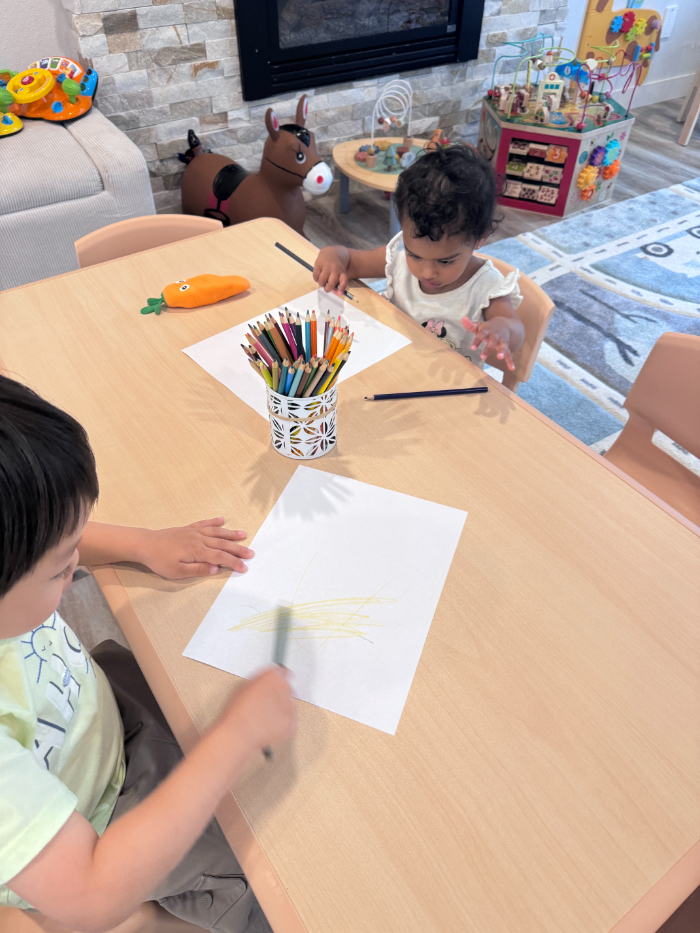
Sensory Social Stations: Create mirrored activity zones where infants engage in identical activities side-by-side. Research from Zero to Three shows increased social gazing when materials are duplicated rather than shared. Implementation table:
| Age Group | Activity | Materials | Social Objective |
|---|---|---|---|
| 6-9 months | Texture exploration mats | Soft fabrics, crinkly papers | Visual tracking of peers |
| 9-12 months | Ball rolling corridors | Lightweight balls | Reciprocal action imitation |
Cooperative Music and Movement for Toddlers
Circle Time Progressions: Begin with caregiver-led songs, transition to child-initiated movements. Studies in early childhood research document a 65% increase in cooperative responses when music incorporates call-and-response elements.
Song Sequence Example:
- “If You’re Happy and You Know It” (individual actions)
- “Row Your Boat” (partner rows)
- “Freeze Dance” (group statues)
Role-Playing and Dramatic Play for Preschoolers
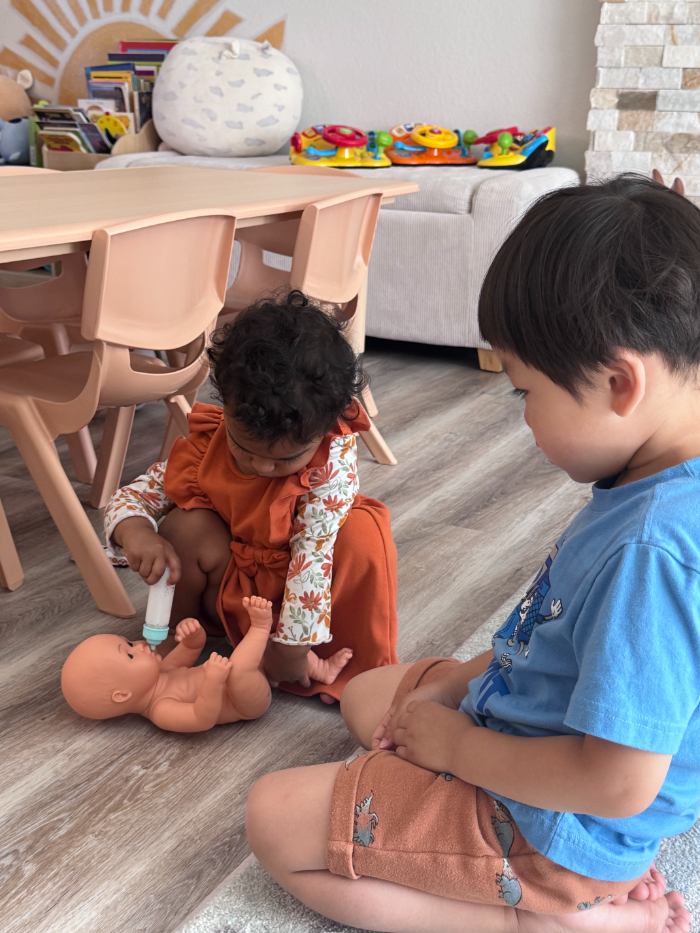
Themed Play Zones: Set up rotating scenarios (grocery store, veterinarian office) with authentic props. Documentation from the Journal of Applied Developmental Psychology reveals that children in dramatic play centres initiate three times more social interactions than in block-area play.
Multi-Age Grouping Benefits and Implementation
Mixed-age groupings (6 months–3 years) naturally scaffold social learning. Older toddlers model language and emotional regulation for infants, while infants provide nurturing opportunities for toddlers. Implementation requires:
- Maximum 1 : 4 ratio in mixed-age rooms
- Vertical grouping for at least 2 hours daily
- Designated “big helper” roles for 30+-month children
Creating a Socially Supportive Environment in Daycare
Physical Space Design for Interaction
Social Geography Principles:
- Low dividers (24–30 inches) to maintain visual contact
- Cozy corners with 2-3 seats for intimate interactions
- Mirrored walls at child height to facilitate self-/other-comparison
- Traffic patterns that encourage natural gathering points
Staff Training and Ratios for Optimal Social Guidance
Professional development should include:
- Recognition of micro-social cues (gaze aversion, approach behaviours)
- Scripting for social coaching (“Maya, Liam has the truck. Let’s ask if we can have a turn”)
- De-escalation techniques for possessive conflict
Recommended Ratios for Social Development:
| Age Group | Maximum Ratio | Social Benefit |
|———–|————–|—————-|
| Infants | 1 : 3 | Individualised social referencing |
| Toddlers | 1 : 5 | Facilitated parallel play |
| Preschoolers | 1 : 8 | Complex group negotiation |
Daily Routines That Promote Peer Connections
Transition Rituals:
- Greeting circles with name games
- Partner hand-washing
- “Buddy walks” to the playground
Addressing Common Social Challenges in Group Care
Managing Conflict and Teaching Empathy
Conflict Resolution Protocol:
- Acknowledge emotions (“You both want the red bike”)
- Describe actions without judgment
- Generate solutions collaboratively
- Follow-up with reconciliation gestures (e.g., high-five)
Supporting Shy or Withdrawn Children
Gradual integration strategies:
- Assign “social mentors” (more confident peers)
- Use visual choice boards for participation
- Celebrate micro-progress (looking at peer = high-five)
Navigating Cultural and Linguistic Diversity
- Implement dual-language labeling
- Celebrate cultural holidays through child-led presentations
- Use translation apps for real-time parent communication
Parental Involvement and Home-Care Alignment
Communication Strategies for Social Progress Updates
Digital Social Portfolios may include:
- 30-second video clips of positive peer interactions
- Weekly “social spotlight” emails highlighting specific skills
- Monthly parent workshops on extending daycare social learning
Home Activities to Reinforce Daycare Social Learning
Weekend Playdate Kits may contain:
- Laminated song cards from the classroom repertoire
- Duplicate toys for parallel play practice
- Conversation prompts for dinner table (“Who did you play with today?”)
Measuring and Tracking Social Development Progress
Developmental Checklists and Observation Tools
Custom Social Observation Form:
| Domain | 3-Month Targets | 6-Month Targets | 12-Month Targets |
|---|---|---|---|
| Initiation | Smiles at peers | Offers toy | Invites play |
| Response | Tracks peer movement | Imitates actions | Takes turns |
| Regulation | Calms with adult | Recovers from conflict | Uses words for needs |
Individualised Social Goals and Documentation
Create child-specific social learning plans reviewed quarterly with parents, including photographic evidence and narrative observations.
About KidoHeaven: Your Partner in Early Social Development
At KidoHeaven, we specialize in creating nurturing environments where infant social skills flourish into meaningful early childhood relationships. Our Bothell centers—offering premier Daycare Bothell and child care Bothell services—implement research-based social curricula with low ratios, multi-age grouping, and continuous parent partnership. Schedule a tour to see our social learning spaces in action.
Why KidoHeaven Stands Out
✅ Licensed in Washington State
✅ Aligned with Early Achievers standards
✅ Working Connections subsidy accepted
✅ Daily updates via Brightwheel
✅ Located in Bothell, serving Mill Creek, Lynnwood & nearby areas
✅ Nutritious snacks, safe outdoor space, & positive mealtime routines
📞 Call 206-734-2040 to schedule a tour
🌐 Enroll now
Follow Our Mealtime Moments
Stay updated with more beautiful outdoor meals and daily learning routines on:
Instagram | Facebook | Nextdoor | Yelp | Winnie | YouTube | Upwards
FAQ
1. When should infants start group care for optimal social development?
The American Academy of Pediatrics suggests high-quality group care can begin at 12 months, but earlier enrollment with excellent ratios (1:3) shows no developmental harm and potential social benefits.
2. How many peers should a toddler interact with daily?
Research indicates 4–6 consistent peers provide optimal social learning without overwhelming the toddler’s regulatory capacity.
3. What if my child bites during social conflicts?
Biting often reflects communication frustration. Implement shadow supervision, teach “biting hurts” scripts, and provide teething alternatives. Most biting phases resolve within 6 weeks with consistent intervention.
4. How does screen time affect group social development?
Zero screen exposure under 18 months remains the recommendation. For 2+, limit to 15 minutes of interactive video calls with familiar peers.
5. Can introverted children thrive in group care?
Absolutely. Quality programs provide quiet spaces for recovery while gradually encouraging participation. Introverted children often develop deep one-on-one friendships in group settings.


