
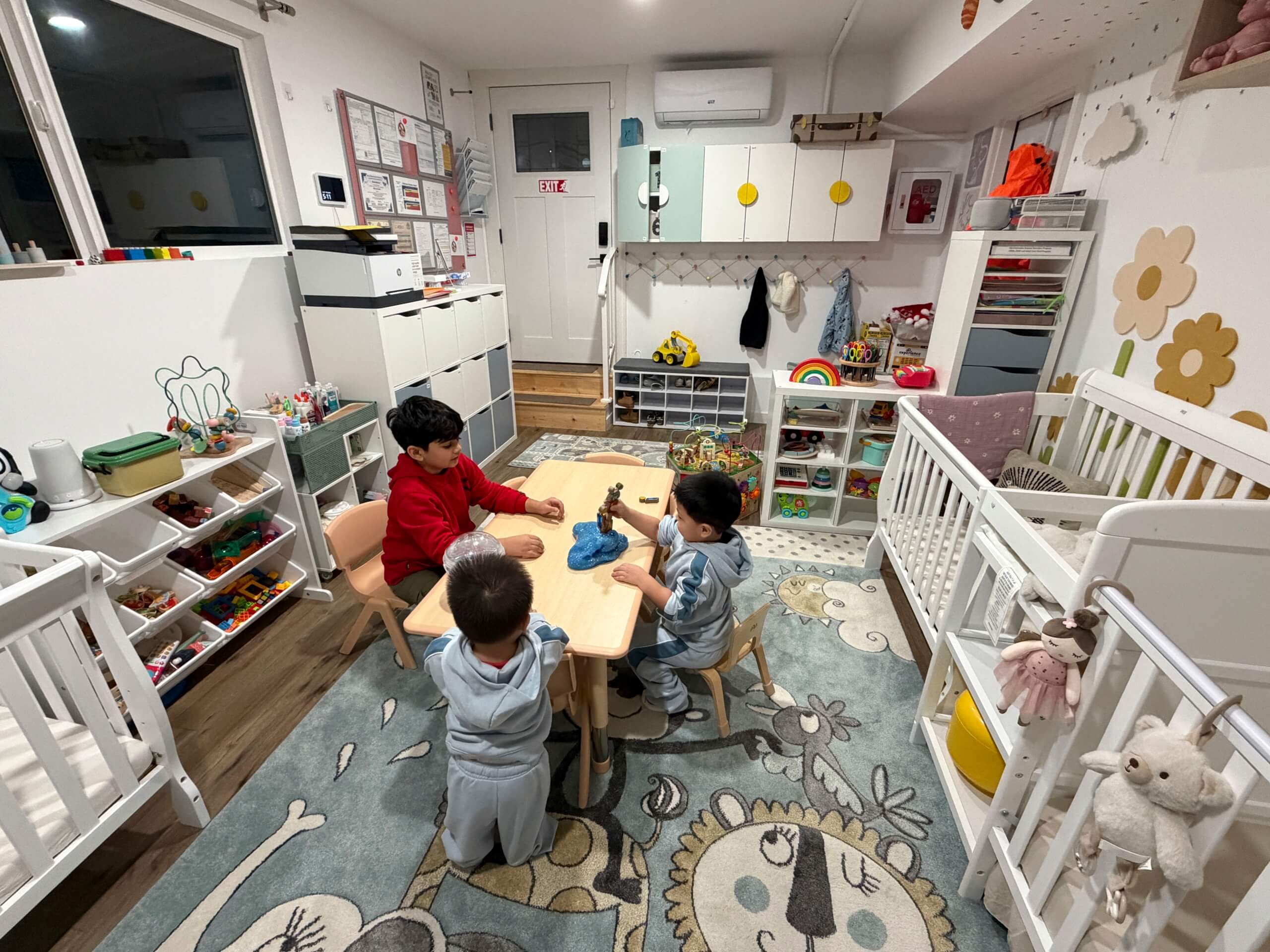


Puppet play in childcare supports imagination, language development, and social skills from infancy through preschool. By watching, interacting, and role-playing with puppets, children strengthen communication abilities, build emotional understanding, and practice creative thinking. Whether infants are observing expressive storytelling, toddlers are experimenting with early speech, or preschoolers are creating their own narratives, puppet play serves as a research-supported early childhood activity that promotes cognitive growth and social-emotional development in a structured learning environment.
What Is Puppet Play in Early Childhood Education?
Puppet play in childcare refers to structured and unstructured learning experiences where educators use hand puppets, finger puppets, or character figures to support communication, storytelling, and social interaction. It is a form of dramatic play rooted in symbolic representation — a foundational skill in early cognitive development.
In high-quality early childhood programs, puppet activities are intentionally integrated into the curriculum to strengthen language development, imagination, and emotional expression. Unlike passive entertainment, educational puppet play is interactive, guided by developmentally appropriate practice (DAP), and aligned with early learning standards.
The Developmental Science Behind Puppet Play
Cognitive Development and Symbolic Thinking
According to developmental theorists such as Jean Piaget, symbolic play emerges during the preoperational stage. When children assign voices and personalities to puppets, they engage in abstract thinking — a precursor to literacy and problem-solving skills.
Research from the Harvard Center on the Developing Child highlights that imaginative play strengthens executive function skills, including working memory and cognitive flexibility.
Language Acquisition and Expressive Skills
Puppet play in childcare naturally encourages conversational exchange. When educators model dialogue through puppets, children hear expanded vocabulary, varied sentence structures, and expressive tone patterns.
The National Association for the Education of Young Children (NAEYC) supports dramatic play as a critical tool for building preschoolers’ language skills and narrative competence.
Social-Emotional Learning and Empathy
Through role-playing scenarios, children practice perspective-taking. A puppet can express sadness, excitement, or frustration, allowing children to identify emotions safely. This supports emotional regulation and social understanding — core components of early childhood activities that promote lifelong resilience.
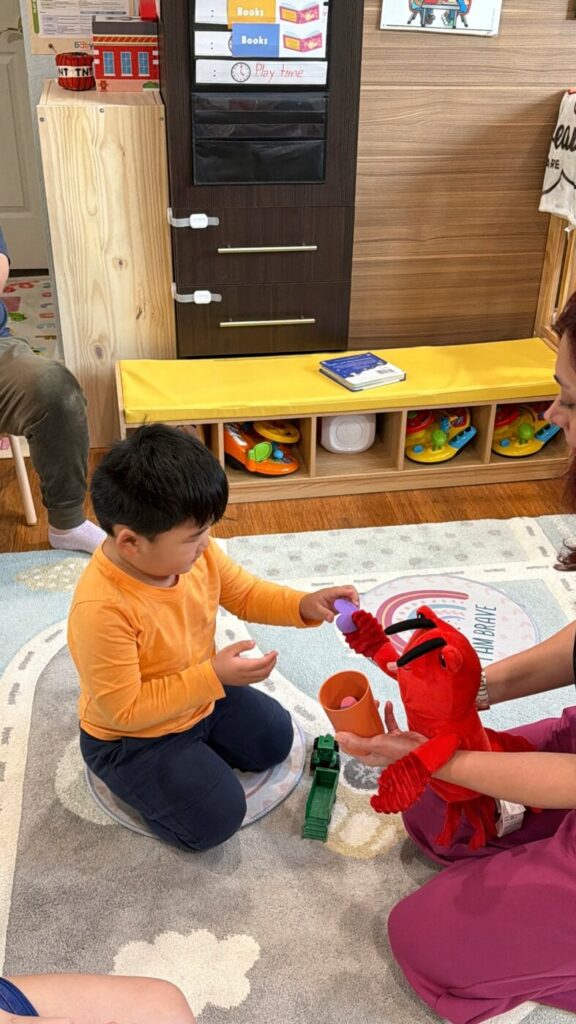
Puppet Play for Infants: The Power of Observation
Infants may not manipulate puppets independently, but they benefit profoundly from watching and interacting with them.
Visual Tracking and Sensory Engagement
Bright colors and gentle puppet movements support visual development and tracking skills. When caregivers move a puppet slowly across an infant’s field of vision, it strengthens early neurological pathways.
Early Communication Foundations
When educators use simple language like “Hello, baby!” through a puppet, infants begin associating sound with social interaction. This reinforces early receptive language development.
Secure Attachment and Responsive Interaction
Warm puppet interactions support bonding. According to attachment research, responsive engagement helps infants develop trust and security — foundational for later social growth.
Puppet Play for Toddlers: Fueling Imagination and Early Speech
Toddlers enter a critical stage for toddler imagination and expressive language.
Expanding Vocabulary Through Interactive Dialogue
A puppet asking, “Can you help me find my shoes?” invites toddlers to respond verbally. This form of guided interaction supports vocabulary expansion and sentence formation.
Symbolic Play and Creativity
At this stage, toddlers begin pretending the puppet is real. This imaginative thinking is directly linked to cognitive flexibility and creative development.
Turn-Taking and Social Awareness
When two toddlers share puppets, they practice turn-taking — a vital social skill. Educators can scaffold this interaction to promote cooperation and patience.
Puppet Play for Preschoolers: Role-Playing and Language Mastery
Preschoolers use puppets to construct complex stories and social scenarios.
Narrative Skills and Storytelling
Story sequencing through puppet shows enhances literacy readiness. Children learn beginning, middle, and end structure — a predictor of future reading success.
Conflict Resolution Through Dramatic Play
Educators can model problem-solving:
“What should the puppet do if it feels left out?”
This technique builds social-emotional development in preschool settings.
Confidence in Communication
Shy children often feel more comfortable speaking through a puppet. The puppet acts as a communication bridge, building confidence and expressive fluency.
Puppet Play and Washington State WAC Standards
High-quality childcare programs in Washington must follow WAC 110-300 regulations for safety, curriculum, and supervision.
Alignment with Early Learning Requirements
Puppet play supports:
- Social-emotional development
- Language and literacy growth
- Cognitive skills
- Creative expression
These domains align with Washington State early learning standards.
Safe Materials and Supervision
Under WAC guidelines:
- Materials must be non-toxic
- Small parts must not pose choking hazards
- Activities require active supervision
Developmentally Appropriate Practice
Programs must tailor activities to the age level. Infants observe, toddlers interact, and preschoolers role-play — ensuring compliance with licensing expectations.
For official standards, see:
Washington State DCYF Child Care Licensing Rules
Implementing Puppet Play in a High-Quality Childcare Program
Structured vs. Free Exploration
Structured puppet storytelling builds literacy.
Free puppet centers promote creativity and peer interaction.
Balanced programs incorporate both approaches.
Inclusive and Culturally Responsive Activities
Puppets representing diverse cultures and family structures promote inclusivity. According to NAEYC guidelines, culturally responsive materials strengthen identity development.
Teacher Facilitation Techniques
Effective educators:
- Model expressive language
- Ask open-ended questions
- Encourage child-led storytelling
- Observe developmental progress
Research-Based Benefits of Puppet Play in Childcare
Studies indicate that dramatic play enhances:
- Vocabulary acquisition
- Emotional intelligence
- Cooperative learning
- Executive functioning
The American Academy of Pediatrics emphasizes play as essential to healthy brain development.
Conclusion: Why Puppet Play Matters in Early Learning
Puppet play in childcare is far more than entertainment. It is a research-supported educational tool that strengthens imagination, communication, and social competence from infancy through preschool. By integrating structured storytelling and child-led dramatic play, early learning programs create environments where creativity and language flourish naturally.
Families seeking high-quality Daycare Bothell programs or trusted child care Bothell providers should look for learning environments that intentionally incorporate imaginative, developmentally appropriate activities such as puppet play.
At Kido Heaven, our curriculum integrates creative early childhood activities aligned with Washington State standards to support confident, expressive, and socially capable learners.
Why KidoHeaven Stands Out
✅ Licensed in Washington State
✅ Aligned with Early Achievers standards
✅ Working Connections subsidy accepted
✅ Daily updates via Brightwheel
✅ Located in Bothell, serving Mill Creek, Lynnwood & nearby areas
✅ Nutritious snacks, safe outdoor space, & positive mealtime routines
📞 Call 206-734-2040 to schedule a tour
🌐 Enroll now
Follow Our Mealtime Moments
Stay updated with more beautiful outdoor meals and daily learning routines on:
Instagram | Facebook | Nextdoor | Yelp | Winnie | YouTube | Upwards
FAQ
1. Is puppet play appropriate for infants?
Yes. While infants do not manipulate puppets independently, observing puppet storytelling supports visual tracking, language exposure, and social bonding.
2. How does puppet play improve preschoolers’ language skills?
Through storytelling, dialogue modeling, and role-play, children practice vocabulary, sentence structure, and narrative sequencing.
3. How often should puppet play be included in early childhood activities?
Daily integration is ideal, either through circle time storytelling or dramatic play centers.
4. Does puppet play meet Washington State childcare standards?
Yes, when implemented safely and developmentally appropriately under WAC 110-300 regulations.


