
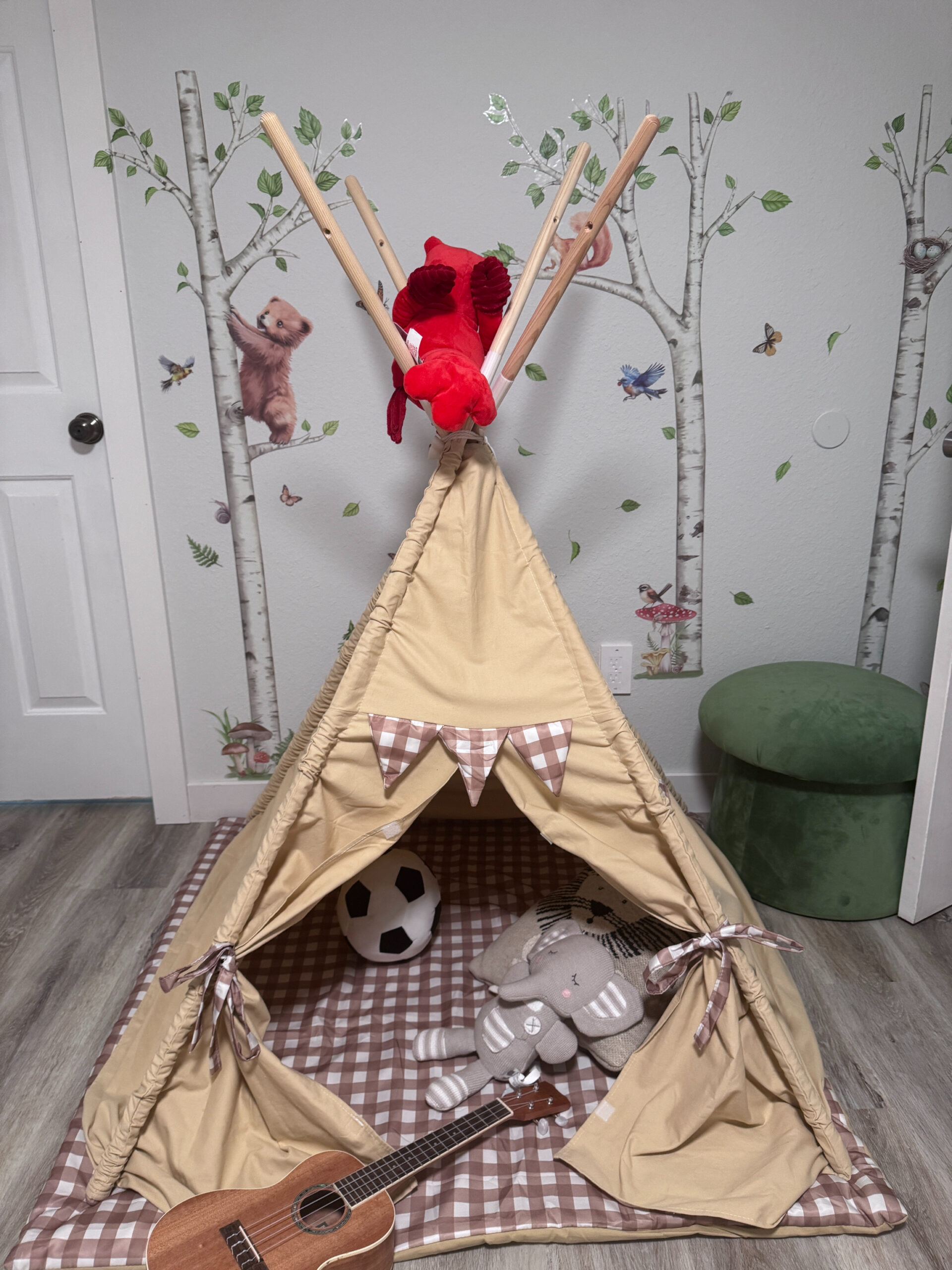


Even though infants, toddlers, and preschoolers spend a significant part of their day in daycare, home remains the most powerful environment for their emotional, cognitive, and physical growth. A thoughtfully designed home doesn’t compete with daycare; it extends and strengthens everything your child learns there while preventing the “learning gap” that can occur when the two environments feel disconnected.In this comprehensive, evidence-based guide—drawing on the latest recommendations from the American Academy of Pediatrics (AAP), the Consumer Product Safety Commission (CPSC), and recent child development research—you’ll discover exactly how to:
- Fully childproof your home on any budget
- Create age-perfect “Yes Spaces” where everything within reach is safe and engaging
- Use a proven toy-rotation system that boosts focused play and creativity by up to 42%
- Implement simple, research-backed activities that skyrocket language, early math, motor, and emotional skills
- Align your evening and morning routines with daycare schedules to reduce separation anxiety and bedtime battles
You don’t need a big house or an unlimited budget. With the practical steps in this article, your home will become a true “second classroom”: safe, stimulating, and perfectly in sync with your child’s daycare experience.Let’s get started building the ideal home environment for your daycare kid.
Why Your Home Environment Matters Even When Kids Attend Daycare
Many parents believe that once their child is enrolled in a high-quality daycare, the learning and development responsibility shifts entirely to the center. In reality, children spend only about 25–40% of their waking hours in daycare. The remaining time at home is a golden opportunity to reinforce social-emotional skills, cognitive growth, and physical development in a familiar, loving setting.
A thoughtfully designed home environment acts as an extension of professional childcare and helps prevent the “learning dip” that can occur when home and daycare experiences feel disconnected.
The Four Pillars of a Daycare-Complementary Home
- Safety First
- Age-Appropriate Stimulation
- Emotional Security
- Consistency with Daycare Routines
Let’s explore each pillar in depth.

Safety First: Building a Truly Childproof Home
Common Hidden Hazards Parents Overlook
- Window blind cords (strangulation risk)
- Tip-over risks from unsecured TVs and furniture
- Access to button batteries and magnets
- Poisonous houseplants (e.g., philodendron, dieffenbachia)
Age-Specific Safety Checklist
| Age Group | Must-Secure Items | Recommended Safety Products |
|---|---|---|
| 0–12 months | Cribs, changing tables, electrical outlets | Outlet covers, corner guards, cabinet locks |
| 12–36 months | Stairs, drawers, toilets, heavy furniture | Safety gates, toilet locks, furniture anchors |
| 3–5 years | Small toys, cleaning supplies, medications | High cabinet locks, poison control stickers |
Non-Toxic Toy and Material Guide
According to toy safety guidance from the Consumer Product Safety Commission (CPSC), it’s wise to:
- Choose toys labeled with ASTM F963 compliance. U.S. Consumer Product Safety Commission+2U.S. Consumer Product Safety Commission+2
- Prefer solid wood toys over many plastics (they often have fewer harmful chemicals like phthalates).
- Avoid toys with paint made before 2011, since older painted toys may pose a lead risk.
For more information, you can refer to the CPSC’s Toy Safety business guidance. U.S. Consumer Product Safety Commission
Creating Dedicated Learning & Play Zones
The Magic of “Yes” Spaces
A “Yes” space is a designated area where everything within reach is 100% safe and interesting for a child to explore independently. Many Montessori and RIE (Resources for Infant Educarers) educators strongly recommend these zones.
Zone Ideas by Age
- Infants (0–12 months)
- Floor bed or firm mattress on the floor
- Black-and-white contrast cards
- Treasure basket with natural objects (wooden rings, silk scarves, metal cups)
- Toddlers (1–3 years)
- Low shelves with a rotating set of 6–8 toys
- Sensory bins (e.g., rice, water beads) under supervision
- If space allows, a Pikler triangle or climbing arch
- Preschoolers (3–5 years)
- Art corner with accessible washable markers and large sheets of paper
- Pretend-play station (play kitchen, doctor kit, tool bench)
- Cozy reading nook with a forward-facing bookshelf
Toy Rotation System That Actually Works
Keep only 8–12 toys accessible at once. Store the rest in clear bins and rotate them every 7–10 days. Research (e.g., from the University of Toledo) suggests that such rotation increases focused play significantly.
Stimulating Cognitive & Language Development at Home
Best Toddler & Preschooler Home Activities (Backed by Research)
| Skill Area | Activity Example | Developmental Benefit |
|---|---|---|
| Language | Narrate everything you do | Increases vocabulary dramatically |
| Executive Function | Simple sorting games (colors/shapes) | Improves working memory |
| Math Readiness | Counting stairs while going up | Builds one-to-one correspondence |
| Fine Motor | Threading large beads or pasta | Prepares for writing (per CDC milestones) |
| Gross Motor | Indoor obstacle course with cushions | Enhances balance and spatial awareness |
Screen-Time Reality Check
- The American Academy of Pediatrics recommends no recreational screen time for children under 18 months, and for ages 2–5, limit to 1 hour per day co-viewed.
- Replace passive screen time with interactive reading. Children who are read to daily tend to enter kindergarten having heard far more words, which supports strong language development.
Supporting Social-Emotional Growth Outside Daycare Hours
Emotion Coaching in Everyday Moments
When your child struggles (for example, wants another cookie), you can:
- Name the feeling: “You’re feeling really frustrated.”
- Validate: “It’s hard when we really want something.”
- Set a limit: “We can have one cookie after dinner.”
- Problem-solve: Talk together about what’s fair and what we can do next.
This emotional-coaching method, based on the work of Dr. John Gottman, helps reduce tantrums over time.
Creating a Calm-Down Corner
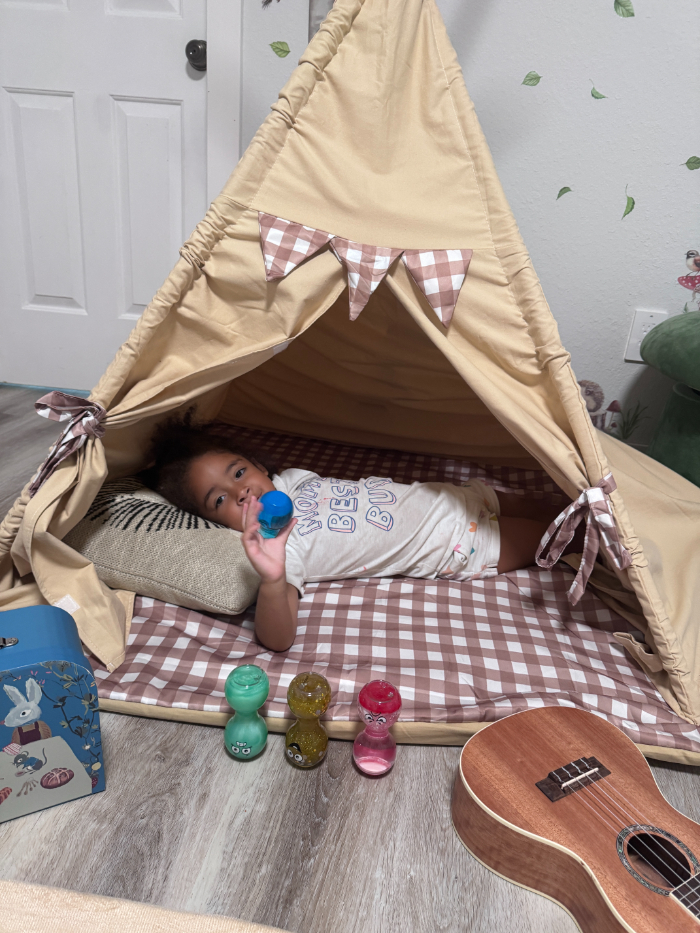
Consider setting up a quiet space for emotional regulation:
- Soft pillows
- Feelings chart
- Squishy stress balls
- Small hourglass timer
- Books about emotions (like The Color Monster or The Way I Feel)
Aligning Home Routines with Daycare Schedules
Here’s an example of how you can blend home and daycare routines if daycare runs from 8:30 AM to 4:30 PM:
| Time | Activity | Purpose |
|---|---|---|
| 6:30–7:30 AM | Wake, breakfast, free play | Smooth morning transition |
| 4:45–5:30 PM | Outdoor time or gross-motor play | Release pent-up energy from the day |
| 5:30–6:15 PM | Dinner + family connection | Language-building and bonding |
| 6:30–7:15 PM | Calm play / bath / books | Wind-down routine |
| 7:30 PM | Bedtime | Consistent sleep (most children need 11–14 hours) |
Consistency reduces separation anxiety and helps avoid bedtime battles.
Bringing It All Together
Bringing It All TogetherCreating a safe and stimulating home environment doesn’t require a big house or unlimited budget. It requires intention: childproof thoroughly, curate a small collection of high-quality open-ended materials, align routines, and be emotionally present.When home and daycare work in harmony, children thrive academically, socially, and emotionally.If you’re searching for a trusted daycare partner in the Bothell area that shares this philosophy of whole-child development, consider Daycare Bothell or explore exceptional child care Bothell options at KidoHeaven. We believe the best outcomes happen when loving homes and professional childcare walk hand-in-hand.
Why KidoHeaven Stands Out
✅ Licensed in Washington State
✅ Aligned with Early Achievers standards
✅ Working Connections subsidy accepted
✅ Daily updates via Brightwheel
✅ Located in Bothell, serving Mill Creek, Lynnwood & nearby areas
✅ Nutritious snacks, safe outdoor space, & positive mealtime routines
📞 Call 206-734-2040 to schedule a tour
🌐 Enroll now
Follow Our Mealtime Moments
Stay updated with more beautiful outdoor meals and daily learning routines on:
Instagram | Facebook | Nextdoor | Yelp | Winnie | YouTube | Upwards
FAQ
1. Isn’t teaching self-care too advanced for babies?
No. Co-regulation in infancy becomes self-regulation by toddlerhood. The earlier you start, the stronger the neural pathways.
2. My toddler only wants screens to calm down. Is that okay?
Short-term yes, long-term no. Screens reduce cortisol quickly but prevent learning internal regulation skills (AAP, 2023).
3. How long should a calm-down activity take?
As little as 30–90 seconds for infants; 3–5 minutes for toddlers. The goal is returning to a “green zone,” not perfection.
4. Can daycare teachers use these activities?
Absolutely. Many of these (breathing buddy, glitter jars, cozy corner) are standard in Reggio-Emilia and RIE-inspired centers worldwide.
5. Where can I find high-quality childcare that already teaches emotional wellness?
Look for centers that train staff in conscious discipline and have dedicated calm corners.


