

Self-regulation is one of the most critical skills children develop in early childhood. It affects how they manage emotions, control impulses, and respond to challenges. However, self-regulation is not something children are simply taught—it is something they develop naturally through consistent experiences.
One of the most effective ways to support this development is through a consistent classroom structure. When children are exposed to predictable environments, clear expectations, and stable routines, they gradually learn how to regulate their own behavior without relying on rewards or punishment.
What Is Self-Regulation in Early Childhood?
Self-regulation refers to a child’s ability to:
- Manage emotions
- Control impulses
- Focus attention
- Adapt behavior to different situations
In early childhood, these skills are still developing. Children rely heavily on their environment and caregivers to guide this process.
The Brain Science Behind Self-Regulation
Self-regulation is closely linked to the development of the prefrontal cortex—the part of the brain responsible for:
- Decision-making
- Impulse control
- Emotional regulation
At the same time:
- The amygdala responds quickly to emotional stimuli
- Neural pathways are still forming
- Executive function skills are immature
This is why young children need structured environments to support their development.
Why Young Children Struggle With Impulse Control
Impulse control does not come naturally to young children. Challenges include:
- Limited ability to delay gratification
- Strong emotional reactions
- Difficulty shifting attention
- Underdeveloped executive functioning
Without a consistent structure, children may feel overwhelmed and unable to regulate their behavior effectively.
How Consistent Classroom Structure Supports Self-Regulation
Predictable Environments
Consistency reduces uncertainty. When children know what to expect, their stress levels decrease, making it easier to manage emotions.
Clear Expectations
Structured classrooms provide clear behavioral boundaries. Children understand:
- What is expected
- What comes next
- How to behave in different situations
Repeated Behavioral Patterns
Through repeated experiences, children begin to internalize appropriate behaviors. Over time, external structure becomes internal control.
Structure vs. Discipline: A Developmental Perspective
Traditional discipline often relies on rewards and consequences. However, research shows that:
- External control does not build internal regulation
- Children learn best through consistent environments
- Emotional safety is more effective than punishment
Structure provides guidance without fear, allowing children to develop self-regulation naturally.
Key Elements of a Structured Classroom
Physical Environment
A well-organized classroom includes:
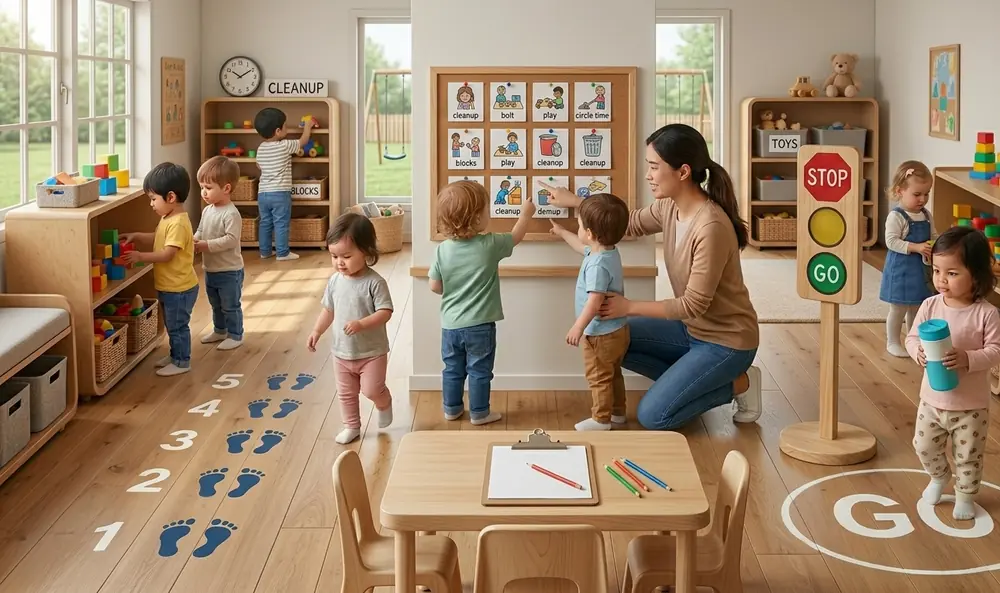
- Clearly defined areas (play, learning, rest)
- Accessible materials
- Minimal clutter
This reduces overstimulation and supports focus.
Time Structure
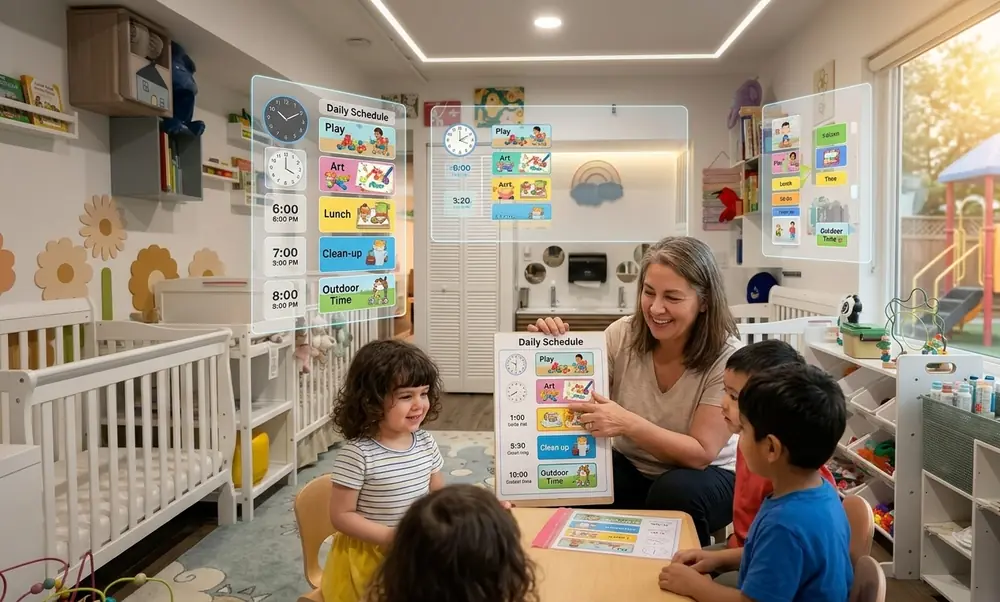
Consistent daily schedules help children anticipate what comes next, reducing anxiety and improving cooperation.
Behavioral Modeling
Caregivers model calm, regulated behavior. Children learn by observing:
- Emotional responses
- Problem-solving strategies
- Social interactions
How Structure Builds Impulse Control Naturally
Impulse control develops gradually through:
- Repeated exposure to expectations
- Opportunities to practice waiting and turn-taking
- Consistent feedback from caregivers
Over time, children move from external guidance to internal self-control.
The Role of Caregivers in Co-Regulation
Before children can regulate themselves, they rely on co-regulation—the process where caregivers help manage emotions.
Effective caregivers:
- Respond calmly to behavior
- Provide reassurance
- Guide emotional responses
In a safe daycare environment in Bothell, caregivers are trained to support co-regulation through structured interactions.
WAC Guidelines and Structured Learning Environments
Washington Administrative Code (WAC) emphasizes:
- Consistent daily schedules
- Developmentally appropriate practices
- Safe and predictable environments
These standards ensure that childcare settings support both safety and emotional development, including self-regulation.
Signs a Child Is Developing Self-Regulation
Indicators include:
- Ability to wait briefly
- Improved emotional control
- Following simple instructions
- Recovering from frustration more quickly
These signs reflect growing independence and emotional maturity.
Common Mistakes That Disrupt Self-Regulation
Inconsistent Environments
Unpredictability increases stress and reduces a child’s ability to regulate behavior.
Overstimulation
Too many activities or sensory inputs can overwhelm children.
Reliance on Rewards/Punishment
External motivation does not build internal control.
Supporting Self-Regulation at Home
Parents can reinforce self-regulation by:
- Maintaining consistent routines
- Setting clear expectations
- Modeling calm behavior
- Allowing children time to practice self-control
Consistency between home and daycare strengthens development.
Choosing the Right Daycare for Self-Regulation Development
When selecting a childcare provider, look for:
- Structured classroom environments
- Trained caregivers
- Consistent schedules
- Focus on emotional development
A professional child care service in Bothell providers should prioritize structure as a foundation for self-regulation.
You can also explore our child care programs to see how structured environments support children’s emotional and behavioral growth.
Conclusion
Self-regulation is not taught through instruction alone—it is developed through experience. Consistent classroom structure provides the foundation children need to build impulse control, manage emotions, and navigate their environment confidently.
By creating predictable, supportive environments, caregivers help children internalize these skills naturally. Over time, this leads to greater independence, confidence, and long-term success.
For families searching for a high-quality daycare in Bothell, choosing a structured environment can make a significant difference in a child’s ability to develop self-regulation skills. A well-designed child care program in Bothell focuses not only on supervision but on emotional and behavioral growth.
At Kido Heaven early learning center, structured classrooms are thoughtfully designed to support self-regulation, helping children grow emotionally, socially, and cognitively.
Why KidoHeaven Stands Out
✅ Licensed in Washington State
✅ Aligned with Early Achievers standards
✅ Working Connections subsidy accepted
✅ Daily updates via Brightwheel
✅ Located in Bothell, serving Mill Creek, Lynnwood & nearby areas
✅ Nutritious snacks, safe outdoor space, & positive mealtime routines
📞 Call 206-734-2040 to schedule a tour
🌐 Enroll now
Follow Our Mealtime Moments
Stay updated with more beautiful outdoor meals and daily learning routines on:
Instagram | Facebook | Nextdoor | Yelp | Winnie | YouTube | Upwards
FAQ
1. What is self-regulation in children?
It is the ability to manage emotions, control impulses, and adapt behavior.
2. How does classroom structure help self-regulation?
It provides predictability and consistency, which reduces stress and supports learning.
3. Can self-regulation be taught without discipline?
Yes, structured environments and caregiver support are more effective than punishment.
At what age do children develop self-regulation?
It begins in infancy and develops gradually through early childhood.
Why is self-regulation important?
It supports academic success, social skills, and emotional well-being.
Visit Kido Heaven Child Care
A licensed home daycare for infants to pre-K, serving Bothell and Mill Creek. Call or text (206) 734-2040 or book a tour.
Book a Tour