
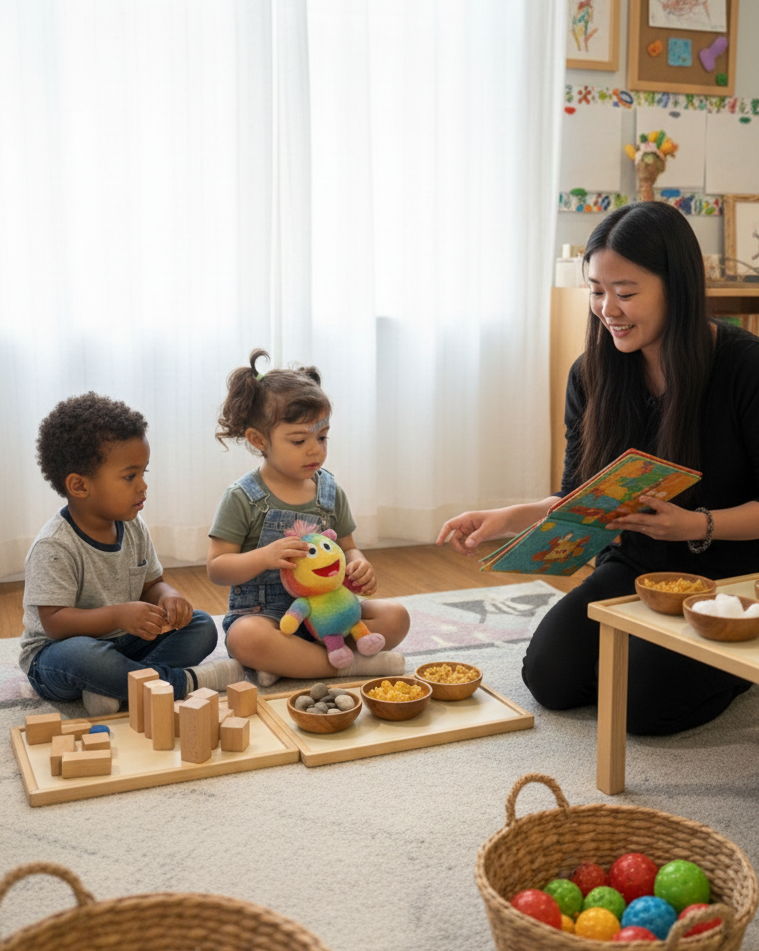


Sensory storytelling transforms ordinary story time into a meaningful learning experience for infants, toddlers, and preschoolers. By using textures, sounds, movement, and visual elements, children don’t just hear a story—they feel, explore, and actively participate in it. This engaging approach supports language development, imagination, emotional growth, and early literacy skills while aligning with developmentally appropriate practices in quality childcare programs.
What Is Sensory Storytelling in Childcare?
Sensory storytelling is an engaging educational approach that involves sharing stories through sight, sound, touch, movement, and sometimes even smell. Instead of children simply listening, they experience the story with their senses, making learning more memorable and meaningful.
Sensory Learning and Brain Development Explained
During early childhood, the brain rapidly develops through sensory input. When children touch textured objects, hear sounds, move their bodies, and visually explore props, they build stronger neural pathways. Sensory storytelling supports:
- neural growth
- language processing
- emotional understanding
- attention development
Why Sensory Experiences Matter More Than Passive Listening
Traditional storytelling is wonderful, but young children learn best when they are involved. Sensory storytelling transforms passive listening into active participation, helping even the youngest learners stay engaged longer and understand better.
Developmental Benefits of Sensory Storytelling
Language and Early Literacy Growth
Through sensory storytelling, children:
- learn new vocabulary
- improve expressive language
- connect sounds to meaning
- strengthen comprehension
Children don’t just hear words — they feel and experience them.
Imagination, Creativity, and Cognitive Skills
When stories include textures, movement, and sound effects, children build creativity and mental imagery. Sensory storytelling also strengthens problem-solving, sequencing, and memory skills.
Emotional Regulation & Social Development
Stories help children understand emotions. When combined with sensory elements, children can better relate to experiences, recognize feelings, and develop empathy.
Sensory Integration and Motor Skills
Handling props improves fine motor skills, while movement storytelling supports gross motor development and body awareness.
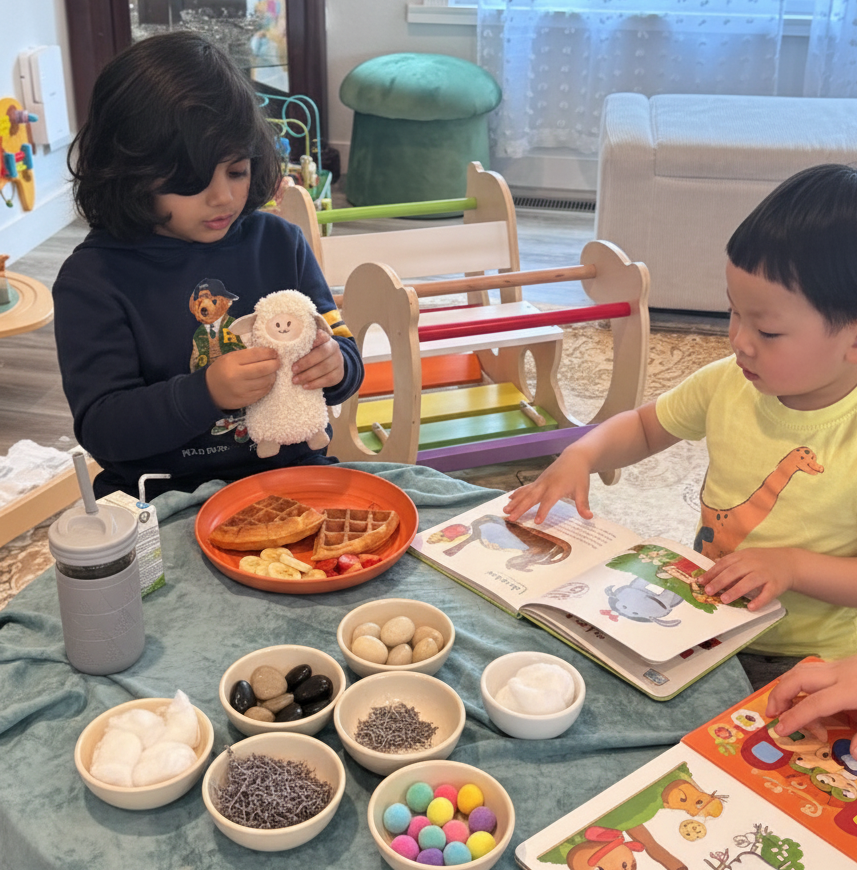
Sensory Storytelling for Different Age Groups
Sensory Storytelling for Infants
Infants respond best to:
- soft textures
- gentle sounds
- high-contrast visuals
- caregiver-led interaction
Short, soothing storytelling builds secure connections and early communication skills.
Activities for Toddlers
Toddlers love:
- fabric story boards
- soft props
- music and rhythm
- short repeating sentences
They begin to imitate sounds, act out characters, and engage more independently.
Preschool Sensory Storytelling
Preschoolers can handle more detailed stories. Ideal activities include:
- themed storytelling bins
- character role play
- creative movement
- early literacy questions
This stage supports stronger comprehension and emerging reading readiness.
Practical Ways Childcare Centers Use Sensory Storytelling
Props, Textures, and Real Objects
Teachers may use:
- scarves
- puppets
- soft plush props
- themed objects like leaves, shells, fabric
These make stories real and engaging.
Sound Effects, Music, and Rhythm
Instruments, recorded sounds, and teacher-led sound effects help children understand tone, setting, and emotion.
Movement-Based Storytelling
Children may jump like animals, pretend to walk through snow, or sway like trees. This keeps learning active and fun.
Story Corners and Sensory Stations
Dedicated environments help children feel calm, secure, and focused while learning.
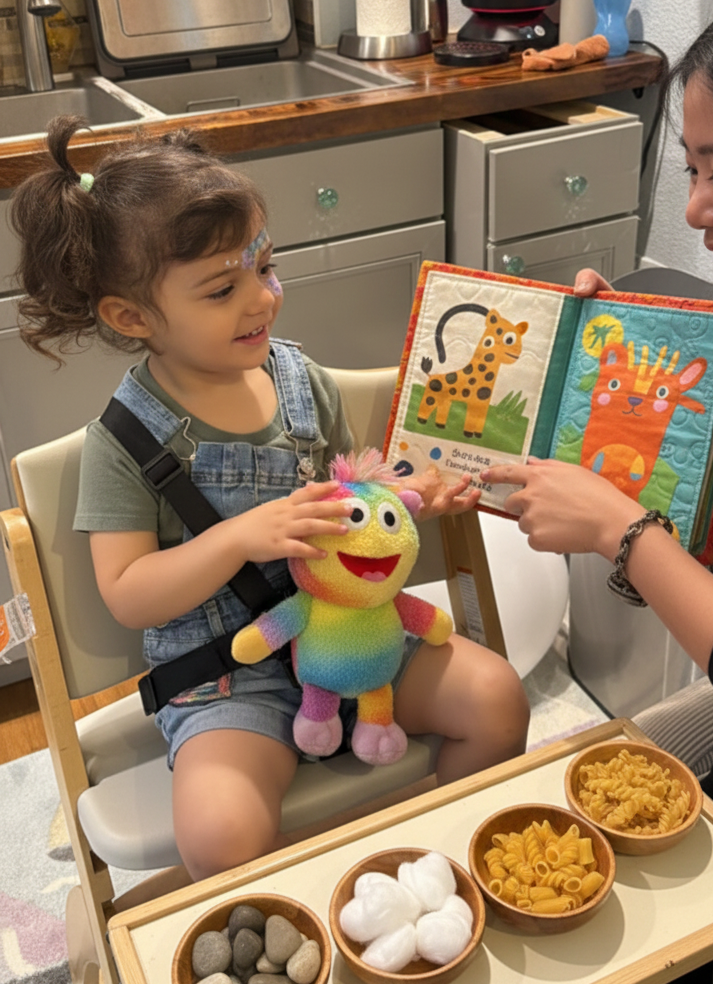
Safety, WAC Compliance, and Best Practices in Washington State
Professional childcare programs in Washington follow WAC (Washington Administrative Code) standards, ensuring activities are safe, developmentally appropriate, inclusive, and emotionally supportive.
Safe, Age-Appropriate Materials
Materials must be:
- non-toxic
- size-safe
- developmentally appropriate
- well-cleaned
Hygiene and Allergen Awareness
Centers maintain strict hygiene practices and avoid allergen-triggering materials whenever possible.
Inclusive Storytelling Practices
Stories respect cultural diversity, individuality, and emotional well-being.
Emotional Safety
Children are never forced to participate and activities always remain positive, supportive, and nurturing.
How Sensory Storytelling Supports Kindergarten Readiness
Sensory storytelling strengthens:
- vocabulary
- listening skills
- comprehension
- confidence
- participation readiness
These are core foundations for successful school transition.
Tips for Parents to Continue Sensory Storytelling at Home
- Use household objects as story props
- Encourage dramatic play
- Read daily
- Ask open-ended questions
- Let children retell stories in their own way
Small, consistent storytelling moments make a big developmental difference.
About Our Childcare Program
At KidoHeaven, we believe learning should be joyful, sensory-rich, and developmentally meaningful. Our educators design storytelling experiences that nurture creativity, language, confidence, and emotional well-being while complying with Washington State childcare standards.
If you’re exploring trusted childcare options, our nurturing programs proudly support families seeking Daycare Bothell and quality child care Bothell programs designed around growth, safety, and meaningful learning.
Why KidoHeaven Stands Out
✅ Licensed in Washington State
✅ Aligned with Early Achievers standards
✅ Working Connections subsidy accepted
✅ Daily updates via Brightwheel
✅ Located in Bothell, serving Mill Creek, Lynnwood & nearby areas
✅ Nutritious snacks, safe outdoor space, & positive mealtime routines
📞 Call 206-734-2040 to schedule a tour
🌐 Enroll now
Follow Our Mealtime Moments
Stay updated with more beautiful outdoor meals and daily learning routines on:
Instagram | Facebook | Nextdoor | Yelp | Winnie | YouTube | Upwards
FAQ
1. Is sensory storytelling safe for infants?
Yes—when materials are age-appropriate and supervised.
2. Does sensory storytelling help speech development?
Absolutely. It supports vocabulary, pronunciation, and communication.
3. Can shy children benefit from sensory storytelling?
Yes, it gently encourages participation and builds confidence.
4. Is this approach supported by childcare experts?
Yes, supported by developmental science, early childhood educators, and leading child development organizations.


