
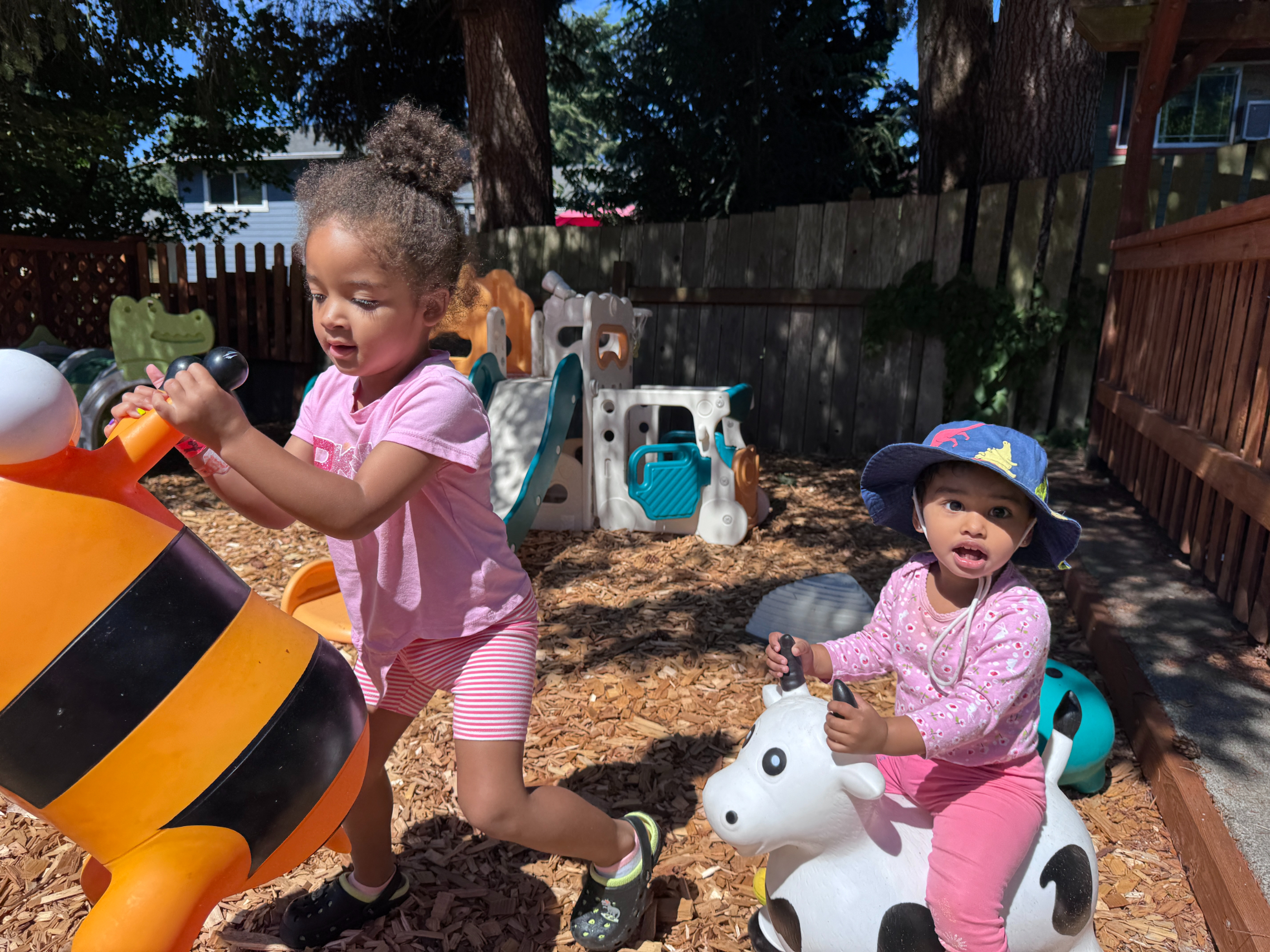


Sibling relationships in childcare play a powerful role in shaping early emotional security, communication skills, and social development. From infants observing older siblings to preschoolers learning cooperation and conflict resolution, structured daycare sibling support helps children build healthy bonds while also developing independence. High-quality childcare programs intentionally nurture sibling connections through shared activities, guided problem-solving, and developmentally appropriate supervision aligned with Washington State standards.
Why Sibling Relationships Matter in Early Childhood
The Developmental Science of Sibling Bonds
Research shows that sibling interactions significantly influence social-emotional growth. According to the Harvard Center on the Developing Child, early relationships shape neural pathways responsible for empathy, cooperation, and emotional regulation.
Siblings often serve as a child’s first peer relationship. Through daily interactions — sharing toys, negotiating space, comforting each other — children practice real-world social skills in a familiar and emotionally meaningful context.
Emotional Security and Attachment
For younger children, especially those under age two, seeing a sibling in the same childcare environment can reduce separation anxiety. Familiar presence provides reassurance during transitions.
However, secure attachment also requires balanced independence. Childcare programs must carefully support connection without encouraging overdependence.
Long-Term Social Outcomes
Positive sibling bonds correlate with:
- Better emotional regulation
- Stronger peer relationships
- Reduced behavioral challenges
- Increased empathy
These outcomes reinforce why early childhood family dynamics deserve structured support in licensed childcare environments.
Unique Dynamics of Siblings in Childcare Settings
Separation Anxiety Across Age Groups
Infants may seek older siblings for comfort. Toddlers may struggle if separated into age-appropriate classrooms. Preschoolers may resist independence if they rely heavily on a younger sibling role.
Educators must balance comfort with developmental readiness.
Competition vs. Cooperation
Sibling rivalry is developmentally normal. In group settings, competition may increase if children compare abilities or attention from teachers.
Intentional daycare sibling support focuses on collaboration rather than comparison.
Individual Identity Development
Each child must feel valued individually. Avoiding labels such as “the older one” or “the shy sibling” helps children build independent self-concepts.
Supporting Siblings from 6–18 Months
Observation and Parallel Play
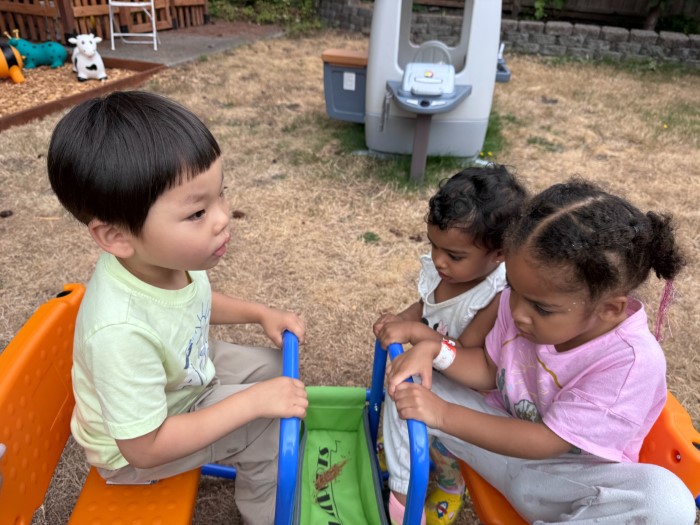
Infants primarily engage in parallel play. Watching a sibling stack blocks provides visual learning without direct participation.
Educators can narrate interactions:
“Your brother is building a tall tower.”
This supports language development and connection simultaneously.
Safe Shared Moments
Brief supervised interactions — such as singing songs together — create bonding opportunities without overwhelming infants.
WAC Safety and Supervision
Under Washington State WAC 110-300:
- Staff must provide active supervision
- Mixed-age interactions must maintain safety
- Materials must meet developmental standards
Toddler Sibling Bonds (18 Months–3 Years)
Encouraging Cooperative Play
Structured toddler sibling bonds develop through simple shared tasks:
- Rolling a ball back and forth
- Building blocks together
- Participating in music circles
Teachers scaffold cooperation through modeling.
Language Modeling for Conflict Prevention
Toddlers lack advanced verbal skills. Educators introduce phrases such as:
“My turn, please.”
“Can we share?”
This reduces physical conflict.
Emotion Coaching
When disagreements occur:
“You feel upset because you want the toy.”
Emotion labeling supports self-regulation — a core component of early childhood family development.
Preschooler Sibling Activities (3–5 Years)
Collaborative Projects
Preschooler sibling activities may include:
- Art projects
- Puppet storytelling
- Building obstacle courses
These structured tasks encourage teamwork.
Teaching Conflict Resolution
Preschoolers can learn problem-solving steps:
- State the problem
- Suggest solutions
- Choose together
According to the American Academy of Pediatrics, guided conflict resolution strengthens executive functioning and empathy.
Leadership and Empathy
Older siblings may model behavior. Teachers must ensure leadership does not become control or dominance.
Conflict Resolution Strategies in Childcare
Positive Discipline Approaches
Programs aligned with best practice avoid punitive responses. Instead, they:
- Guide problem-solving
- Encourage empathy
- Reinforce respectful communication
Avoiding Comparison
Comparisons increase rivalry. Statements like:
“Why can’t you be calm like your sister?”
undermine sibling bonds.
Encouraging Repair
After conflict:
“What can you say to make it better?”
This teaches accountability.
Alignment with Washington State WAC Standards
Social-Emotional Development
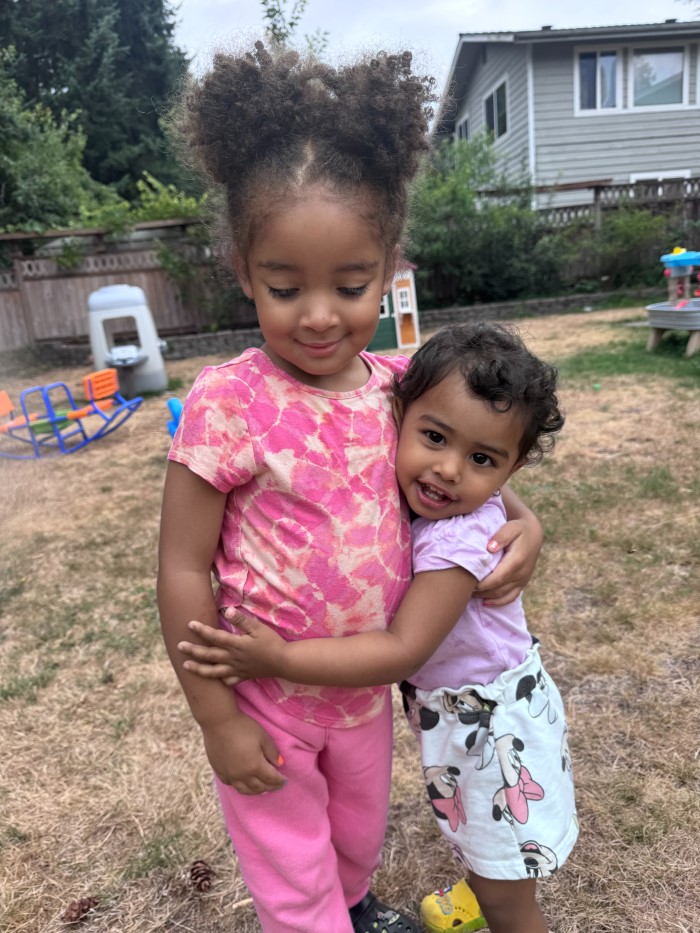
WAC 110-300 requires programs to support emotional development and social competence.
Sibling relationship guidance directly supports these licensing expectations.
Supervision and Mixed-Age Policy
Programs must:
- Maintain required staff-child ratios
- Ensure safe interactions
- Prevent harm during mixed-age play
Family Communication
Licensed childcare must maintain ongoing communication with families about children’s development and behavior.
Partnering with Families
Strong sibling support requires collaboration.
Consistent Communication
Teachers share:
- Observations
- Conflict patterns
- Positive milestones
Supporting Transitions
Drop-off strategies may involve brief sibling greetings before separation.
Respecting Cultural Values
Different families have different expectations around sibling roles. Educators must practice culturally responsive care.
Conclusion
Supporting sibling relationships in childcare settings requires intentional structure, emotional guidance, and developmentally appropriate supervision. From infancy through preschool, sibling bonds influence language development, emotional resilience, and social competence. High-quality programs recognize the importance of balancing connection with independence while aligning practices with Washington State WAC standards.
Families searching for trusted Daycare Bothell or nurturing child care Bothell environments should look for programs that understand the importance of early childhood family dynamics and structured daycare sibling support.
At Kido Heaven, our approach integrates social-emotional learning, collaborative activities, and family partnership to help siblings grow confidently — together and individually.
Why KidoHeaven Stands Out
✅ Licensed in Washington State
✅ Aligned with Early Achievers standards
✅ Working Connections subsidy accepted
✅ Daily updates via Brightwheel
✅ Located in Bothell, serving Mill Creek, Lynnwood & nearby areas
✅ Nutritious snacks, safe outdoor space, & positive mealtime routines
📞 Call 206-734-2040 to schedule a tour
🌐 Enroll now
Follow Our Mealtime Moments
Stay updated with more beautiful outdoor meals and daily learning routines on:
Instagram | Facebook | Nextdoor | Yelp | Winnie | YouTube | Upwards
FAQ
1. Should siblings stay together in the same classroom?
It depends on age and developmental readiness. Separation can promote independence while maintaining opportunities for connection.
2. How does childcare reduce sibling rivalry?
Through structured cooperative activities, guided conflict resolution, and avoiding comparison.
3. Are mixed-age interactions safe?
Yes, when aligned with WAC supervision standards and staff-child ratio requirements.
4. Can sibling bonds improve school readiness?
Yes. Healthy sibling relationships strengthen communication, empathy, and emotional regulation — key predictors of academic success.


