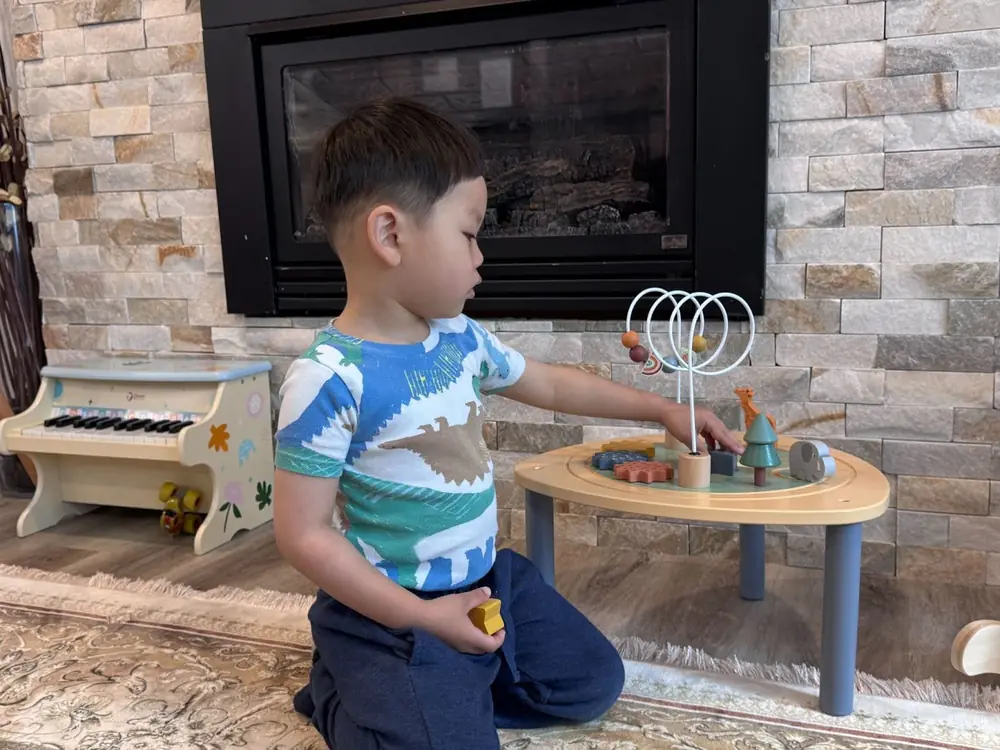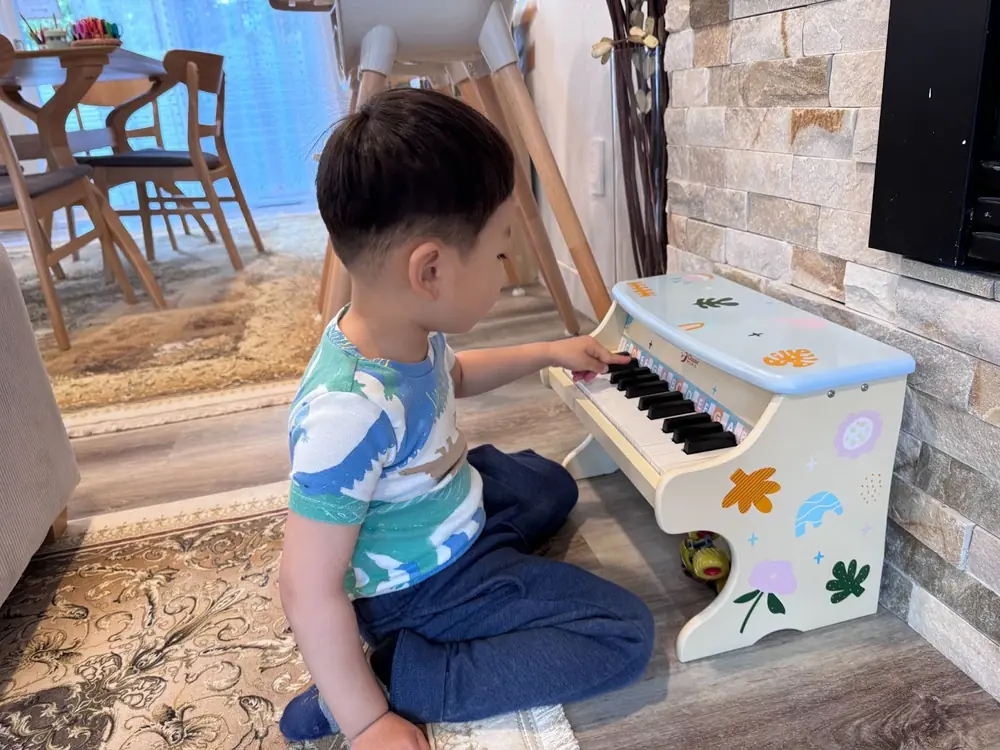


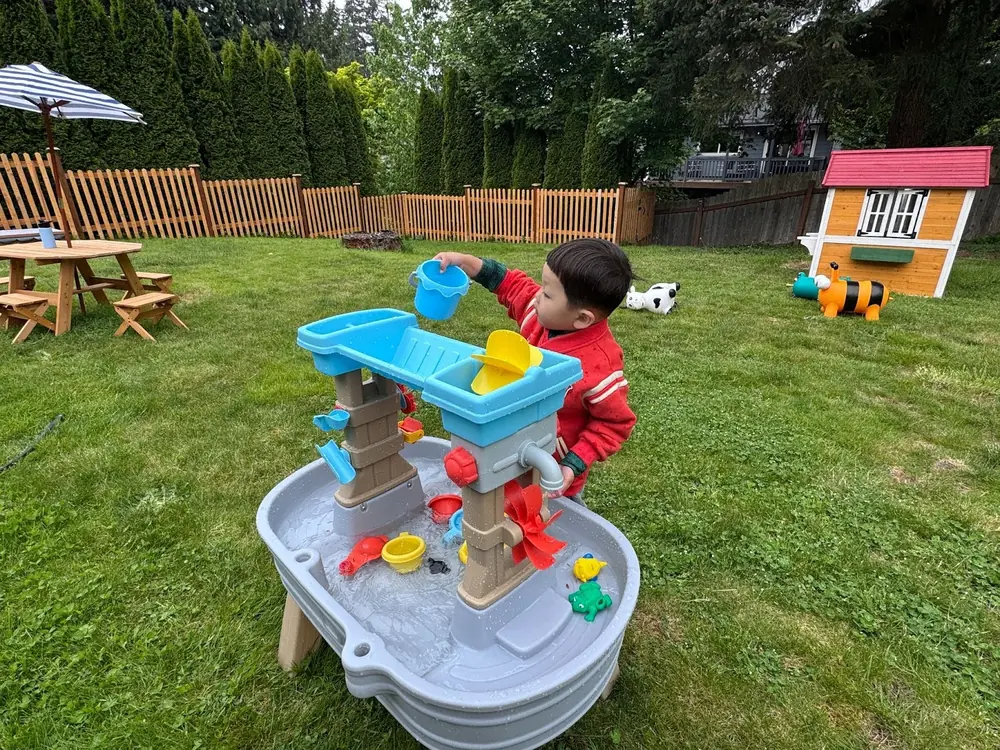
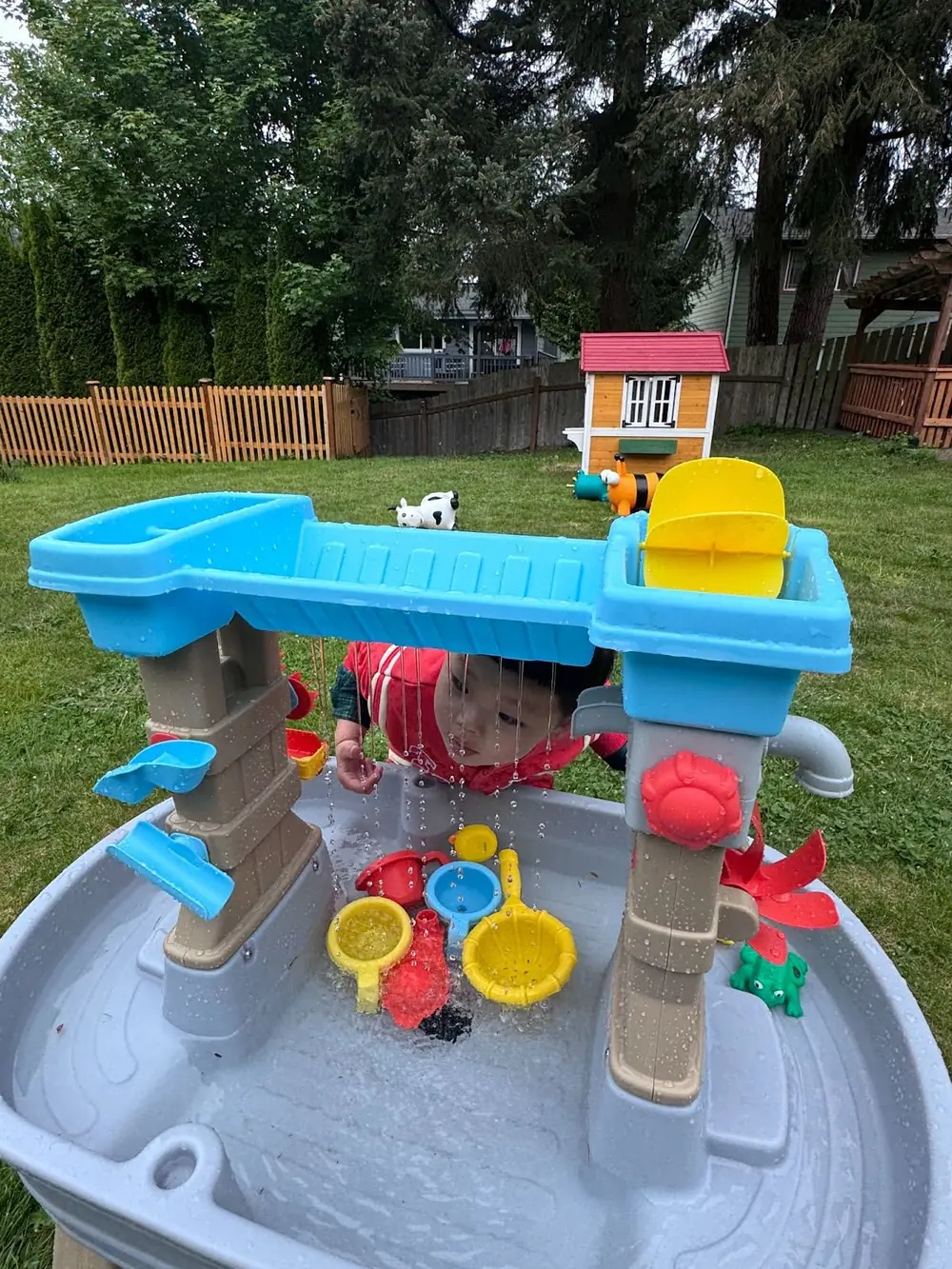
At Kido Heaven Child Care in Bothell, WA, water play is a cornerstone of our early learning program, transforming outdoor spaces into dynamic environments where children aged 1 to 5 explore, learn, and grow. Far beyond a simple pastime, water play engages young minds in STEM (Science, Technology, Engineering, and Math) discovery, sensory development, motor skill enhancement, emotional regulation, and social interaction. Aligned with Washington’s Early Achievers Quality Standards and rooted in Montessori values, our water play activities foster curiosity, critical thinking, and confidence in a nurturing setting. Through splashing, pouring, and experimenting, children at Kido Heaven build foundational skills that prepare them for lifelong learning, all under the guidance of our trained educators.
Why Water Play Matters for Young Children
Water is a universal medium that captivates children, offering a unique blend of sensory stimulation and educational potential. As the National Association for the Education of Young Children (NAEYC) emphasizes, water play is a multifaceted tool that supports holistic development by engaging children’s senses, minds, and emotions. At Kido Heaven, we harness this natural fascination to create daily opportunities for children to explore science, math, motor skills, emotional well-being, and social connections through joyful, hands-on play.
- STEM Exploration
Water play introduces children to scientific concepts in an intuitive, accessible way. By manipulating water with various tools, children observe how it flows, fills spaces, or interacts with objects, uncovering principles like volume, buoyancy, gravity, and movement. For instance, when a child pours water into a container and notices it overflows, they begin to understand capacity—a foundational math concept. Outdorable highlights how such experiences teach physical properties, such as how water responds to different forces. At Kido Heaven, our outdoor water play area encourages children to experiment freely, asking questions like “Why does the water move this way?” or “What happens if I add more?” These moments lay the groundwork for scientific inquiry and engineering thinking, preparing children for future STEM challenges. - Cognitive Development
Engaging with water sparks cognitive growth by encouraging children to think critically and solve problems. As they transfer water between containers or redirect its flow, they explore cause-and-effect relationships and spatial reasoning. Questions like “Why does it spill?” or “How can I make it move differently?” prompt children to test ideas through trial and error, a process Pentagon Play notes as key to developing critical thinking. At Kido Heaven, educators support this by posing open-ended questions that encourage children to reflect on their observations, fostering early hypothesis-testing skills that mirror the scientific method. This cognitive engagement builds a mindset of curiosity and resilience, essential for academic success. - Fine and Gross Motor Skills
Water play is a natural avenue for building motor skills, as children scoop, pour, and manipulate tools. These actions strengthen hand-eye coordination, dexterity, and muscle control, which are critical for tasks like writing, dressing, or using utensils. Day Early Learning underscores that water play enhances both fine motor skills (e.g., gripping a small scoop) and gross motor skills (e.g., lifting a filled container). At Kido Heaven, our water play tools are carefully selected to challenge and support children at different developmental stages, ensuring they build physical skills through playful exploration. For example, a toddler might practice scooping water, while a preschooler refines precision by pouring into a narrow container. - Emotional Well-Being
The sensory qualities of water—its sound, texture, and temperature—provide a calming effect that helps children regulate emotions. NAEYC notes that water play is particularly beneficial for children with sensory processing needs, offering a soothing environment to focus and unwind. At Kido Heaven, we observe children finding comfort in the rhythmic act of pouring or splashing, which helps them manage stress or overstimulation. This emotional regulation supports their ability to engage in learning and interact positively with peers, creating a balanced and inclusive classroom experience. - Language and Social Skills
Water play fosters communication as children describe their actions, ask questions, or collaborate with peers. Educators at Kido Heaven model STEM vocabulary—words like “pour,” “float,” “sink,” “full,” or “empty”—to expand children’s language skills. Group activities encourage social development, as children share tools, take turns, or work together to solve problems, such as figuring out how to move water from one area to another. These interactions build essential skills like negotiation, empathy, and teamwork, preparing children for successful social experiences in school and beyond.
Engaging Water Play Activities at Kido Heaven
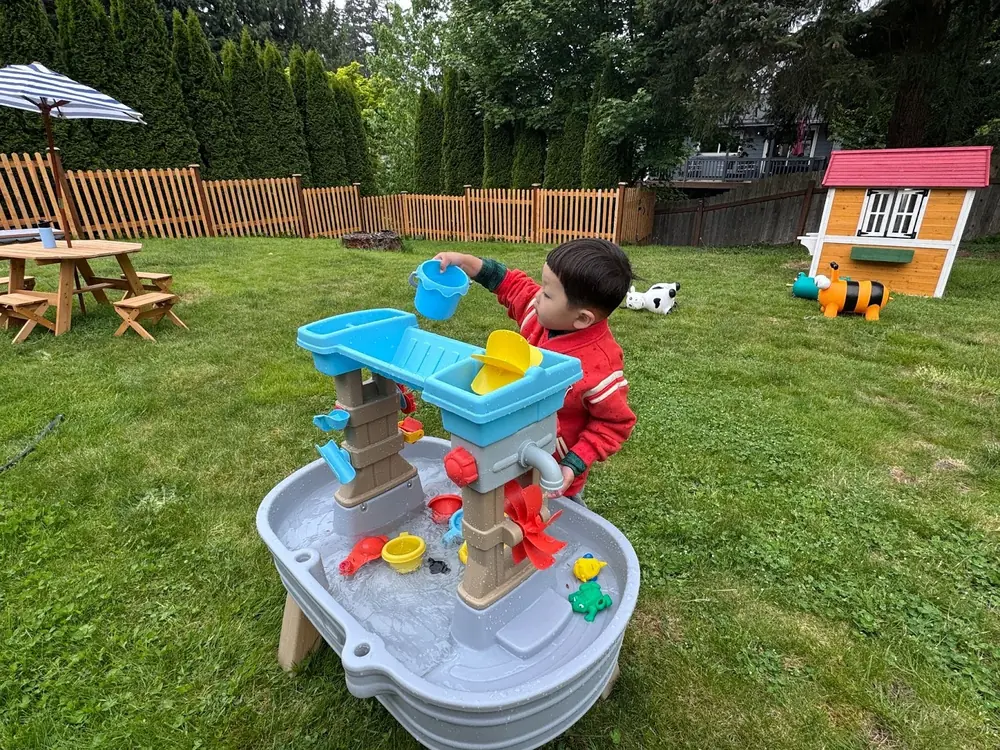
Our outdoor water play area is a hub of exploration, designed to spark curiosity and creativity. Inspired by the dynamic setups described by Pentagon Play, we provide a range of water play tools and setups that encourage children to investigate water’s properties. Without assuming specific equipment, our activities involve versatile tools like scoops, containers, or objects that guide water’s flow, ensuring flexibility and accessibility. Educators facilitate open-ended play, asking questions like “What do you notice?” or “How can we try this differently?” to deepen learning.
- Pouring and Measuring: Children transfer water between containers of varying sizes, exploring concepts like volume and capacity. They notice differences between “full” and “empty” or compare how much water different containers hold, laying the foundation for mathematical reasoning.
- Directing Water Flow: Using tools to guide or collect water, children observe how it moves or pools, sparking curiosity about gravity and motion. This could involve redirecting water with scoops or creating small streams, encouraging engineering thinking.
- Exploring Buoyancy: By placing objects in water, children discover which ones float or sink, engaging in hands-on experiments that introduce physical science. This mirrors the discovery-based learning championed by Day Early Learning, where simple actions yield significant insights.
- Sensory Play: Splashing, stirring, or feeling water’s texture engages children’s senses, fostering focus and emotional regulation. This is particularly valuable for children with sensory needs, as NAEYC highlights, ensuring all learners benefit.
- Collaborative Challenges: Group activities, like working together to fill a large container, promote teamwork and communication. Children negotiate roles and share tools, building social skills through play.
These activities are designed to be inclusive, with tools and setups that accommodate diverse sensory and motor abilities, ensuring every child can participate fully. Whether a toddler is splashing with a scoop or a preschooler is comparing container sizes, our water play area is a place of discovery and joy.
Extending Water Play at Home: Tips for Families
To strengthen the home-school connection, we encourage families to extend water play learning at home. Inspired by NAEYC and Day Early Learning, we share simple, low-cost ideas through Brightwheel that parents can try during bath time, in the backyard, or at the kitchen sink. These activities reinforce STEM concepts and language skills while fostering quality family time.
- Bath Time Exploration: Provide cups or containers for pouring water, asking questions like “Which holds more?” to introduce volume. Add objects like plastic toys to explore floating and sinking.
- Backyard Water Play: Use a bucket and scoops to transfer water, encouraging children to describe their actions with words like “pour” or “full.” This builds language and motor skills.
- Sensory Bins: Fill a shallow tub with water and add spoons or small containers. Let children splash or stir, focusing on the sensory experience to promote calm and focus.
- Simple Experiments: Try dropping pebbles or feathers into water to observe sinking or floating, sparking discussions about why objects behave differently. Use terms like “buoyancy” to mirror classroom vocabulary.
- Outdoor Water Flow: If possible, create a small water path using bowls or trays, letting children guide water with scoops. Ask “How can we make it move faster?” to encourage problem-solving.
These activities are easy to implement and align with Kido Heaven’s approach, helping families reinforce learning in a fun, meaningful way. We share these ideas regularly via Brightwheel, along with photos and updates, to keep parents engaged.
How Water Play Aligns with Early Achievers Standards
Washington’s Early Achievers Quality Standards ensure high-quality early learning experiences, and water play at Kido Heaven is integral to meeting these benchmarks. Our activities are thoughtfully designed to support children’s growth across multiple domains, reflecting our commitment to excellence.
- Learning Environment
Our outdoor water play area is safe, engaging, and accessible, designed to welcome children of all abilities. With a variety of tools and setups, it supports diverse sensory and motor needs, allowing every child to explore independently. The open-ended design encourages creativity and self-directed learning, key aspects of a quality environment. - Child Outcomes
Water play fosters critical developmental skills, including focus, curiosity, resilience, and problem-solving. As children experiment, they gain confidence in their abilities, which educators document through Brightwheel to share with families. Group activities promote social-emotional growth, such as sharing tools or collaborating on tasks, preparing children for school readiness. - Interactions and Curriculum
Educators enhance water play with intentional interactions, posing questions like “What happens if we use a different tool?” or “Why does the water stay here?” These prompts encourage critical thinking and connect to curriculum themes like weather, water cycles, or ocean life. By embedding STEM concepts in play, we meet Early Achievers’ standards for meaningful, intentional teaching. - Family Engagement
We partner with families to extend learning beyond the classroom. Through Brightwheel, we share photos, videos, and practical ideas for water play, empowering parents to reinforce STEM and language skills at home. This collaboration strengthens the home-school connection, a core Early Achievers principle. - Professional Development
Our educators receive ongoing training in early STEM education, sensory integration, and outdoor safety, ensuring water play is both educational and secure. Observations from water play activities inform our Early Achievers assessments and professional reflections, driving continuous improvement in our program.
Water Play and Montessori Values
Montessori education celebrates a child’s natural curiosity, emphasizing hands-on learning, nature, and independence. At Kido Heaven, water play embodies these values, creating a sensory-rich environment where children lead their own discoveries.
- Child-Led Exploration: Children choose how to engage with water play, whether pouring, splashing, or experimenting. This autonomy fosters independence and self-confidence, aligning with Montessori’s focus on self-directed learning.
- Practical Tools: Our water play tools, such as containers and scoops, mirror real-world objects, connecting play to everyday life. This practical approach helps children understand their environment, a key Montessori principle.
- Repetition for Mastery: Water play invites children to repeat actions, like filling and emptying containers, deepening their understanding over time. This repetitive process builds concentration and skill mastery, essential for cognitive growth.
- Connection to Nature: Set in our outdoor area, water play connects children to the natural world, fostering environmental awareness and a sense of wonder. Montessori emphasizes nature as a teacher, and our water play activities bring this philosophy to life.
By weaving Montessori values into water play, we create a learning experience that honors each child’s unique developmental journey, preparing them for future academic and personal success.
Why Choose Kido Heaven Child Care?
We offer a holistic, child-centered program that goes beyond worksheets. Our outdoor learning spaces, Montessori-inspired approach, and Early Achievers participation mean your child receives the highest quality care.
✅ Licensed in WA State
✅ Daily outdoor learning and water play
✅ Full-time care for ages 1–5
✅ Working Connections subsidy accepted
✅ Daily updates via Brightwheel
📞 Call 206-734-2040 to schedule a tour
🌐 Enroll now
📲 Stay Connected
Follow our water play and STEM adventures on:
Instagram | Facebook | Nextdoor | Yelp | Winnie | YouTube | Upwards
💧 In Summary
Water play isn’t just fun—it’s a foundation for STEM exploration, sensory development, and joyful discovery. At Kido Heaven Child Care, we honor every child’s natural desire to learn through play, giving them the tools—and water—to explore, test, and grow.
FAQ
1. How does water play support my child’s development?
Water play introduces STEM concepts like volume and buoyancy, builds motor skills, fosters emotional regulation, and encourages social interaction.
2. Is water play accessible for all children?
Yes, our water play area is designed to be inclusive, with tools and setups that support diverse sensory and motor abilities.
3. How can parents reinforce water play at home?
We share ideas via Brightwheel, such as pouring water during bath time or exploring floating objects, to extend STEM and language learning.
4. What makes Kido Heaven’s water play unique?
Our Montessori-inspired approach, outdoor focus, and trained educators create a nurturing, discovery-based experience tailored to each child.
5. How can I learn more about Kido Heaven’s program?
Call 206-734-2040 for a free tour or visit www.kidoheaven.com.
Visit Kido Heaven Child Care
A licensed home daycare for infants to pre-K, serving Bothell and Mill Creek. Call or text (206) 734-2040 or book a tour.
Book a Tour