

Water play is one of the most engaging and beneficial activities for young children, offering a range of physical, cognitive, emotional, and social benefits. From infants splashing in shallow tubs to preschoolers pouring and experimenting, water play encourages exploration, learning, and growth at every developmental stage. By providing sensory experiences, opportunities for problem-solving, and moments of social interaction, water play helps children build essential skills for lifelong learning.
For practical examples of structured water play activities, check out our previous post: Exploring Science Through Water Play at Kido Heaven Child Care.
Introduction
Water has a universal appeal for children. Its movement, texture, and sound provide natural sensory stimulation that captures attention and encourages exploration. Unlike screen-based activities or structured learning, water play is open-ended, allowing children to experiment freely, discover new concepts, and engage with their peers. Across all early childhood stages—from infancy to preschool—water play supports holistic development, including physical coordination, cognitive reasoning, language acquisition, emotional well-being, and social skills.
Water Play and Sensory Development
Water play is a powerful sensory experience, offering children the opportunity to engage multiple senses simultaneously.
Infant Sensory Exploration
For infants, water play is primarily about touch, sight, and sound. Splashing hands or kicking feet in shallow water introduces cause-and-effect learning. The varying temperatures, textures, and resistance of water provide tactile stimulation essential for early neural development. Infants may notice ripples, bubbles, and reflections, supporting visual tracking and sensory integration.
Toddler Sensory Development
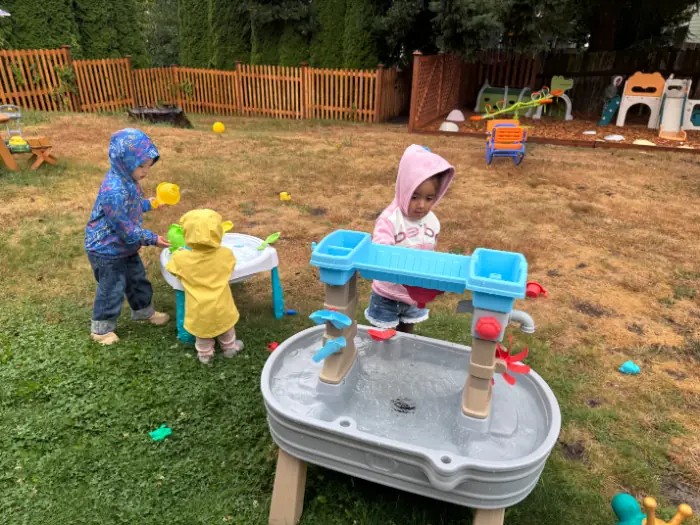
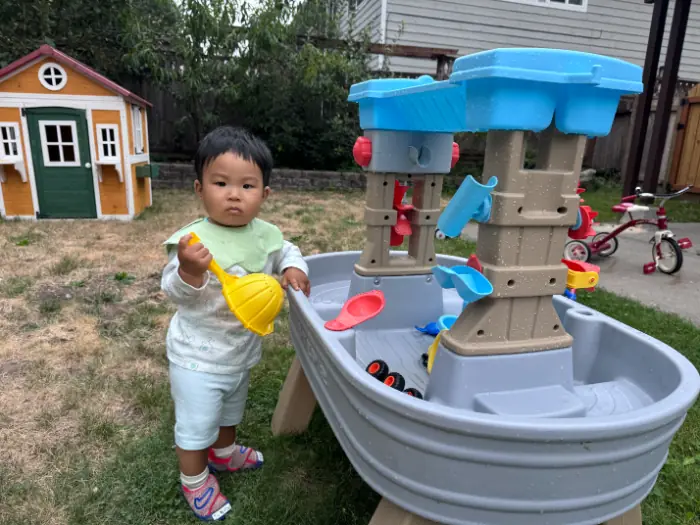
Toddlers benefit from slightly more structured water play. Activities like pouring from one container to another or stirring water with spoons encourage hand-eye coordination while reinforcing sensory exploration. Engaging multiple senses—hearing the splash, feeling the water’s movement, observing the changes—supports toddler sensory development and prepares them for more complex problem-solving tasks.
Cognitive Growth Through Water Play
Water play offers countless opportunities for children to think critically and understand the world around them.
Preschooler Problem Solving
Preschoolers develop cognitive skills as they experiment with water. Asking questions like “What happens if I fill this container?” or “Why does this float while that sinks?” introduces the concepts of cause and effect, volume, and measurement. These activities foster logical thinking and help children learn through trial and error.
Early STEM Concepts
Water play naturally introduces children to science, technology, engineering, and math (STEM) principles. Observing water flow, understanding how to redirect it, or experimenting with floating and sinking objects teaches gravity, buoyancy, and motion. Early STEM exposure in a playful, hands-on environment builds a foundation for later academic success.
Physical Development
Water play enhances both fine and gross motor skills, supporting physical growth and coordination.
Fine Motor Skills
Pouring water, picking up small objects, or manipulating scoops and cups strengthens the small muscles of the hands and fingers. These skills are crucial for writing, drawing, self-feeding, and dressing. Toddlers refining their grip and preschoolers practicing precise pours demonstrate continual improvement in dexterity and control.
Gross Motor Skills
Lifting buckets of water, moving large containers, or creating streams encourages whole-body movement. Children develop balance, core strength, and spatial awareness, which support physical confidence and coordination for activities like climbing, running, and jumping.
Emotional and Social Benefits
Water play supports emotional regulation and social development, helping children navigate feelings and relationships.
Emotional Regulation
The sound, movement, and tactile qualities of water create a calming sensory experience. Children learn to self-soothe, manage overstimulation, and focus attention, which is particularly helpful for toddlers with heightened sensory needs.
Social Interaction and Communication
Group water play encourages sharing, collaboration, and turn-taking. Children communicate needs, negotiate roles, and work together to solve problems, such as filling a container or creating a water channel. These experiences develop empathy, teamwork, and effective communication.
Practical Water Play Activities for Different Ages
Infants
- Shallow tubs with splashing opportunities
- Floating and grasping lightweight toys
- Gentle pouring with small cups
Toddlers
- Pouring water between cups or buckets
- Stirring water with spoons, scoops, or funnels
- Sensory bins with sponges, water, and small toys
Preschoolers
- Experiments with floating/sinking objects
- Redirecting water using funnels or tubes
- Measuring and comparing water volumes in containers
These activities are low-cost, safe, and adaptable for home or daycare environments.
Aligning Water Play with WAC Standards
Washington Administrative Code (WAC) standards emphasize safe, inclusive, and educational play environments. Water play aligns with WAC guidelines by:
- Supporting developmentally appropriate practice across ages 1–5
- Encouraging inclusive participation for children of all abilities
- Providing intentional learning experiences while prioritizing safety and supervision
Daycare providers, like Kido Heaven, ensure water play is structured yet flexible, meeting WAC safety, hygiene, and educational requirements.
Extending Water Play at Home
Parents can reinforce water play learning through simple, everyday activities:
- Bath time experiments: Cups and toys to explore pouring, floating, and sinking
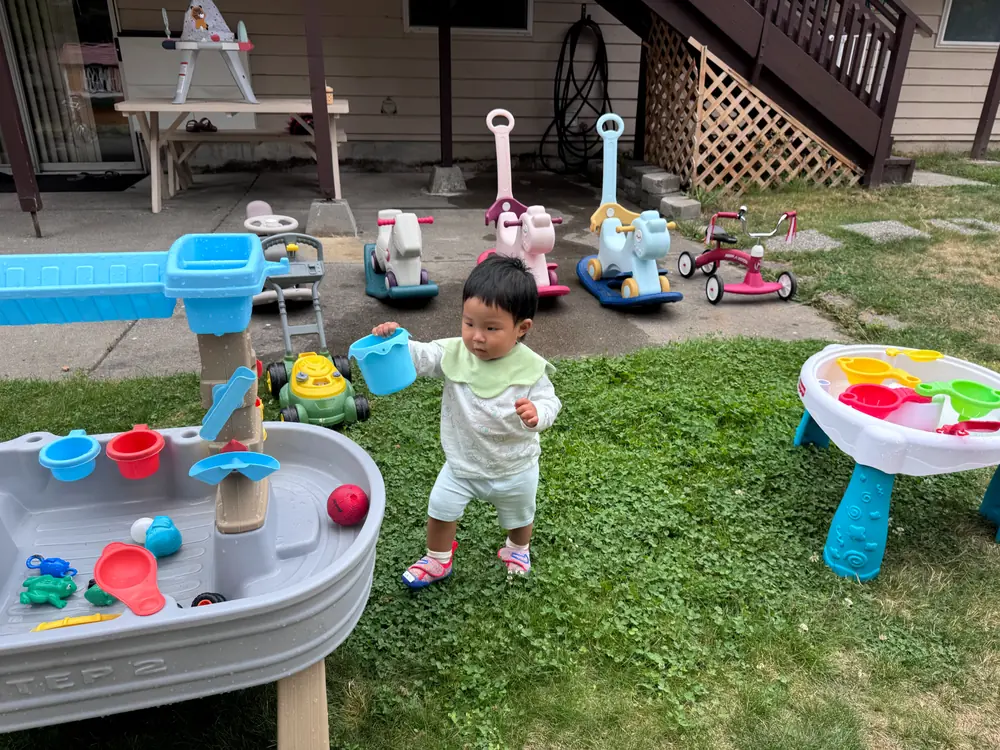
- Backyard water stations: Buckets, scoops, and bowls for sensory exploration
- Mini science activities: Observing how objects react in water to spark curiosity
- Language and vocabulary: Encourage children to describe actions and observations
These practices support continuous development while fostering quality family interactions.
Conclusion
Water play is more than fun—it’s a foundation for growth. Across all early childhood stages, it nurtures sensory awareness, cognitive thinking, motor skills, emotional regulation, and social development. By incorporating water play at home or in daycare settings, parents and educators provide children with hands-on learning experiences that foster curiosity, confidence, and a lifelong love for exploration.
At Kido Heaven Child Care in Bothell, WA, we embrace water play as a core component of our Montessori-inspired, STEM-focused program. Children ages 1–5 engage in safe, inclusive, and meaningful activities that encourage exploration and growth every day.
Why KidoHeaven Stands Out
✅ Licensed in Washington State
✅ Aligned with Early Achievers standards
✅ Working Connections subsidy accepted
✅ Daily updates via Brightwheel
✅ Located in Bothell, serving Mill Creek, Lynnwood & nearby areas
✅ Nutritious snacks, safe outdoor space, & positive mealtime routines
📞 Call 206-734-2040 to schedule a tour
🌐 Enroll now
Follow Our Mealtime Moments
Stay updated with more beautiful outdoor meals and daily learning routines on:
Instagram | Facebook | Nextdoor | Yelp | Winnie | YouTube | Upwards
FAQ
1. How does water support my child’s development?
Water play enhances motor skills, cognitive reasoning, emotional regulation, social interaction, and language development, supporting holistic growth.
2. Can water play be done at home?
Yes! Simple activities using cups, scoops, or shallow tubs allow children to learn while having fun.
3. Is water play suitable for all children?
Absolutely. Activities can be adapted to different ages, abilities, and sensory needs.
4. How does water play introduce STEM concepts?
Children explore cause and effect, measurement, buoyancy, and water flow through hands-on experiments.
Visit Kido Heaven Child Care
A licensed home daycare for infants to pre-K, serving Bothell and Mill Creek. Call or text (206) 734-2040 or book a tour.
Book a Tour